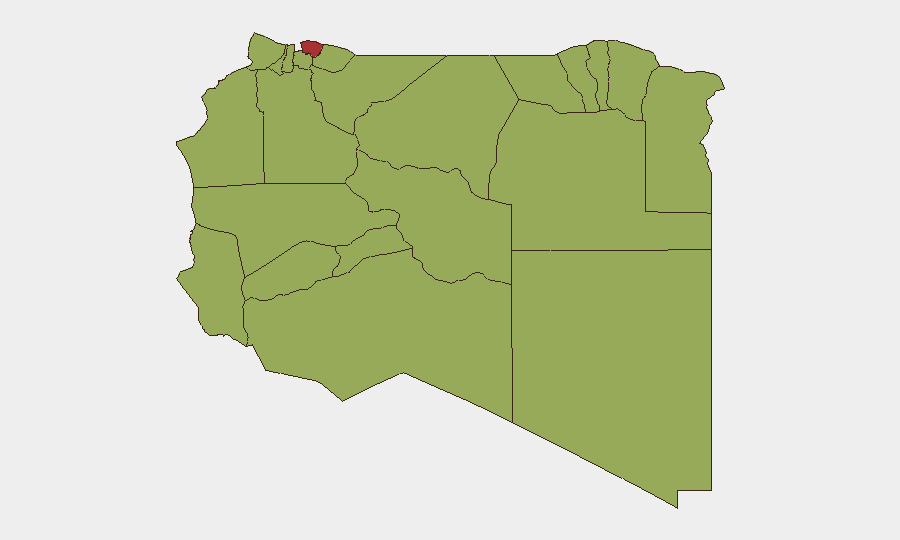
Situation Summary
Libya remains at elevated composite threat level (#22 globally, score 68) driven primarily by civil-conflict dynamics and transnational security pressures. Tripoli dominates the risk profile (77.5), reflecting ongoing institutional fragility, organized-crime networks, and competing power centers. Open-source reporting confirms sporadic security incidents across the capital and western regions through mid-July, but no independently verified, precisely dated incidents have been corroborated within the last 24–48 hours; current signal flow suggests operational tempo remains elevated but episodic rather than escalatory at present.
Key Developments
- Tripoli (Tajoura district) – 2026-07-19: Libyan security forces conducted a targeted raid against a kidnapping cell, rescuing two foreign migrants and arresting a Somali suspect. The operation was framed as law-enforcement rather than armed conflict, targeting migrant exploitation and extortion networks.
- Southern Libya (Umm al-Aranib area) – 2026-07-20: The Anti-Illegal Migration Agency launched a large-scale anti-smuggling sweep across desert border corridors in the southwest. No combat reported; operation reflects heightened enforcement activity targeting trafficking and smuggling routes.
- Libya (national) – 2026-07-20: Domestic authorities opened an investigation involving business and government entities on apparent corruption or sanctions-evasion grounds. The action signals institutional friction and governance-related stress rather than street-level unrest.
- Libya–Saudi Arabia – 2026-07-23: Two separate detention or arrest actions involving Libyan and Saudi entities were recorded. Limited public detail available; classified as transnational security-cooperation event pending further clarification.
- Al-Zawiya (west of Tripoli) – mid/late July: Armed gunmen fired on a vehicle, killing four occupants; the vehicle subsequently caught fire. No group has claimed responsibility; incident underscores localized violence risk in greater Tripoli area.
- Unspecified location, Libya – mid/late July: A Libyan security officer was killed during a public-security operation targeting unspecified threats. Reflects operational risk borne by internal security forces during enforcement actions.
Note: No independently verified, precisely dated incidents have been confirmed within the last 24 hours; events above represent the most recent multi-source-corroborated developments available.
Highest-Risk Areas
Tripoli (77.5) stands as the dominant driver of national risk, reflecting overlapping organized-crime, migrant-trafficking, and institutional-stability concerns. A secondary tier—Nalut, Ghat, Az Zawiya District, Wadi al Shatii, Murzuq, Kufra, and others (all 47.5)—spans western, central, and southern regions, indicating dispersed governance and enforcement challenges rather than concentrated conflict zones. The ranking reflects trafficking networks, border-security gaps, and competition for territorial and resource control rather than active conventional warfare; however, the broad geographic spread of elevated risk means that security operations and criminal activity remain endemic across multiple jurisdictions.
How GeoBit Would Assist
Security teams should employ AOI Monitoring & Early Warning to maintain persistent watch on Tripoli's districts and transit corridors, with automated alerting on kidnapping, trafficking, and armed incidents. OSINT fusion (X/Telegram feeds, YouTube intelligence, and multi-language search) and conflict event-feed integration provide near-real-time situational awareness of law-enforcement operations and criminal activity. GIS & spatial analysis combined with network & actor analysis enable mapping of trafficking routes, migrant-detention hotspots, and organized-crime nodes across the broader western region.
7-Day Outlook
Operational tempo in Tripoli and western regions is expected to remain elevated but episodic, with continued law-enforcement sweeps against trafficking and organized crime. Border-security activity in the south will likely persist. No indicators suggest imminent large-scale armed escalation, but fragile governance and transnational crime networks remain persistent sources of localized violence and duty-of-care risk for personnel and assets.
Highest-Risk Areas — Ranked
| # | State / Region | Risk |
|---|---|---|
| 1 | Tripoli | 77.5 |
| 2 | Nalut | 47.5 |
| 3 | Ghat | 47.5 |
| 4 | Baladiyah Surman | 47.5 |
| 5 | Az Zawiya District | 47.5 |
| 6 | Wadi al Shatii | 47.5 |
| 7 | Wadi al Hayaa | 47.5 |
| 8 | Murzuq | 47.5 |
| 9 | Kufra | 47.5 |
| 10 | Nuqat al Khams | 47.5 |
| 11 | Jafara | 47.5 |
| 12 | Murqub | 47.5 |
Sources
Previous Daily Briefs
A new Libya brief is written every day — each with its own risk map and downloadable CSV. Here's the last week; use the calendar to go further back.
📅 Browse every day by calendar →
Highlighted days have a brief. Tap a day for that day's map & analysis, or “csv” for that day's dataset ($5).
Atlas — our AI intelligence desk — emails them this snapshot personally. Nothing else, no list.