Situation Summary
North Korea's security environment remains defined by military modernization and cyber aggression, with no major civil or internal disruptions reported in the past 48 hours. The July 3–5 naval weapons trials and Kim Jong Un's directive to accelerate a nuclear-capable "green-water" navy signal sustained focus on maritime strategic capability, raising medium-to-long-term escalation risk around the Korean Peninsula. Concurrent disclosure of North Korean state-linked cyber supply-chain attacks targeting AI tools and financial institutions indicates persistent external threat activity. Overall threat posture remains elevated but operationally stable within North Korea itself.
Key Developments
- East Sea (North Korea's east coast) – July 3, 2026
North Korea conducted live-fire trials of a nuclear-capable strategic cruise missile and multiple naval weapons systems aboard the new 5,000-ton Kang Kon guided-missile destroyer, supervised by Kim Jong Un. The test included evaluation of naval artillery, automatic cannons, electronic warfare suites, and fire-control systems, with state media confirming trials and commissioning orders within two months.
- Pyongyang (leadership directive) – July 5–6, 2026
Following the Kang Kon trials, Kim Jong Un issued orders to accelerate development of a "green-water" navy capable of projecting strategic strike systems beyond coastal waters, signaling a shift toward sustained maritime nuclear deterrence.
- Global cyber domain (DPRK state-linked actors) – July 4–6, 2026
Security researchers disclosed discovery of six malicious software packages attributed to the Lazarus Group in a supply-chain attack targeting AI development tools, cryptocurrency platforms, and potentially banks and multinational firms. The campaign represents an expansion of DPRK cyber operations beyond traditional targets.
- North Korea–China border (multiple informal routes) – early July, 2026
Satellite and trade indicators show over a dozen improvised smuggling routes reactivating after a months-long lull, used to move vehicles and contraband goods into North Korea, suggesting loosened border enforcement and continued sanctions evasion.
- Regional maritime security analysis – July 6, 2026
Multiple analytical pieces released July 6 characterized the Kang Kon cruise-missile demonstration as part of a "high-stakes" pattern of increasing missile-test tempo in East Asian waters, reinforcing assessments of elevated regional military tension.
Highest-Risk Areas
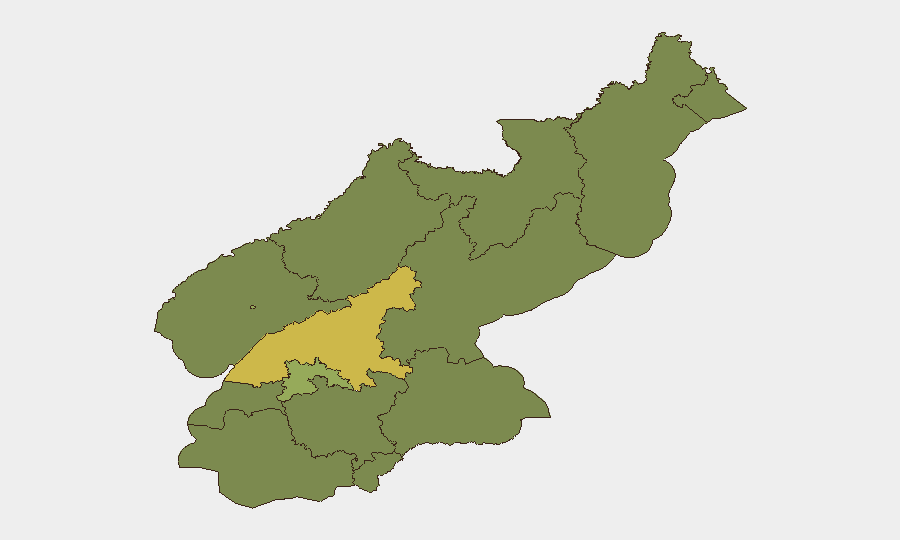
South Pyongan Province (risk 66.8) and P'yŏngyang (53.1) drive the composite threat ranking, reflecting concentration of military infrastructure, naval facilities, and state-security apparatus in these jurisdictions. South Pyongan's elevated score reflects proximity to shipyards and weapons-development sites associated with the Kang Kon program; P'yŏngyang's score reflects political leadership presence and cyber-operations coordination. Remaining provinces cluster at 36.8, indicating relatively distributed but lower baseline risk outside the capital and primary military-industrial zones. Risk escalation is primarily military and cross-border in nature rather than civil unrest or internal instability.
How GeoBit Would Assist
Security teams operating in or monitoring North Korea should employ Conflict & Military capabilities (force structure tracking, weapons-capability analysis, battle mapping) to monitor the Kang Kon commissioning timeline and naval deployments. Maritime & Aviation tracking, combined with AOI Monitoring & Early Warning on key shipyards and test ranges, enables persistent surveillance of operational tempo and launch readiness. Network & Actor Analysis and cyber threat intelligence feeds would track Lazarus Group supply-chain campaigns targeting corporate technology and financial systems, allowing teams to assess indirect exposure to compromised tools or institutions.
7-Day Outlook
Near-term escalation risk remains contained to military posturing and cyber operations; no internal instability or civil unrest is forecast. The two-month Kang Kon commissioning timeline suggests continued high operational tempo in naval weapons testing through early September. Border smuggling reactivation and cyber campaign persistence suggest sustained external activity but stable near-term conditions within North Korea itself.
Highest-Risk Areas — Ranked
| # | State / Region | Risk |
|---|---|---|
| 1 | South Pyongan | 66.8 |
| 2 | P'yŏngyang | 53.1 |
| 3 | Ryanggang | 36.8 |
| 4 | North Hamgyong | 36.8 |
| 5 | North Pyongan | 36.8 |
| 6 | Chagang | 36.8 |
| 7 | Nampo | 36.8 |
| 8 | South Hwanghae | 36.8 |
| 9 | North Hwanghae | 36.8 |
| 10 | South Hamgyong | 36.8 |
| 11 | Kaesong | 36.8 |
| 12 | Kangwon | 36.8 |
Sources
Previous Daily Briefs
A new North Korea brief is written every day — each with its own risk map and downloadable CSV. Here's the last week; use the calendar to go further back.
📅 Browse every day by calendar →
Highlighted days have a brief. Tap a day for that day's map & analysis, or “csv” for that day's dataset ($5).
Atlas — our AI intelligence desk — emails them this snapshot personally. Nothing else, no list.