Situation Summary
Oman remains a low-threat country overall (composite score 7; #null globally), with no verified domestic security incidents, civil unrest, or terrorism activity reported in the last 24–48 hours. However, the country faces acute indirect risk from escalating U.S.–Iran tensions in adjacent maritime zones—specifically the Gulf of Oman and Strait of Hormuz—where Omani-mediated diplomacy is now the primary mechanism for de-escalation. Commercial shipping and port operations tied to Omani terminals (Sohar, Salalah) are experiencing booking suspensions and routing disruptions due to regional military activity and blockade enforcement. Internal security remains stable; maritime and commercial risk is the operational priority for multinational teams.
Key Developments
- Gulf of Oman, ~100 nm east of Duqm (30 July 2026): UK Maritime Trade Operations reported a merchant tanker incident involving military forces during "ongoing military activity in the region," with no attribution or casualty details released.
- Gulf of Oman, undisclosed position (30 July 2026): U.S. Central Command fired on and disabled the Mozambique-flagged tanker *Lavine* for breaching the maritime blockade on Iranian ports; incident occurred within operational range of Omani waters and reinforces enforcement intensity.
- Strait of Hormuz / Omani maritime corridor (30–31 July 2026, ongoing): Oman-led diplomatic talks with Iran on Hormuz reopening and shipping regulation remain active; concurrent U.S. pause on airstrikes indicates active de-escalation window, directly affecting shipping lane stability adjacent to Oman's territorial waters.
- Strait of Hormuz, regional proposal (active 30–31 July 2026): Oman presented Iran a Gulf-backed framework allowing Tehran to collect voluntary shipping fees from Hormuz transits; negotiations are ongoing and impact cost and routing predictability for vessels using Omani ports.
- Iran's rejection of joint Strait management (30–31 July, widely cited): Iran rejected key elements of Oman-backed Hormuz co-management proposals, insisting on primary control; this sustains uncertainty for maritime operators and indicates fragility of the current diplomatic window.
- Dry-cargo booking suspensions (30–31 July 2026, active advisory): Regional logistics advisories report suspended or heavily disrupted dry-cargo bookings to/from Omani terminals (Sohar) and other Gulf ports due to drone activity, prior port attacks, and ongoing tensions.
- No terrestrial incidents reported: Open-source monitoring and social media review confirm no new protests, civil unrest, major crime, or infrastructure attacks within Oman's land territory during the same 24–48-hour window.
Highest-Risk Areas
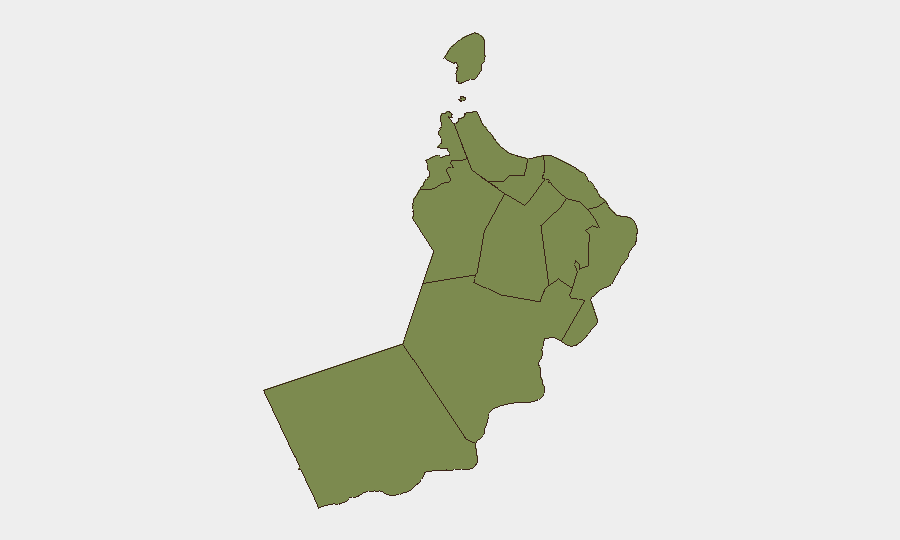
Musandam Governorate (risk 31.3) is the singular area of elevated concern due to its maritime borders with Iran and the Strait of Hormuz's proximity; this reflects geographic exposure to shipping incidents and potential spillover from naval activity rather than local instability. All other governorates (Muscat, Al Batinah, Ad Dakhiliyah, Dhofar, and others) carry composite risk scores of 1.3—indicating low domestic threat profiles. Risk concentration in Musandam reflects maritime chokepoint exposure, not territorial instability. For multinational teams and assets located inland or in major urban centers (Muscat, Salalah), domestic security risk remains negligible; the operational focus is on port and shipping logistics disruption.
How GeoBit Would Assist
Maritime & Aviation tracking and AOI Monitoring with alerting would detect vessel incidents and blockade enforcement activity near Omani waters in real time, enabling supply-chain and shipping-schedule adjustments. Conflict & Military tracking combined with Network & Actor Analysis would map ongoing U.S.–Iran military postures and diplomatic signals, flagging escalation or de-escalation windows affecting regional stability. Routing & Network Analysis would model alternative commercial and employee transit routes around disrupted Gulf shipping lanes and ports, supporting contingency logistics and travel-duty-of-care compliance.
7-Day Outlook
Oman-led diplomacy is likely to remain the dominant driver of near-term risk trajectory; if talks collapse, maritime incidents and shipping disruptions will sharpen. If de-escalation holds, booking normalcy and vessel transits through the Strait should gradually resume, reducing operational friction for companies with Omani port or supply-chain dependencies. Domestic security conditions within Oman's territory are expected to remain stable absent unexpected spillover from external conflict.
Highest-Risk Areas — Ranked
| # | State / Region | Risk |
|---|---|---|
| 1 | Musandam Governorate | 31.3 |
| 2 | Muscat Governorate | 1.3 |
| 3 | Al Buraymi Governorate | 1.3 |
| 4 | Ad Dhahirah Governorate | 1.3 |
| 5 | Al Batinah North Governorate | 1.3 |
| 6 | Al Batinah South Governorate | 1.3 |
| 7 | Ad Dakhiliyah Governorate | 1.3 |
| 8 | Ash Sharqiyah North Governorate | 1.3 |
| 9 | Ash Sharqiyah South Governorate | 1.3 |
| 10 | Dhofar Governorate | 1.3 |
| 11 | Al Wusta Governorate | 1.3 |
Sources
Previous Daily Briefs
A new Oman brief is written every day — each with its own risk map and downloadable CSV. Here's the last week; use the calendar to go further back.
📅 Browse every day by calendar →
Highlighted days have a brief. Tap a day for that day's map & analysis, or “csv” for that day's dataset ($5).
Atlas — our AI intelligence desk — emails them this snapshot personally. Nothing else, no list.