Situation Summary
Panama's composite threat score (35, rank #56 globally) reflects endemic gang and organized-crime activity concentrated in northern border and transit zones, with no major security incident tracked in the reporting week. The country is experiencing a concurrent surge in labor unrest and protest activity—teachers, transport operators, construction workers, and civic organizations have staged multiple demonstrations over dismissals, fuel subsidies, alleged police surveillance, and infrastructure concerns. Four violent deaths were reported over the first weekend of October in separate incidents across Panama City and adjacent municipalities, consistent with baseline gang-related homicide patterns in high-risk areas. Overall trajectory remains stable at elevated baseline risk, with labor friction as a secondary near-term mobility and commercial disruption vector.
Key Developments
- Sept. 29 — Panama City (Ombudsman's Office): Teachers dismissed after a recent labor action held a vigil and protest demanding reinstatement, part of a week-long series of planned demonstrations by education, construction, and transport sectors.
- Sept. 30 — Panama City (Parque Belisario Porras to Plaza 5 de Mayo): SUNTRACS and allied organizations marched against alleged illegal police surveillance of union leaders and social activists, raising concerns about monitoring of family members and residences.
- Sept. 30 — Darién Province (Río Chico, near Yaviza): SENAFRONT (national border police) reported an armed confrontation with alleged organized-crime operatives during night operations in a high-trafficking zone.
- Oct. 1 — Panama City (Presidency grounds): Transport operators from multiple provinces concentrated to demand renewed government negotiations on fuel subsidies, scheduled to expire October 2.
- Oct. 3 — Panama City (Parque Belisario Porras to National Assembly): Popular organizations marched against alleged police infiltration of unions, health-sector dismissals, and proposed mining activity in Donoso, Colón Province.
- Oct. 3–4 — Panama City and adjacent municipalities (24 de Diciembre, Colón, San Joaquín, Monterrico, La Chorrera): Four violent deaths reported over the first weekend of October, including homicides in 24 de Diciembre and Colón and fatalities of minors in San Joaquín, Monterrico, and La Chorrera.
- Oct. 4–5 — Panama City and nationwide commercial zones: National Police deployed over 1,000 officers for security coverage during Panama Black Weekend shopping event.
Highest-Risk Areas
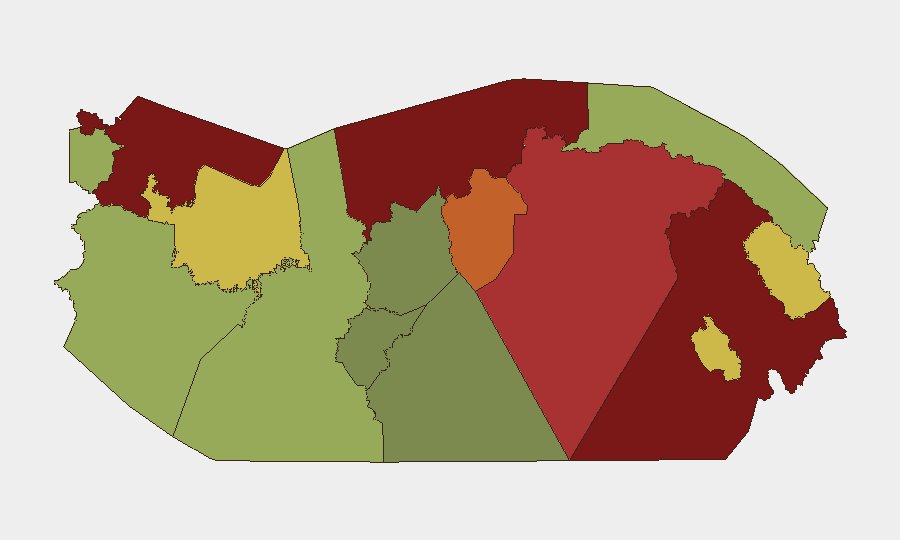
Darién (risk 95) and Colón (risk 88) dominate the threat landscape as the primary drivers of national risk, both serving as transit corridors for transnational gang activity, smuggling, and irregular migration. Bocas del Toro (82) and Panamá Province (78) extend this northern and eastern belt of elevated risk, with organized-crime presence and inter-gang violence the dominant factors. The capital and surrounding Panamá Oeste (75) experience lower but consistent gang homicide activity and petty crime, while indigenous territories (Ngäbe-Buglé, Emberá-Wounaan, Guna Yala, Naso Tjër Di) face a mix of drug-trafficking pressures and limited state presence. Southern provinces (Chiriquí, Coclé, Veraguas) remain substantially lower-risk.
How GeoBit Would Assist
A security team with personnel or assets in Panama would use AOI Monitoring & Early Warning to track labor actions and protest routes in Panama City and provincial capitals, reducing unplanned exposure to road blockages and transit delays. Network & Actor Analysis and OSINT fusion capabilities would support tracking of gang and criminal-organization movements in Darién, Colón, and Bocas del Toro, triangulating intelligence from radio SIGINT, social-media analysis, and entity extraction to identify emerging trafficking patterns. Routing & Network Analysis would enable real-time alternative-journey planning for staff or supply movement when protests or confrontations disrupt primary corridors.
7-Day Outlook
Labor demonstrations are expected to continue through mid-October as fuel-subsidy negotiations and teacher reinstatement demands remain unresolved; road blockages and temporary transit disruptions should be anticipated in Panama City and along the Pan-American Highway. Gang-related homicides will likely remain at baseline levels in Panamá City, Colón, and outlying municipalities. No major escalation in organized-crime violence or political instability is forecast for the coming week.
Highest-Risk Areas — Ranked
| # | State / Region | Risk |
|---|---|---|
| 1 | Darién | 95 |
| 2 | Colón | 88 |
| 3 | Bocas del Toro | 82 |
| 4 | Panamá Province | 78 |
| 5 | Panamá Oeste | 75 |
| 6 | Ngäbe-Buglé | 68 |
| 7 | Emberá-Wounaan | 62 |
| 8 | Veraguas | 58 |
| 9 | Chiriquí | 48 |
| 10 | Naso Tjër Di | 45 |
| 11 | Guna Yala | 42 |
| 12 | Coclé | 35 |
Sources
Previous Weekly Briefs
A new Panama brief is written every Monday, covering the week — each with its own risk map and downloadable CSV. Use the calendar to go further back.
- September 28, 2026
- September 21, 2026
- September 14, 2026
- September 7, 2026
- September 1, 2026
- August 31, 2026
- August 30, 2026
📅 Browse past briefs by calendar →
Highlighted days have a brief. Tap a day for that day's map & analysis, or “csv” for that day's dataset ($5).
Atlas — our AI intelligence desk — emails them this snapshot personally. Nothing else, no list.