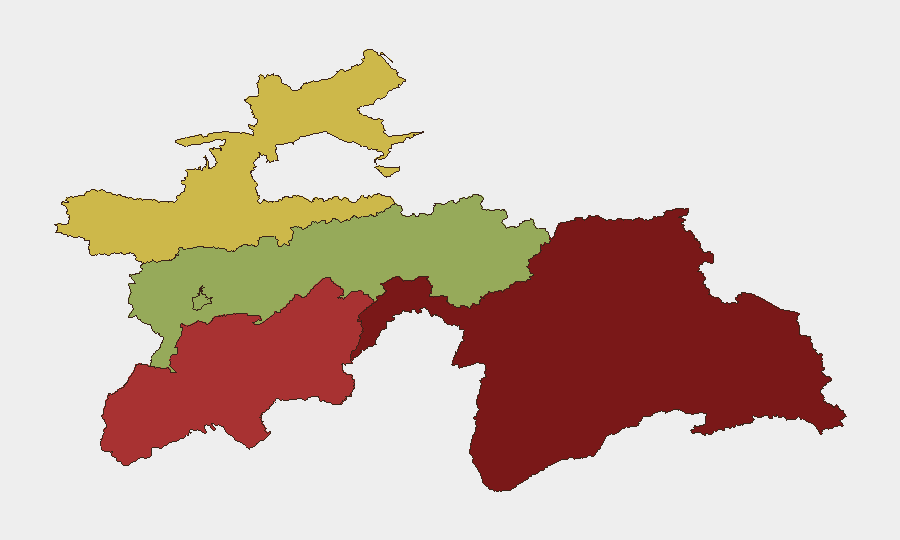
Situation Summary
Tajikistan remains a low-frequency threat environment globally (rank #131), with no confirmed security incidents recorded during the review week of 12–19 October 2026. The country faces persistent transnational risks along its Afghan and Kyrgyz borders—narcotics trafficking, weapons smuggling, and extremist infiltration—rather than active internal conflict. Western and Russian engagement on border security intensified this week, reflecting sustained international investment in containment capabilities. The security trajectory remains stable but dependent on border-state cooperation and insurgent activity across neighboring Afghanistan.
Key Developments
- Dushanbe — 14 October: The United Kingdom committed nearly £3 million over three years to enhance Tajikistan's border-security infrastructure under the Threat Detection and Response Capability program, targeting detection and response capacity at official crossing points.
- Tajik-Afghan border — 16 October: Russia pledged weapons, military equipment, and technical systems to strengthen Tajikistan's border defenses against militant infiltration, weapons trafficking, and narcotics smuggling during a Moscow security conference.
- Regional threat assessment — 16 October: Russia identified Islamic State Khorasan Province and allied extremist groups operating from Afghanistan as the principal terrorist threat to Central Asia, warning of attempted infiltration into neighboring states including Tajikistan.
- Tajikistan — 15 October: Tajikistan's lower house ratified the UN Convention against Cybercrime, establishing legal frameworks for international cooperation, electronic-evidence exchange, and cross-border criminal-asset recovery.
- Tajikistan — 18 October: The International Civil Aviation Organization (ICAO) will conduct an unlawful-interference security audit of Tajik aviation infrastructure from 7–19 November 2026, indicating planned compliance assessment rather than response to a recent incident.
- Diplomatic response — 15 October: Tajikistan's Foreign Ministry condemned attacks on Saudi Arabian airports and energy infrastructure; this was a diplomatic statement and does not reflect threats to Tajik territory or assets.
Highest-Risk Areas
Gorno-Badakhshan Autonomous Region (GBAO, risk score 92) and Khatlon Region (78) drive national risk concentration, primarily due to proximity to the Afghan border and the unresolved Tajik-Kyrgyz boundary dispute in high-altitude terrain. GBAO's remote geography, limited state presence, and porosity to cross-border militant movement and narcotics transit create sustained vulnerability. Khatlon, bordering Afghanistan directly, faces recurring infiltration and trafficking pressure. Sughd Region (65) presents secondary risk from northern Afghan border exposure. Dushanbe (42) remains the lowest-risk major urban center, though diplomatic and administrative infrastructure receives routine security attention. High-risk zones remain geographically peripheral and sparsely populated, limiting direct impact on corporate operations in major population centers.
How GeoBit Would Assist
Security teams would deploy AOI Monitoring & Early Warning on GBAO and Khatlon border zones to detect cross-border movement and militant activity with persistent alerting; Intelligence & OSINT (multi-language feeds, Telegram/social monitoring, entity extraction) to track extremist group rhetoric and recruitment linked to IS-K and affiliated networks; and Routing & Network Analysis to evaluate alternative supply-chain and personnel-movement corridors that avoid high-risk border transit points. These capabilities enable duty-of-care teams to anticipate rather than react to border-driven security shifts.
7-Day Outlook
No imminent security escalation is anticipated over the next seven days. Border-security investments announced this week (UK, Russia) will mature over months and do not reflect crisis conditions. ICAO's November audit poses no near-term operational disruption. Monitoring should remain routine, with heightened attention to any cross-border incident reporting in GBAO or Khatlon regions.
Highest-Risk Areas — Ranked
| # | State / Region | Risk |
|---|---|---|
| 1 | Gorno-Badakhshan Autonomous Region | 92 |
| 2 | Khatlon Region | 78 |
| 3 | Sughd Region | 65 |
| 4 | Districts of Republican Subordination | 58 |
| 5 | Dushanbe | 42 |
Sources
Previous Weekly Briefs
A new Tajikistan brief is written every Monday, covering the week — each with its own risk map and downloadable CSV. Use the calendar to go further back.
- October 12, 2026
- October 5, 2026
- September 28, 2026
- September 21, 2026
- September 14, 2026
- September 7, 2026
- September 3, 2026
📅 Browse past briefs by calendar →
Highlighted days have a brief. Tap a day for that day's map & analysis, or “csv” for that day's dataset ($5).
Atlas — our AI intelligence desk — emails them this snapshot personally. Nothing else, no list.