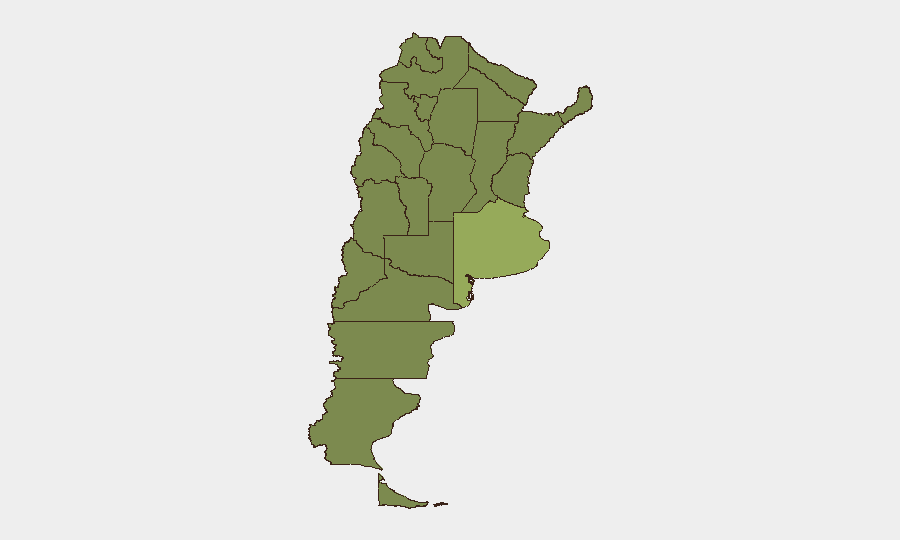
Situation Summary
Argentina remains a mid-tier regional security concern (rank #48 globally, composite threat score 33) with fragmented but persistent risks across crime, political friction, and localized violence. The past 48 hours have yielded routine criminal incidents—armed robbery, gang operations, and violence at mass gatherings—rather than systemic institutional instability. Buenos Aires Province and the capital city drive the majority of tracked threat signals, while secondary risk concentrates in the northwest and along the Atlantic coast. Overall trajectory remains stable but with elevated operational hazards for organizations in high-density urban and transport corridors.
Key Developments
- Palermo, Buenos Aires City – July 29–31, 2026: False bomb threat against the U.S. Embassy triggered evacuation on July 29; Argentine Federal Police and FBI arrested a 35-year-old caller in Perico, Jujuy on July 31 following geolocation analysis. No explosive device confirmed.
- Fuerte Apache (Ejército de los Andes), Buenos Aires City – July 29, 2026: Approximately 500 police officers with helicopter support conducted 24 simultaneous raids targeting a narcocriminal gang suspected in the July 18 killing of police officer Alan Molina. Operations focused on locating primary suspect "Gordo Tillín" and dismantling street-level drug distribution cells.
- Obelisk Area, Buenos Aires City – August 2–3, 2026: Fan celebrations for Argentina's national football team resulted in clashes between supporters and police, with at least nine arrests documented. Crowd-control incidents in central Buenos Aires indicate public-order volatility during mass gatherings.
- Neuquén City, Neuquén Province – August 2–3, 2026: A 30-year-old male was fatally injured following an altercation at a bar during national team celebrations; classified as homicide. Reflects elevated violent-crime risk during festive periods.
- Mar del Plata, Buenos Aires Province – August 2–3, 2026: Armed assailants robbed a party venue during event preparation, restraining staff at gunpoint and escaping with unspecified cash. Incident aligns with a broader pattern of armed robbery targeting event and commercial venues.
- Mendoza Province (Las Heras) – August 2–3, 2026: Ride-hailing app driver robbed by passenger at gunpoint; assailant took phone, license, and 100,000 pesos. Part of ongoing targeting of transport-app drivers across the province.
- Fiambalá, Catamarca Province – late July 2026: Heavy snowfall trapped multiple vehicles on roads; Argentine Gendarmerie conducted recovery and safety operations. Infrastructure disruption in mountainous regions may affect supply chains and mobility.
Highest-Risk Areas
Buenos Aires Province (score 53) and the Autonomous City of Buenos Aires (41.7) account for nearly 40% of tracked threat activity, driven by gang violence, armed robbery, and public-order incidents in high-density neighborhoods and transit hubs. Jujuy and Santiago del Estero provinces (both 26.4) follow as secondary risk zones, with Jujuy notably hosting the arrested bomb-threat caller and representing northern trafficking corridors. Western and Atlantic-coast provinces (Mendoza, Catamarca, Santa Fe, Córdoba) record moderate but consistent risks tied to narcocriminal activity, armed robbery, and violent crime against soft targets such as drivers and event venues. Risk concentration in Buenos Aires reflects both population density and organized-crime competition for drug distribution and theft; provincial risks relate primarily to supply-chain vulnerability and opportunistic violent crime.
How GeoBit Would Assist
Teams should employ AOI Monitoring & Early Warning to track arrest activity and gang operations in high-risk neighborhoods (Fuerte Apache, Palermo, La Matanza), OSINT fusion to correlate emerging criminal actor networks and threat-maker profiles (as in the bomb-threat case), and Routing & Network Analysis to plan secure transport corridors avoiding high-incident zones in Buenos Aires and Mendoza provinces. Intel Sweep and multi-language sentiment & temporal analysis of regional news and Telegram channels can detect early signals of mass gatherings and public-order escalation before incidents crystallize.
7-Day Outlook
Short-term risk trajectory remains elevated in Buenos Aires Province and capital city due to ongoing gang enforcement and continued targeting of commercial and transport assets. Festive periods and mass gatherings in public spaces will likely continue attracting both crowds and opportunistic violent crime, raising duty-of-care exposure for organizations with staff in central districts or event-based operations. No systemic political or institutional crisis is imminent, but operational security posture should remain heightened for personnel mobility and venue security through the week.
Highest-Risk Areas — Ranked
| # | State / Region | Risk |
|---|---|---|
| 1 | Buenos Aires Province | 53 |
| 2 | Autonomous City of Buenos Aires | 41.7 |
| 3 | Jujuy Province | 26.4 |
| 4 | Santiago del Estero Province | 26.4 |
| 5 | Misiones | 24.7 |
| 6 | Santa Fe Province | 24.7 |
| 7 | Córdoba | 24.7 |
| 8 | Entre Ríos Province | 24.2 |
| 9 | Salta Province | 23.6 |
| 10 | Catamarca Province | 23.6 |
| 11 | Neuquén Province | 23.6 |
| 12 | Chubut Province | 23.6 |
Sources
Previous Daily Briefs
A new Argentina brief is written every day — each with its own risk map and downloadable CSV. Here's the last week; use the calendar to go further back.
📅 Browse every day by calendar →
Highlighted days have a brief. Tap a day for that day's map & analysis, or “csv” for that day's dataset ($5).
Atlas — our AI intelligence desk — emails them this snapshot personally. Nothing else, no list.