Situation Summary
Djibouti remains a relatively stable transit hub in the Horn of Africa, ranking 100th globally in composite threat score with no tracked security incidents reported in the review week. However, the country's northern and western regions—particularly Obock and Tadjourah—face elevated humanitarian and maritime risks driven by irregular migration flows and regional instability spillover. The October 8–9 migrant boat capsizing near Guhere, which killed at least 139 people and left 84 missing, underscores ongoing dangers along Red Sea maritime corridors and has prompted official scrutiny by the Djibouti National Human Rights Commission.
Key Developments
- Off the coast of Obock, 8–9 October: An overcrowded migrant vessel traveling toward Yemen capsized in the Red Sea near Guhere during the night, resulting in at least 139 deaths (including 15 children) and 84 missing persons. The incident reflects deteriorating conditions aboard irregular migration routes originating from or transiting through Djibouti.
- Obock region, 18 October: The Djibouti National Human Rights Commission conducted an on-site visit to Obock following the capsizing, signaling official acknowledgment of the humanitarian crisis and likely initiation of formal inquiry into maritime safety and migrant protection failings.
- Regional backdrop (since mid-October): Foreign-ministry and diplomatic activity increased, reflecting concern over potential Houthi operations in the southern Red Sea and their downstream impact on Djibouti-based commercial, military, and humanitarian traffic. No new attacks or border incursions were confirmed within Djibouti proper during the review period.
Highest-Risk Areas
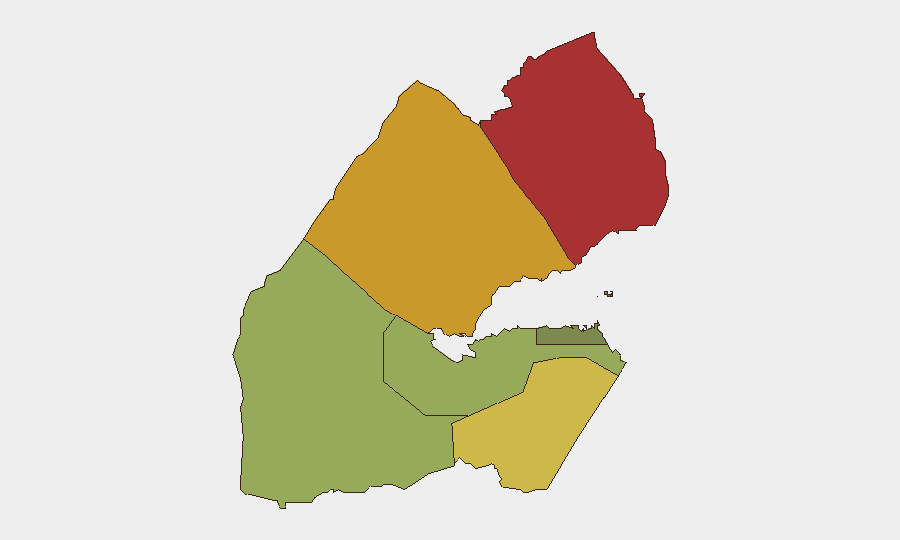
Obock (risk score 78) and Tadjourah (risk score 72) dominate the threat picture, driven by their roles as maritime migration hubs and proximity to Yemen and the Red Sea. Both regions face compounding risks: inadequate port safety infrastructure, limited coast guard capacity, and influx of desperate migrants and refugees fleeing Ethiopian conflict and broader Horn instability. Ali Sabieh (score 65), positioned near the Ethiopia border, remains vulnerable to cross-border spillover from ongoing regional fighting. The capital region (Djibouti city, score 35) and southern areas maintain significantly lower operational risk, making them safer operational bases for personnel and assets.
How GeoBit Would Assist
Security teams managing assets or personnel in Djibouti would benefit from Maritime & Aviation tracking to monitor vessel movements and identify overcrowded or distressed vessels before incidents occur; AOI Monitoring & Early Warning to maintain persistent watch over high-risk coastal zones and border regions (Obock, Tadjourah, Ali Sabieh) with alerting capability; and Intelligence & OSINT (Intel Sweep, Telegram/X monitoring, multi-language search) to detect emerging migrant flow patterns, humanitarian alerts, and Houthi or regional actor signals indicating imminent spillover. GIS & Spatial Analysis and Routing & Network Analysis support contingency planning and alternative travel corridors for staff.
7-Day Outlook
Near-term risk is unlikely to escalate sharply absent a major regional conflict event or maritime incident, though the regular arrival of migrants and refugees will sustain humanitarian and security pressures in Obock and Tadjourah through the forecasting horizon. Diplomatic and official attention to the October capsizing may result in temporary port-access restrictions or increased maritime patrols, affecting business-as-usual logistics. Duty-of-care teams should maintain elevated vigilance for maritime incidents and monitor Ethiopia-Djibouti border dynamics as a secondary threat vector.
Highest-Risk Areas — Ranked
| # | State / Region | Risk |
|---|---|---|
| 1 | Obock | 78 |
| 2 | Tadjourah | 72 |
| 3 | Ali Sabieh | 65 |
| 4 | Arta | 48 |
| 5 | Dikhil | 42 |
| 6 | Djibouti | 35 |
Sources
Previous Weekly Briefs
A new Djibouti brief is written every Monday, covering the week — each with its own risk map and downloadable CSV. Use the calendar to go further back.
- October 12, 2026
- October 5, 2026
- September 28, 2026
- September 21, 2026
- September 14, 2026
- September 7, 2026
- September 1, 2026
📅 Browse past briefs by calendar →
Highlighted days have a brief. Tap a day for that day's map & analysis, or “csv” for that day's dataset ($5).
Atlas — our AI intelligence desk — emails them this snapshot personally. Nothing else, no list.