Situation Summary
Germany remains a moderate-risk environment (global rank #127, composite score 6) with acute concentration of threat activity in Berlin. A vehicle-ramming attack at a Berlin Pride event on 26–27 July resulted in one fatality and 16+ injuries; the suspected perpetrator was identified as linked to Islamist extremism and was fatally engaged by police on 27 July during apprehension. The incident has triggered tightened security measures around public gatherings nationwide and renewed focus on vehicle-borne attack vectors in high-footfall urban areas.
Key Developments
- Berlin, Tiergarten / Brandenburg Gate area, 26–27 July: A vehicle rammed into crowds at Berlin Pride, killing one woman and injuring at least 16 people. Police identified the suspect as Abdul B. and confirmed Islamist extremism as the suspected motive.
- Berlin, Spandau (allotment garden complex), 27 July: Police fatally engaged the primary suspect during a manhunt following the Pride ramming incident after he allegedly attempted to attack officers with a bladed weapon.
- Berlin, nationwide, 27 July: Authorities elevated security protocols around public events and gatherings in response to the attack; multiple German and international outlets reported renewed travel caution and police warnings tied to crowded venues.
- Germany, 27 July–1 August: Vehicle-ramming incidents remain a persistent threat vector in German security planning; the Berlin attack reactivated historical patterns of concern flagged across federal and state law-enforcement communications.
Highest-Risk Areas
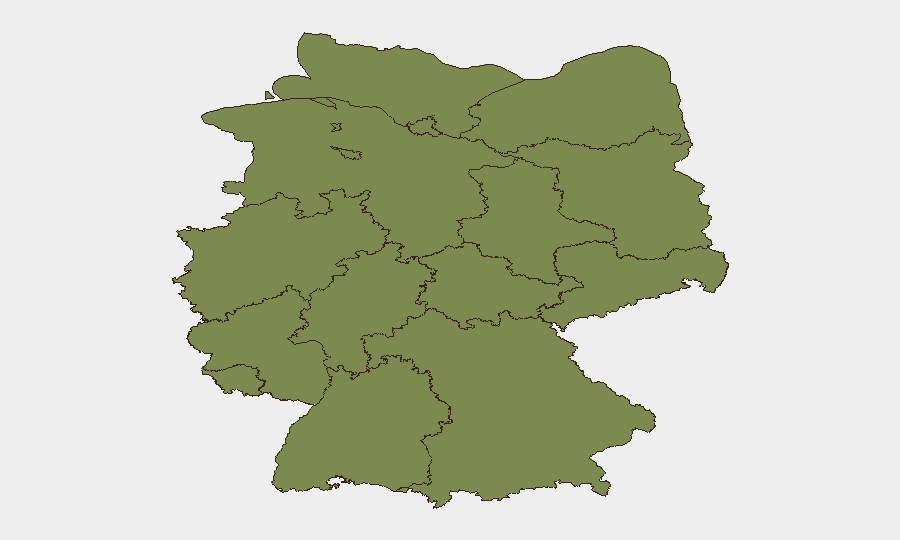
Berlin dominates the threat landscape with a composite risk score of 31.8—roughly four times higher than the second-ranked region (Bavaria, 7.7). The capital's concentration of political institutions, high-density public events, and symbolic significance make it the primary locus of both protest activity and extremist targeting. Hamburg (6.2) and Lower Saxony (5.3) rank third and fourth; all other states remain below 3.0, indicating that security risk in Germany is heavily spatially clustered. Duty-of-care teams with personnel or assets in Berlin should assume elevated threat environment for public gatherings and transport hubs through the near term.
How GeoBit Would Assist
Security teams should employ Intel Sweep and global event feeds for real-time tracking of protest, extremist, and public-gathering disruptions in Berlin and other high-risk zones; X/Twitter & Telegram OSINT and multi-language search will surface emerging threat narratives and extremist rhetoric before activation. AOI Monitoring & Early Warning with persistent watch on Berlin's major event venues, transport nodes, and public squares will provide continuous alerting on gathering size, police posture, and sentiment shifts. GIS & Spatial Analysis and Routing & Network Analysis enable rapid identification of alternative routes and safer venue planning for staff movement and events.
7-Day Outlook
Security posture in Berlin will remain elevated through early August as law-enforcement investigation consolidates and public-event organizers implement revised venue-access protocols. Risk of secondary attack or copycat vehicle-ramming activity in other major German cities cannot be excluded over the next 7 days; Hamburg and Munich are secondary watch points. State-level security agencies are expected to issue updated guidance on crowd management and vehicle-access control at public gatherings by 2–3 August.
Highest-Risk Areas — Ranked
| # | State / Region | Risk |
|---|---|---|
| 1 | Berlin | 31.8 |
| 2 | Bavaria | 7.7 |
| 3 | Hamburg | 6.2 |
| 4 | Lower Saxony | 5.3 |
| 5 | Schleswig-Holstein | 2.9 |
| 6 | Saxony | 2.6 |
| 7 | North Rhine-Westphalia | 2.6 |
| 8 | Hesse | 2 |
| 9 | Rhineland-Palatinate | 1.8 |
| 10 | Baden-Württemberg | 1.8 |
| 11 | Thuringia | 1.8 |
| 12 | Mecklenburg-Vorpommern | 1.8 |
Sources
Previous Daily Briefs
A new Germany brief is written every day — each with its own risk map and downloadable CSV. Here's the last week; use the calendar to go further back.
📅 Browse every day by calendar →
Highlighted days have a brief. Tap a day for that day's map & analysis, or “csv” for that day's dataset ($5).
Atlas — our AI intelligence desk — emails them this snapshot personally. Nothing else, no list.