Situation Summary
India remains at composite threat score 71 (rank #17 globally), with 953 tracked events. The security environment is characterized by concurrent civil-unrest risk in the national capital, industrial safety failures in critical infrastructure, ongoing monsoon-driven infrastructure disruption, and diplomatic friction following loss of Indian nationals in an international conflict zone. The trajectory reflects elevated near-term volatility concentrated in Delhi and select high-risk states, with cascading effects on travel, protest response, and workforce safety.
Key Developments
- New Delhi, Delhi – 24–25 July 2026: Delhi Police imposed prohibitory orders under Section 163 BNSS across New Delhi district and deployed approximately 5,000 police and paramilitary personnel ahead of the Cockroach Janta Party's "Chalo Sansad" march protesting alleged NEET exam irregularities. High-security zones established at Parliament area, Jantar Mantar, Central Vista, Connaught Place, and Shankar Chowk, with intensified vehicle checks and CCTV surveillance. Police publicly announced no permission granted for the march and warned participants face prosecution under Section 223 BNS.
- Samardung village, Sikkim – 24–25 July 2026: A suspected gas explosion in a tunnel at the NHPC Teesta hydro project caused tunnel collapse, killing at least 10 workers and leaving 17 feared trapped. Hazardous gas contamination is hampering active rescue operations, creating acute industrial-safety and critical-infrastructure risk in Himalayan region.
- New Delhi, India – 24–25 July 2026: India's Ministry of External Affairs summoned the Russian Chargé d'Affaires to lodge "grave concerns and unequivocal condemnation" over a missile/drone attack on commercial vessel MV Golden Leo (departing Odesa) that killed four Indian nationals on 23 July. Diplomatic protest signals escalating international-conflict risk affecting Indian maritime workers and nationals abroad.
- Delhi, India – 23–24 July 2026: Building collapse in Delhi killed at least four people during heavy monsoon rains. Part of broader rain-triggered landslides and travel disruption across multiple regions, indicating elevated urban infrastructure vulnerability during monsoon season.
- India (national) – 23–24 July 2026: Heavy monsoon activity triggered landslides and travel disruption across parts of the country, elevating road-safety and infrastructure-disruption risk nationally in the 48-hour window.
Highest-Risk Areas
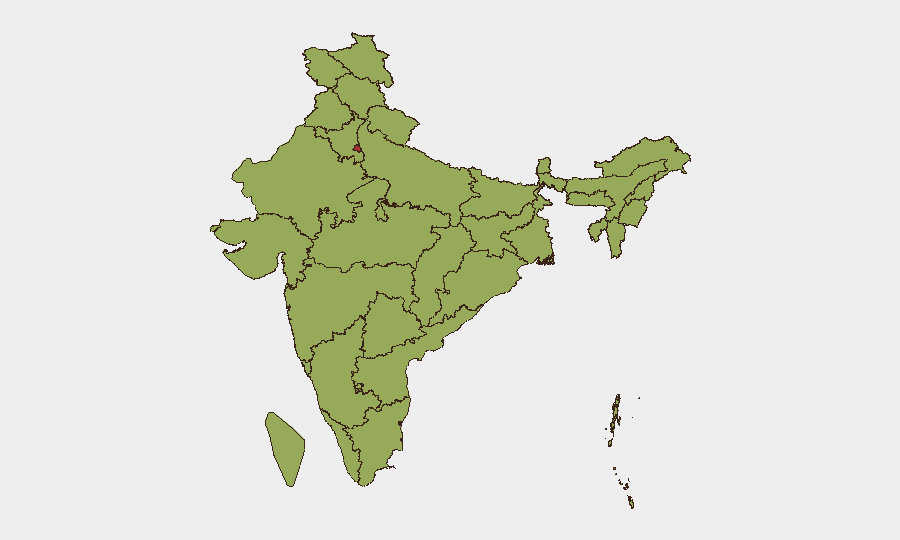
Delhi dominates sub-national rankings at 79.5, driven by the convergence of major protest activity, critical infrastructure concentration, and monsoon-related incidents. Maharashtra (56.6), Uttarakhand (54.4), Tamil Nadu (53.6), and Bihar (53.5) form a secondary tier of elevated concern; these states experience compounding pressures from civil unrest, resource stress, and seasonal hazards. The concentration of police/paramilitary deployment and prohibitory orders in Delhi indicates authorities assess imminent high civil-unrest probability, while Sikkim's industrial incident underscores critical-infrastructure vulnerability in remote Himalayan zones where rescue and emergency-response capacity remains constrained.
How GeoBit Would Assist
Teams with personnel or assets in India should employ Intel Sweep and multi-language OSINT (X/Twitter, Telegram, YouTube) to track real-time protest messaging, police advisories, and crowd-coordination signals around the Delhi march and related political activity. AOI Monitoring & Early Warning on Parliament zone, Jantar Mantar, and major transport corridors will provide persistent alerting if prohibitory orders are lifted, barriers breach, or violence escalates. Routing & Network Analysis supports alternative-route planning for travel in Delhi and monsoon-affected regions, while Sentiment & Temporal Analysis on diplomatic statements and labor unrest signals will flag secondary protest contagion risk.
7-Day Outlook
The Delhi protest prohibition remains in force through the Parliament monsoon session, likely containing street activity but risking flash-point clashes if barriers fail. Monsoon intensity is forecast to persist through late July, maintaining elevated infrastructure-failure and travel-disruption risk nationally. Rescue operations at the Sikkim hydro project will dominate industrial-safety discourse; outcome will shape labor-safety policy response and workforce morale across India's hydropower sector.
Highest-Risk Areas — Ranked
| # | State / Region | Risk |
|---|---|---|
| 1 | Delhi | 79.5 |
| 2 | Maharashtra | 56.6 |
| 3 | Uttarakhand | 54.4 |
| 4 | Tamil Nadu | 53.6 |
| 5 | Bihar | 53.5 |
| 6 | Uttar Pradesh | 53 |
| 7 | Punjab | 52.3 |
| 8 | Ladakh | 52.2 |
| 9 | West Bengal | 52.1 |
| 10 | Karnataka | 51.5 |
| 11 | Jammu and Kashmir | 51.4 |
| 12 | Telangana | 51.3 |
Sources
Previous Daily Briefs
A new India brief is written every day — each with its own risk map and downloadable CSV. Here's the last week; use the calendar to go further back.
📅 Browse every day by calendar →
Highlighted days have a brief. Tap a day for that day's map & analysis, or “csv” for that day's dataset ($5).
Atlas — our AI intelligence desk — emails them this snapshot personally. Nothing else, no list.