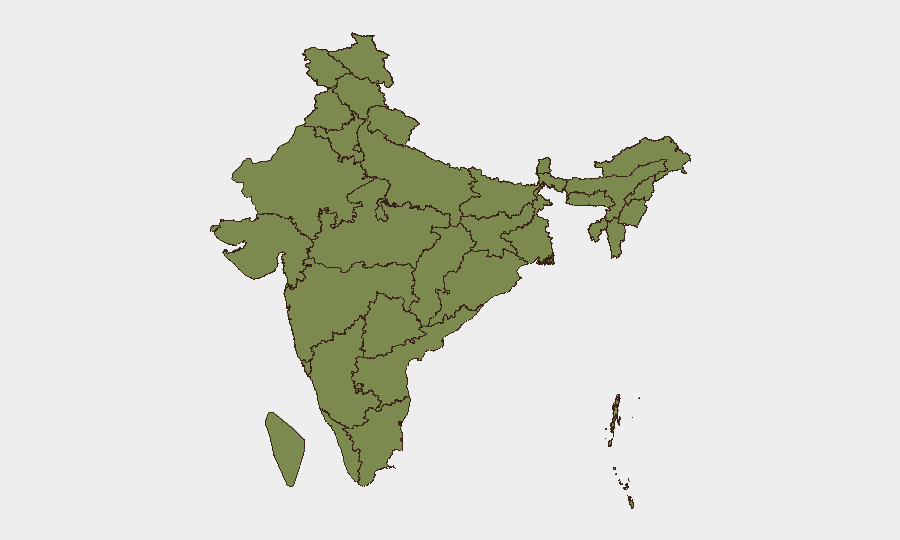
Situation Summary
India maintains a composite threat score of 25 (global rank #63), with 906 tracked events in the current assessment window. The security environment is characterized by concentrated risk in the National Capital Region and select metropolitan areas, driven by political unrest, monsoon-related infrastructure incidents, and cross-border tensions. The threat trajectory remains stable but volatile in Delhi and Maharashtra, where political demonstrations and climate-related disruptions are intersecting with routine governance friction.
Key Developments
- Sikkim, Samardung village (NHPC Teesta project) — July 2026: A tunnel collapse at a hydroelectric construction site killed at least 10 workers, with additional personnel feared trapped; rescue operations ongoing in hazardous conditions. This incident reflects infrastructure vulnerability during monsoon season.
- Delhi — July 22, 2026: Delhi Police detained opposition leaders Rahul Gandhi, Priyanka Gandhi, and Akhilesh Yadav at protest sites near the Prime Minister's residence, signaling heightened political tension and law-enforcement assertiveness ahead of parliamentary activity.
- New Delhi — July 20–23, 2026: Police implemented prohibitory orders, vehicle checkpoints, and metro station closures around Jantar Mantar and Parliament following sustained protests over alleged NEET (National Eligibility cum Entrance Test) irregularities, indicating ongoing civil unrest and security service response.
- Delhi — July 2026 (rain events): At least four deaths reported in building collapses across the capital linked to monsoon rainfall, compounding infrastructure stress and mobility disruption.
- India–Russia maritime incident — July 2026: India summoned a Russian diplomat following an attack on a cargo vessel departing Odesa that killed four Indian nationals; reflects external maritime security exposure affecting Indian citizens and shipping routes.
- India–Pakistan border posture — July 2026: India formally accused Pakistan of violating a recent ceasefire understanding, citing violations across land, air, and sea domains; indicates renewed cross-border tension and potential escalation risk in contested regions.
Highest-Risk Areas
Delhi dominates the sub-national risk profile (score 32.9), driven by political demonstrations, security-force responses, and monsoon-related infrastructure collapse. Maharashtra (14.4) follows at significant distance, reflecting urban crime and administrative friction in metropolitan Mumbai and surroundings. Uttar Pradesh, Tamil Nadu, and Punjab cluster in the 6–7 range, indicating distributed but lower-intensity civil and administrative stress. The concentration of risk in Delhi reflects the convergence of parliamentary activity, sustained political opposition protests, and climate-amplified infrastructure vulnerability, while the sharp drop-off to other states suggests the capital remains the primary focus for duty-of-care monitoring.
How GeoBit Would Assist
Security teams should deploy Intel Sweep and X/Twitter OSINT to track real-time political protest evolution, detention announcements, and parliamentary activity in Delhi and state capitals. AOI Monitoring & Early Warning on Jantar Mantar, Parliament precincts, and metro nexuses provides persistent alerting on protest escalation and mobility constraints. Satellite & Imagery analysis on Sikkim's Teesta site and monsoon-affected infrastructure across high-risk states enables rapid detection of structural or safety incidents affecting supply chains and personnel movement.
7-Day Outlook
Political unrest in Delhi is likely to persist through parliamentary sessions and opposition pressure cycles, with periodic detention actions and protest responses creating recurring mobility and security friction. Monsoon intensity is expected to remain elevated through early August, sustaining infrastructure incident risk in Uttarakhand, Sikkim, and hill-adjacent regions. Cross-border tensions may see diplomatic messaging escalation but limited operational military action absent a significant trigger.
Highest-Risk Areas — Ranked
| # | State / Region | Risk |
|---|---|---|
| 1 | Delhi | 32.9 |
| 2 | Maharashtra | 14.4 |
| 3 | Uttar Pradesh | 7.3 |
| 4 | Tamil Nadu | 7.2 |
| 5 | Punjab | 6.8 |
| 6 | Uttarakhand | 6.8 |
| 7 | Bihar | 6.8 |
| 8 | Gujarat | 6.1 |
| 9 | West Bengal | 5.8 |
| 10 | Haryana | 5.3 |
| 11 | Madhya Pradesh | 4.9 |
| 12 | Jammu and Kashmir | 4.8 |
Sources
Previous Daily Briefs
A new India brief is written every day — each with its own risk map and downloadable CSV. Here's the last week; use the calendar to go further back.
📅 Browse every day by calendar →
Highlighted days have a brief. Tap a day for that day's map & analysis, or “csv” for that day's dataset ($5).
Atlas — our AI intelligence desk — emails them this snapshot personally. Nothing else, no list.