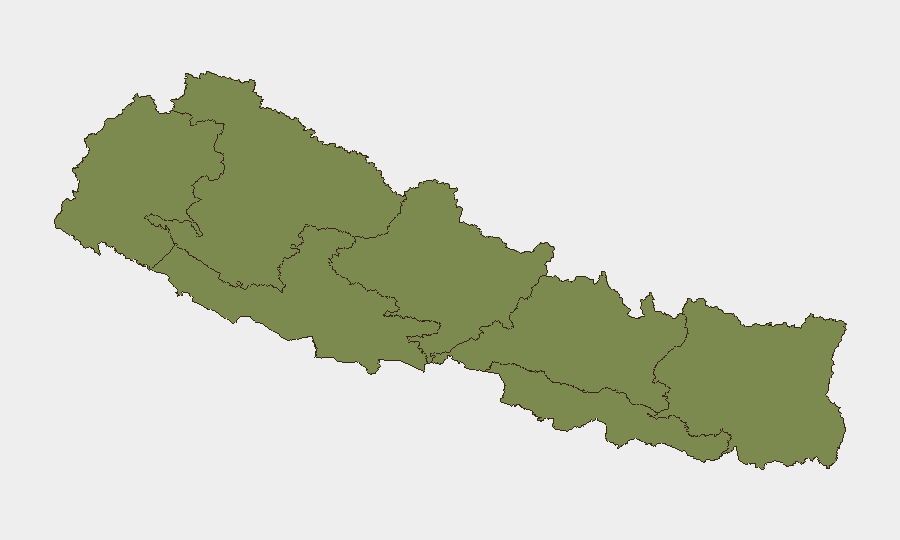
Situation Summary
Nepal remains a composite-threat environment (global rank #108, score 8/100) characterized by dispersed political instability, localized crime and trafficking, and periodic civil unrest rather than acute conflict. The past 48 hours have registered multiple concurrent signals—road closures on critical national corridors, narcotics enforcement, self-immolation cases, provincial government budget dysfunction, and ministerial pressure within the ruling coalition—indicating cumulative stress across governance, public order, and transportation networks. Risk is heavily concentrated in Bagamati Province (composite score 31.9), which encompasses the capital region and provincial administration, while secondary concern zones include Karnali and Gandaki provinces. The trajectory suggests continued friction within the coalition government and episodic disruption to inter-provincial commerce and services.
Key Developments
- Chitwan District (Narayanghat–Muglin Road & Prithvi Highway), 19 July evening: Local administration ordered overnight closure of the Narayanghat–Muglin road and Prithvi Highway section toward Chitwan from 22:00, disrupting east–west traffic through a primary national corridor; closure reason not independently specified in available reporting.
- East–West Highway, Makwanpur District, 18–19 July: Police arrested two individuals and seized 109 kg of marijuana from a vehicle on the East–West Highway, indicating continued narcotics trafficking on a major inter-provincial artery.
- Bagmati Province Government (Hetauda), 18–19 July: CPN-UML ministers in the Bagmati Province government were instructed to resign amid uncertainty over continuation of the Nepali Congress–UML coalition government; this signals active political destabilization in Nepal's most volatile province.
- Sudurpashchim Province Government Assembly, 18–19 July (fiscal year 2026/27 commencement): The provincial government failed to secure assembly approval for the 2026/27 budget, entering a partial budget vacuum and impairing public expenditure authority from the fiscal year start date.
- Multiple locations (Kathmandu, Sarlahi District, Rautahat District), mid-to-late July: Three self-immolation deaths (ride-hailing driver, businessman, Sarlahi resident) and one additional self-immolation with severe burns in Garuda Municipality (Rautahat) have been reported; these incidents correlate with renewed political protest activity and public-order concern.
- Hetauda Sub-Metropolitan City–6, Makwanpur District, 18 July: A 13-year-old child drowned in an unprotected water-filled pit near Karra Khola, reflecting monsoon-season infrastructure hazards and child-safety risks in construction zones.
Highest-Risk Areas
Bagamati Province (risk score 31.9) dominates the national threat profile, concentrating government instability, coalition friction, protest activity, and capital-region crime. Current ministerial resignations and budget pressures add acute near-term governance risk. Karnali Province (18.2) and Gandaki Province (14.4) represent secondary concern zones associated with localized political disapproval signals and administrative friction; Karnali particularly warrants monitoring for escalation. The remaining five provinces (Lumbini, Koshi, Sudurpashchim, Madhesh) register significantly lower composite scores but Sudurpashchim's current budget impasse may constrain service delivery and amplify local grievance.
How GeoBit Would Assist
GeoBit's AOI Monitoring & Early Warning capability on Bagamati Province government and coalition activity would provide persistent alerting to changes in ministerial composition, legislative action, or protest clustering. Routing & Network Analysis would identify alternative east–west transport corridors if primary routes (Narayanghat–Muglin, East–West Highway) face recurring closure. Sentiment & Temporal Analysis of public statements, X/Twitter, and local media would track self-immolation clustering, protest momentum, and coalition stability signals before operational impact.
7-Day Outlook
Coalition government instability is likely to persist, with further ministerial pressure or formal government restructuring possible; Bagmati Province will remain the focal point for political friction and public-order incidents. Road closures and intermittent traffic disruption should be anticipated on primary corridors (Prithvi Highway, East–West Highway, Narayanghat–Muglin) pending clarification of administrative orders. Overall threat level is unlikely to escalate to acute violence or mass protest in the 7-day window, but governance uncertainty and self-immolation clustering warrant continuous monitoring for secondary social-order effects.
Highest-Risk Areas — Ranked
| # | State / Region | Risk |
|---|---|---|
| 1 | Bagamati Province | 31.9 |
| 2 | Karnali Province | 18.2 |
| 3 | Gandaki Province | 14.4 |
| 4 | Lumbini Province | 7.6 |
| 5 | Koshi Province | 3 |
| 6 | Sudurpashchim Province | 1.9 |
| 7 | Madhesh Province | 1.9 |
Sources
Previous Daily Briefs
A new Nepal brief is written every day — each with its own risk map and downloadable CSV. Here's the last week; use the calendar to go further back.
📅 Browse every day by calendar →
Highlighted days have a brief. Tap a day for that day's map & analysis, or “csv” for that day's dataset ($5).
Atlas — our AI intelligence desk — emails them this snapshot personally. Nothing else, no list.