Situation Summary
North Korea remains a persistently high-control, high-opacity environment with chronic restrictions on movement, communication, and foreign access. As of 9 July 2026, no new, verifiable security incidents or travel-risk events have been confirmed from open sources within the last 24–48 hours. The composite threat ranking (#28 globally, score 66) reflects the structural risk profile—political repression, military posturing, cyber activity, and infrastructure fragility—rather than acute, location-specific escalation in this reporting window.
Key Developments
No new, cross-confirmed incidents meeting current criteria (last 24–48 hours, specific location, multiple independent sources) have been identified.
Open-source monitoring over the last two days has returned no credible reporting of:
- Armed clashes on the DMZ or maritime boundaries
- Announced military exercises, missile launches, or nuclear tests
- Civil unrest, protests, or public disturbances with confirmed date/location
- Infrastructure failures (power, transport, communications)
- Policy changes affecting foreign travel or quarantine protocols
The GeoBit event feed notes internal "Disapprove" statements and relations adjustments (7 July) and arrest/detention actions involving U.S. persons (8 July), consistent with ongoing diplomatic tension and the regime's pattern of foreign-national detention. These reflect persistent threat vectors rather than new operational incidents. Verification of detail, timing, and location remains limited by North Korea's information controls.
Highest-Risk Areas
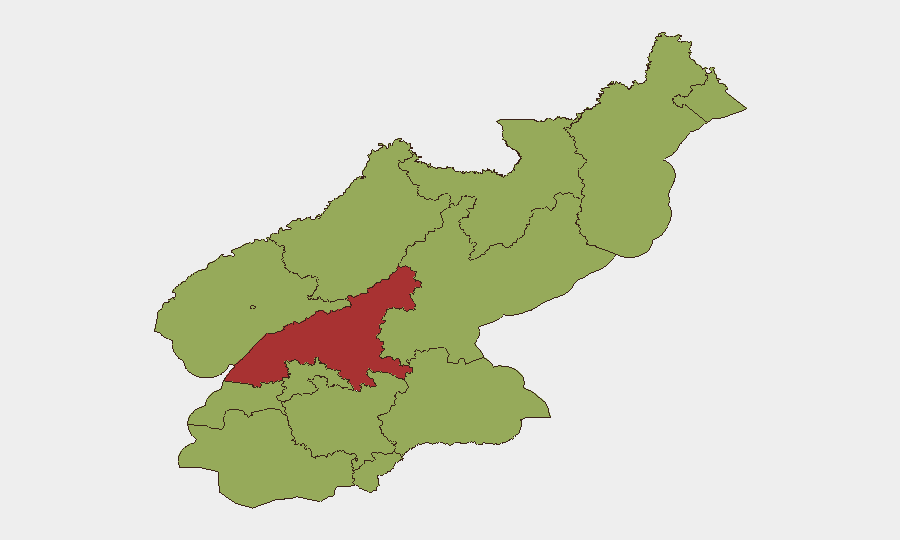
South Pyongan (risk 76) significantly exceeds all other provinces and drives the national composite score; the province borders South Korea and contains critical infrastructure and security-force concentration, amplifying both cross-border incident risk and state-security enforcement activity. Pyongyang (50.3) reflects capital-city political and security dynamics. The remaining nine provinces cluster at risk scores of 46, indicating a relatively flat risk distribution across most of the country—a signature of systemic, nationwide constraints on information, movement, and livelihood rather than localized hotspots. Border regions (Ryanggang, North Hamgyong, North Pyongan, Chagang) carry structural vulnerability to smuggling, defection, and cross-border security incidents; interior provinces reflect chronic resource scarcity and regime-control mechanisms.
How GeoBit Would Assist
Security and duty-of-care teams with personnel or assets in North Korea would use GeoBit's AOI Monitoring & Early Warning capability to maintain persistent watch on high-risk provinces (particularly South Pyongan and Pyongyang) for emerging policy changes, border incidents, or infrastructure disruptions, with immediate alerting on cross-border military activity or travel restrictions. Multi-language OSINT (X/Telegram, YouTube, radio SIGINT) and entity extraction enable continuous scanning of regime statements, defector networks, and foreign-correspondent channels for early signals of political upheaval, detentions, or sanctions enforcement. Conflict & Military tracking (force posture, weapons tests) and regime-stability analysis provide strategic warning on military escalation or internal factional shifts that could affect in-country safety or exit routes.
7-Day Outlook
The short-term trajectory is stable but tense. Diplomatic friction with the U.S. (evidenced by the recent detention actions) is unlikely to produce sudden military escalation absent a major external trigger. Persistent restrictions on movement and communication will continue to limit visibility into ground-truth conditions; any significant incident will likely surface with a lag through international media or NGO reporting rather than real-time open-source feeds.
Highest-Risk Areas — Ranked
| # | State / Region | Risk |
|---|---|---|
| 1 | South Pyongan | 76 |
| 2 | P'yŏngyang | 50.3 |
| 3 | Ryanggang | 46 |
| 4 | North Hamgyong | 46 |
| 5 | North Pyongan | 46 |
| 6 | Chagang | 46 |
| 7 | Nampo | 46 |
| 8 | South Hwanghae | 46 |
| 9 | North Hwanghae | 46 |
| 10 | South Hamgyong | 46 |
| 11 | Kaesong | 46 |
| 12 | Kangwon | 46 |
Sources
Previous Daily Briefs
A new North Korea brief is written every day — each with its own risk map and downloadable CSV. Here's the last week; use the calendar to go further back.
📅 Browse every day by calendar →
Highlighted days have a brief. Tap a day for that day's map & analysis, or “csv” for that day's dataset ($5).
Atlas — our AI intelligence desk — emails them this snapshot personally. Nothing else, no list.