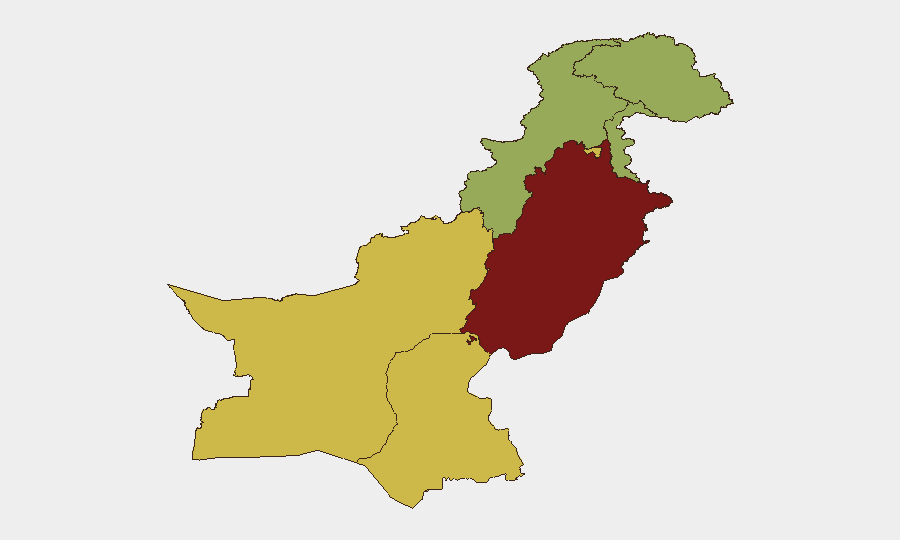
Situation Summary
Pakistan remains at elevated baseline threat (global rank #33, composite score 78), driven primarily by persistent insurgency and organized crime across multiple provinces. Over the past 24–48 hours, the military and federal security apparatus have launched a coordinated nationwide intensification of counter-terrorism and anti-crime operations—branded as a renewed phase of "Operation Hardball"—signaling recognition of sustained militant and criminal activity across urban and remote zones. Punjab (the highest-risk sub-national jurisdiction at 84.9) and Balochistan (70.7) are commanding operational focus and visible security posture increases. The current trajectory points toward sustained high operational tempo and checkpoint/movement friction, particularly in conflict-prone districts and inter-city corridors.
Key Developments
- Quetta & Balochistan districts (8–9 July 2026): Director General ISPR held emergency press conference detailing multiple recent terrorist incidents around Quetta and nearby areas, announcing intensified counter-terror operations and elevated alert status with reinforced road checkpoints and movement restrictions.
- Makran Division, Balochistan coastal belt (8–9 July 2026): Military spokesman referenced ongoing armed incidents and militant activity along the Makran and coastal zones; security forces have increased convoy movements and reinforced checkposts between Turbat and Gwadar corridors in response to reported threats.
- Karachi, Sindh (8–9 July 2026): Police and paramilitary units conducted targeted raids across multiple Karachi localities against dacoit and militant networks under Operation Hardball branding; overnight operations resulted in arrests in high-crime neighborhoods with temporary traffic disruption.
- Interior Sindh riverine areas (8–9 July 2026): Security forces launched fresh operations against bandit gangs in katcha (riverine) zones along the Indus; intermittent road closures reported near these areas as part of coordinated anti-crime and anti-militancy effort.
- Lahore & Rawalpindi, Punjab (8–9 July 2026): Heightened counter-terror readiness and visible security deployments increased over the past two days; snap checkpoints, patrols, and intelligence-based raids noted in major urban centers under nationwide federal and provincial directives.
- National security posture (8–9 July 2026): Across official briefings and commentary, officials and analysts characterized the last 24–48 hours as part of a coordinated nationwide escalation, with emphasis on heightened travel and movement risk around checkpoints, sensitive installations, and conflict-prone districts.
Highest-Risk Areas
Punjab's top-ranking risk score (84.9) reflects its scale, urbanization, and sustained militant infiltration across Lahore, Rawalpindi, and smaller cities; the current operation surge indicates security agencies perceive active cells and networks within the province. Balochistan (70.7) remains acutely volatile due to entrenched separatist and extremist groups, evidenced by the emergency ISPR briefing and ongoing military operations in Quetta and the Makran corridor. Sindh (68.6) faces organized crime, gang activity, and militant presence in Karachi and riverine zones, necessitating parallel anti-crime and counter-terrorism effort. These three provinces together account for the majority of tracked threat events (781 nationwide) and are the primary drivers of Pakistan's composite threat ranking.
How GeoBit Would Assist
Security teams monitoring corporate personnel and assets in Pakistan should employ AOI Monitoring & Early Warning on Quetta, Karachi, Lahore, and border zones to track escalating operational tempo and checkpoint activity; Routing & Network Analysis to generate real-time alternate inter-city corridors avoiding heightened checkpoints and militant activity; and OSINT fusion (Intel Sweep, X/Telegram OSINT, and multi-language search) to corroborate military announcements, track security force posture changes, and detect emerging regional incidents ahead of mainstream reporting.
7-Day Outlook
Coordinated counter-terror operations are expected to remain elevated across Punjab and Balochistan through at least mid-July, with persistent checkpoint delays and movement restrictions on major routes. Security incidents in Balochistan may spike as operations intensify; simultaneous risk of secondary attacks or clashes in urban centers (Karachi, Lahore) where militant networks are targeted. Baseline vigilance for travel and supply-chain disruption should remain heightened.
Highest-Risk Areas — Ranked
| # | State / Region | Risk |
|---|---|---|
| 1 | Punjab | 84.9 |
| 2 | Balochistan | 70.7 |
| 3 | Sindh | 68.6 |
| 4 | Islamabad Capital Territory | 63.7 |
| 5 | Khyber Pakhtunkhwa | 57.1 |
| 6 | Gilgit-Baltistan | 54.9 |
| 7 | Azad Kashmir | 54.9 |
Sources
Previous Daily Briefs
A new Pakistan brief is written every day — each with its own risk map and downloadable CSV. Here's the last week; use the calendar to go further back.
📅 Browse every day by calendar →
Highlighted days have a brief. Tap a day for that day's map & analysis, or “csv” for that day's dataset ($5).
Atlas — our AI intelligence desk — emails them this snapshot personally. Nothing else, no list.