Situation Summary
Palau remains a low-threat jurisdiction (global rank #181) with no discrete security incidents recorded in the current reporting window. However, the past week has surfaced three distinct operational concerns—a fatal maritime incident, drug-smuggling arrests at the primary airport, and escalating public controversy over a planned U.S. military port expansion—that collectively warrant monitoring for duty-of-care and asset-protection purposes. Overall threat trajectory is stable, but emerging geopolitical sensitivities and organized-crime activity merit sustained attention.
Key Developments
- Peleliu Wall, Peleliu State (14–19 Sep): Official search for two missing experienced divers, missing since 7 Sep, concluded as of 11 Sep with low survival probability. Palau Bureau of Public Safety is investigating the maritime safety incident involving foreign tourists; no foul play indicated, but case remains unresolved and reflects maritime hazard exposure.
- Koror International Airport (12 & 14 Sep, reported 18 Sep): Three Filipina passengers arrested on separate United Airlines arrivals from Manila after 337.82 grams of methamphetamine were discovered in body cavities. A fourth suspect (spouse of one arrestee) charged with felony narcotics trafficking; bail set at US$2 million combined. Indicates organized drug-smuggling via airport with Philippines nexus.
- Koror, Ministry of Justice (15 Sep): Australia delivered 24 vehicles to Palau's Bureau of Public Safety to enhance emergency response and law-enforcement operational capacity. Fleet reportedly already deployed during Pacific Islands Forum Leaders Meeting in Koror, signaling improved security infrastructure.
- Malakal Harbor, Koror (16–18 Sep): U.S. Army announced plans to reconstruct Palau's primary seaport to accommodate naval warships. Local petition with ~2,000 signatures filed with Congress demanding security guarantees amid concerns that military infrastructure could draw Palau into U.S.–China confrontation.
- Malakal Wharf, Koror (18 Sep): Planned dredging operations for military port expansion are projected to destroy approximately 4.26 hectares of coral in a UNESCO World Heritage zone. Environmental advocates framed the project as a dual threat to coastal resilience and fisheries livelihoods.
- Koror, public discourse (17 Sep): Social media amplification of local war-risk anxieties and wildlife concerns related to U.S. military buildup, contributing to heightened political debate and reputational sensitivity rather than immediate physical security incidents.
- Nationwide (19 Sep): Commercial travel-risk assessment reaffirmed Palau at U.S. State Department Level 1 ("Exercise Normal Precautions"), with no active disaster or health alerts, though flagged drug-smuggling arrests and defense infrastructure controversy as emerging monitoring issues.
Highest-Risk Areas
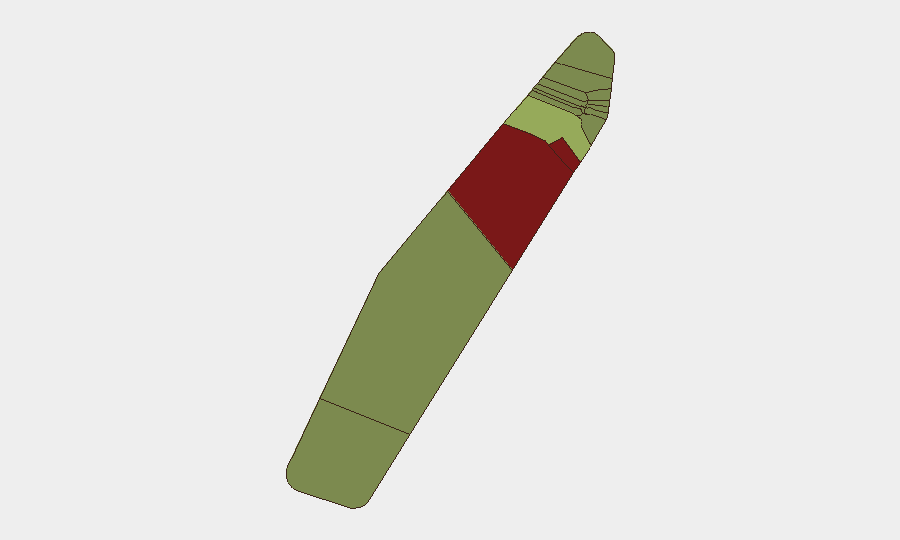
Peleliu and Angaur states rank significantly above all others (risk scores 92 and 88, respectively), though both are geographically remote and sparsely populated; their elevation likely reflects maritime hazard exposure and limited emergency response infrastructure. Koror (score 45) remains the primary hub of economic activity, tourism, and government operations, making it the practical focal point for duty-of-care planning. The concentration of recent incidents—dive operations, airport narcotics cases, and military port development—all occur in or funnel through Koror, reinforcing it as the zone of most direct relevance to corporate presence and asset management.
How GeoBit Would Assist
Continuous AOI Monitoring & Early Warning on Koror's airport and port facilities would detect drug-trafficking patterns and security-force deployments. OSINT fusion across local media, social networks, and official channels would track evolving sentiment around U.S. military projects and identify emerging civil-society mobilization. Maritime & Aviation tracking combined with environmental & health data integration would support risk assessment for dive operations and port-development impacts on supply chains.
7-Day Outlook
No escalation of physical security incidents is forecast. Controversy over the military port project will likely persist in public debate and civil-society forums over coming weeks; geopolitical sensitivity remains rhetorical rather than operationally acute. Drug-smuggling detection and prosecution will continue as a law-enforcement priority, with no indication of organized gang activity or territorial conflict on the islands themselves.
Highest-Risk Areas — Ranked
| # | State / Region | Risk |
|---|---|---|
| 1 | Peleliu | 92 |
| 2 | Angaur | 88 |
| 3 | Koror | 45 |
| 4 | Melekeok | 35 |
| 5 | Airai | 32 |
| 6 | Ngatpang | 28 |
| 7 | Ngeremlengui | 26 |
| 8 | Ngaraard | 25 |
| 9 | Ngardmau | 24 |
| 10 | Aimeliik | 23 |
| 11 | Ngiwal | 22 |
| 12 | Ngchesar | 21 |
Sources
Previous Weekly Briefs
A new Palau brief is written every Monday, covering the week — each with its own risk map and downloadable CSV. Use the calendar to go further back.
- September 14, 2026
- September 7, 2026
- August 31, 2026
- August 28, 2026
- August 25, 2026
- August 22, 2026
- August 19, 2026
📅 Browse past briefs by calendar →
Highlighted days have a brief. Tap a day for that day's map & analysis, or “csv” for that day's dataset ($5).
Atlas — our AI intelligence desk — emails them this snapshot personally. Nothing else, no list.