Situation Summary
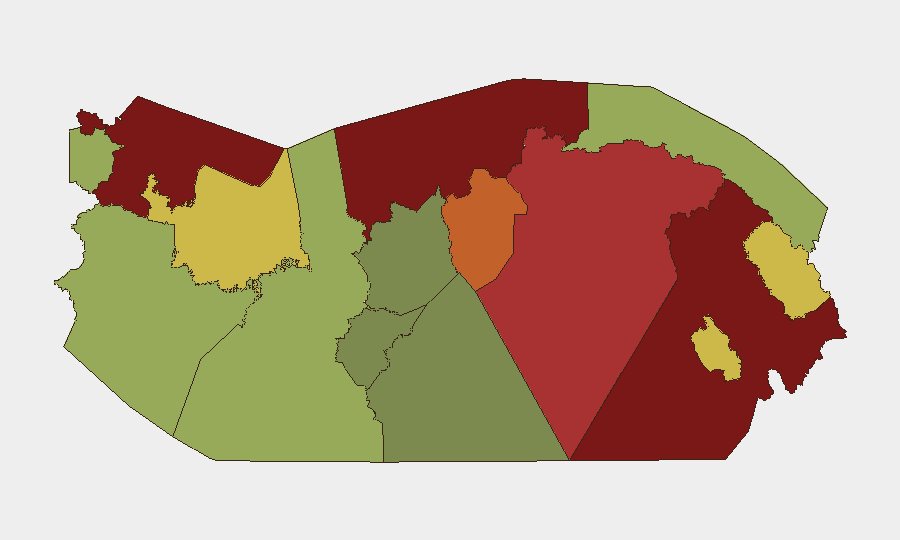
Panama's security environment remains fragmented across geography and threat type, with organized crime concentrated in border and transit regions while acute humanitarian needs dominate central provinces following the 9 October earthquake. The national threat score of 35 (rank 56 globally) masks severe sub-national disparities: Darién, Colón, and Bocas del Toro present critical risk (95, 88, and 82 respectively), driven by trafficking, armed group activity, and limited state presence, while urban incidents in Panama City and Panamá Oeste signal ongoing gang and narcotics-related violence. Post-earthquake displacement and infrastructure damage will sustain humanitarian pressure through the medium term.
Key Developments
- Veracruz Health Center, Panamá Oeste — 17 October: Armed gunfire erupted in a clinic waiting room, wounding two patients who were transferred to Hospital Santo Tomás under police escort; the facility closed 18 October for repairs and security review, indicating organized violence spillover into civilian healthcare infrastructure.
- Chiriquí Province — 12 October: A national court sentenced three foreign nationals to 12 years imprisonment for international drug trafficking following the interception of a vessel carrying approximately 1.8 tonnes of cocaine, reflecting ongoing transit-corridor enforcement.
- Central Panama provinces (Veraguas, Coclé, Herrera, Los Santos) — 12–13 October: Post-earthquake response operations continued with class suspensions affecting 656 educational facilities; UNICEF assessed that approximately 38,000 people, including 8,300 children, require humanitarian assistance, creating secondary displacement and supply-chain vulnerabilities.
- Senafront & Colombian joint operations — 8 October: A cross-border raid on suspected Clan del Golfo migrant-trafficking and illegal-mining sites near the Colombia–Panama border resulted in 13 detentions and seizure of illicit materials, illustrating sustained cartel presence in Darién.
- Panama City — 10 October: A shootout near Mercado de Mariscos triggered a police pursuit into El Chorrillo; two arrests and 539 rectangular packages (suspected narcotics) were seized, confirming active street-level drug distribution in the capital's commercial and peripheral zones.
Highest-Risk Areas
Darién, Colón, and Bocas del Toro (composite risks 95, 88, and 82) dominate the threat landscape and reflect overlapping vulnerabilities: lawless border geography, minimal police presence, competing cartel control, migrant-trafficking networks, and maritime access for transnational crime. Panamá Province and Panamá Oeste (78 and 75), which include Panama City and its periphery, sustain elevated risk through urban gang activity, street-level drug markets, and spillover violence into civilian spaces—exemplified by the 17 October clinic shooting. Indigenous territories and remote provinces show graduated but persistent risk, while Coclé's recent earthquake damage has created temporary humanitarian vulnerabilities and likely service-delivery gaps.
How GeoBit Would Assist
Organizations operating in Panama should deploy AOI Monitoring & Early Warning on high-risk provinces (Darién, Colón, Bocas del Toro, Panamá Oeste) to detect emerging cartel activity, trafficking routes, and security incidents with real-time alerting; simultaneously, Intelligence & OSINT (OSINT fusion, multi-language search, and entity extraction) enables tracking of Clan del Golfo and other actor networks across news, social media, and regional sources. Routing & Network Analysis supports duty-of-care teams in calculating secure personnel and asset movement corridors around active violence zones and trafficking hubs, while Satellite & Imagery analysis can monitor infrastructure damage, displacement camps, and humanitarian choke points in earthquake-affected provinces.
7-Day Outlook
Near-term trends suggest continued urban gang violence in Panama City and Panamá Oeste, persistent transnational crime in border regions, and humanitarian logistics strain in central provinces as earthquake recovery progresses. No immediate escalation or new threat category is apparent, but seasonal migration pressures and cartel territorial disputes in Darién typically intensify in late October through December.
Highest-Risk Areas — Ranked
| # | State / Region | Risk |
|---|---|---|
| 1 | Darién | 95 |
| 2 | Colón | 88 |
| 3 | Bocas del Toro | 82 |
| 4 | Panamá Province | 78 |
| 5 | Panamá Oeste | 75 |
| 6 | Ngäbe-Buglé | 68 |
| 7 | Emberá-Wounaan | 62 |
| 8 | Veraguas | 58 |
| 9 | Chiriquí | 48 |
| 10 | Naso Tjër Di | 45 |
| 11 | Guna Yala | 42 |
| 12 | Coclé | 35 |
Sources
Previous Weekly Briefs
A new Panama brief is written every Monday, covering the week — each with its own risk map and downloadable CSV. Use the calendar to go further back.
- October 12, 2026
- October 5, 2026
- September 28, 2026
- September 21, 2026
- September 14, 2026
- September 7, 2026
- September 1, 2026
📅 Browse past briefs by calendar →
Highlighted days have a brief. Tap a day for that day's map & analysis, or “csv” for that day's dataset ($5).
Atlas — our AI intelligence desk — emails them this snapshot personally. Nothing else, no list.