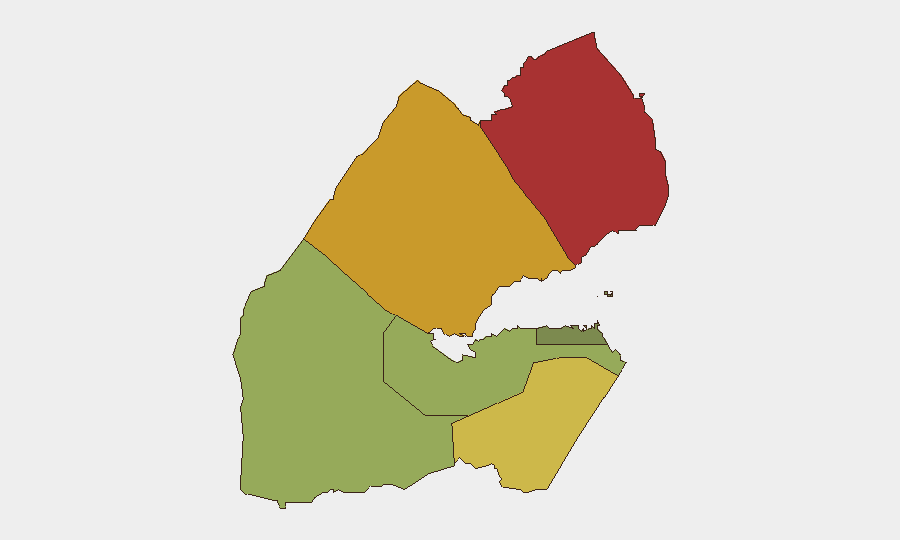
Situation Summary
Djibouti remains stable internally with no reported domestic security incidents in the past week, but is experiencing acute pressure from regional conflict in Yemen. A sharp surge in maritime refugee arrivals—estimated at 1,400–2,000 Yemeni displaced persons landing on Djibouti's northern coast between 11–13 September—reflects intensified Houthi military operations along Yemen's Red Sea coast and represents the dominant security-management challenge for the country this week. Concurrent with refugee flows, maritime crime risk has elevated: a bulk carrier operating with Djibouti connections was hijacked on 10 September in the Bab el-Mandeb Strait, and Houthi forces' capture of Perim Island and Dhubab (11 September) has positioned armed actors directly opposite Djibouti's approaches. The U.S. Embassy lifted a shelter-in-place advisory on 9 September, suggesting no acute domestic threat in Djibouti City at present, but the convergence of refugee pressure, piracy, and regional military activity creates layered risk for maritime and air transit through the country.
Key Developments
- Obock, northern coast – 12 September 2026 – Nearly 500 Yemeni refugees landed by boat after fleeing intensified fighting on Yemen's Red Sea coast; arrivals acknowledged by Djibouti's minister of economy and finance, indicating official coordination for reception and screening.
- Djibouti's northern shores (multiple landing points including Obock) – 11–13 September 2026 – Djiboutian authorities and IOM reported 1,400–2,000+ arrivals of Yemeni displaced persons within a 24-hour period, fleeing a new Houthi offensive and crossing the Bab el-Mandeb Strait by boat.
- Bab el-Mandeb Strait – 11 September 2026 – Houthi forces captured Perim (Mayyun) Island and Dhubab town, placing armed actors on strategic positions overlooking the strait opposite Djibouti and elevating shipping-risk assessments for the corridor.
- Bab el-Mandeb / Red Sea, southwest of Yemen – 10 September 2026 – Bulk carrier *Glamor*, identified as operating in and out of Port of Djibouti, was hijacked approximately 38 nautical miles southwest of Balhaf; EU Operation Atalanta and monitoring authorities alerted.
- Djibouti City – 9 September 2026 – U.S. Embassy lifted a previously issued shelter-in-place warning, indicating resolution of an acute short-term threat but confirming recent security concern.
- Djibouti's coastal reception areas – 11–14 September 2026 – Djibouti's navy, coast guard, and emergency services conducted ongoing rescue and reception operations for arriving Yemeni refugees, with government and IOM coordination documented.
- Red Sea / Djibouti transit corridor – 11–13 September 2026 – Travel-risk advisories issued recommending travelers reconfirm itineraries involving Djibouti, Eritrea, and Red Sea airports due to regional conflict, piracy, and potential disruption.
Highest-Risk Areas
Obock (risk 78) and Tadjourah (risk 72) in northern Djibouti are the primary drivers of the country's elevated sub-national risk profile, directly reflecting their exposure to the Bab el-Mandeb Strait, Yemeni cross-border displacement, and maritime crime. The past week's refugee landings and Houthi military consolidation along Yemen's opposite shore validate this ranking: both northern regions serve as the primary reception zones for displaced persons and are within close range of piracy and potential maritime incidents. Ali Sabieh (risk 65) in the west maintains elevated risk due to historical border instability and proximity to the Somali and Eritrean boundaries. Djibouti City (risk 35) and the southern interior regions show substantially lower risk, consistent with the absence of reported domestic unrest and the lifting of the U.S. Embassy shelter advisory on 9 September.
How GeoBit Would Assist
Security teams would employ AOI Monitoring & Early Warning to set persistent watches on Obock and Tadjourah's coastlines for refugee surge detection and maritime anomalies, with real-time alerting on vessel movements in the Bab el-Mandeb Strait. Maritime & Aviation tracking capabilities combined with OSINT fusion (X/Twitter, Telegram, multi-language web research) would enable rapid detection of hijacking attempts, Houthi force positioning, and changes to shipping corridors affecting Port of Djibouti operations. Sentiment & temporal analysis of humanitarian and security reporting would provide early warning of displacement pressure escalation before arrivals spike.
7-Day Outlook
The refugee influx is likely to persist or increase if Houthi operations continue along Yemen's Red Sea coast, placing sustained pressure on Djibouti's northern reception and security infrastructure through the coming week. Maritime risk in the Bab el-Mandeb will remain elevated pending any de-escalation in Yemen; no imminent threat to Djibouti City or core economic zones is evident, but contingency planning for expanded refugee populations and maritime incident response remains prudent.
Highest-Risk Areas — Ranked
| # | State / Region | Risk |
|---|---|---|
| 1 | Obock | 78 |
| 2 | Tadjourah | 72 |
| 3 | Ali Sabieh | 65 |
| 4 | Arta | 48 |
| 5 | Dikhil | 42 |
| 6 | Djibouti | 35 |
Sources
Previous Weekly Briefs
A new Djibouti brief is written every Monday, covering the week — each with its own risk map and downloadable CSV. Use the calendar to go further back.
- September 7, 2026
- September 1, 2026
- August 30, 2026
- August 27, 2026
- August 25, 2026
- August 23, 2026
- August 21, 2026
📅 Browse past briefs by calendar →
Highlighted days have a brief. Tap a day for that day's map & analysis, or “csv” for that day's dataset ($5).
Atlas — our AI intelligence desk — emails them this snapshot personally. Nothing else, no list.