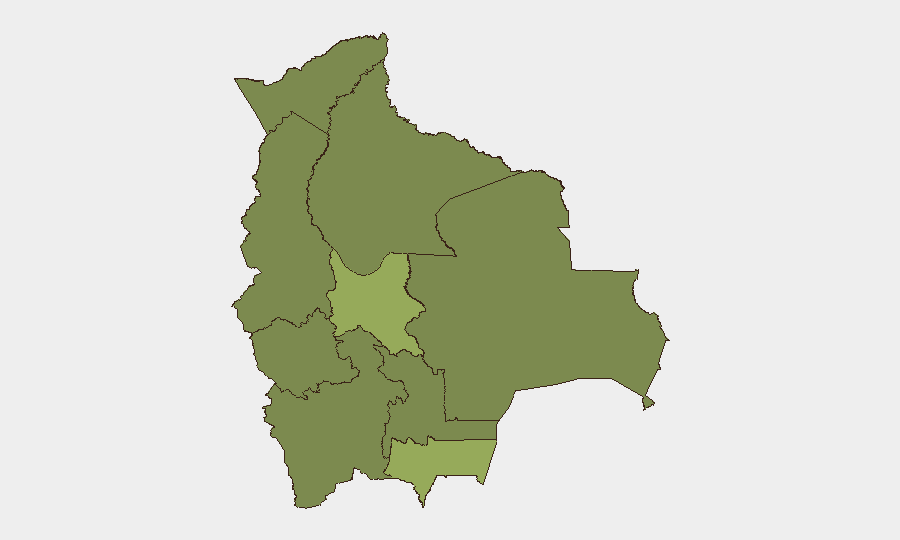
Situation Summary
Bolivia remains under a state of emergency (in force since 20 June 2026) following a national crisis triggered by wage and subsidy disputes. Military and police deployments continue to secure highways and urban centers, though large-scale blockades and violent clashes have significantly de-escalated since late June. The political environment has shifted into negotiation phase under a proposed "national accord" framework, with no verified new incidents in the last 24–48 hours, though the security posture remains fragile and contingent on the durability of ongoing agreements.
Key Developments
- No verified new security incidents reported in the last 24–48 hours across accessible open sources. The absence of fresh blockades, violent clashes, or major arrests in publicly indexed media and X/Twitter monitoring suggests continued relative calm under state-of-emergency conditions.
- Cochabamba department roadblocks remain suspended (as of early July). Previously entrenched coca-grower and Indigenous mobilizations have announced pauses; road transport and cargo movement in Cochabamba show signs of normalization compared with May–mid-June, though military police presence persists.
- National political negotiations ongoing (La Paz, early July). Government and opposition actors are engaged in "gran acuerdo nacional" (national accord) talks; no credible reports of new violent incidents, major arrests, or attacks on political figures have surfaced in cross-checked monitoring.
- Military–police coordination remains active (nationwide, ongoing). Deployment of military police and conventional forces to support civil order continues as part of the state-of-emergency framework; no reports of escalated inter-force clashes in the last 48 hours.
- International attention steady (China, last 24h). Public statements from Chinese officials have been recorded; no new bilateral security or trade incidents reported.
Highest-Risk Areas
Cochabamba department (composite risk 56.8) remains the single highest-risk zone, driven by its role as a center of coca-grower organization and Indigenous mobilization during the June crisis; although current blockades are suspended, the underlying structural tensions and mobilization capacity persist. Tarija (44.7) follows as secondary risk, reflecting its historical role in fuel-subsidy and regional wage disputes. La Paz (35.7) remains significant as the political and administrative capital, where negotiations and potential renewed mobilizations could trigger rapid escalation; the remaining departments (Potosí, Pando, Beni, Oruro, Chuquisaca, Santa Cruz) each score 26.8–28.7, indicating residual risk tied to the national state of emergency but no immediate acute hotspots.
How GeoBit Would Assist
GeoBit's AOI (area-of-interest) monitoring and alerting for Cochabamba, La Paz, and Tarija would provide real-time early warning of renewed blockade activity, protest calls, or military mobilizations. Multi-language X/Twitter and Telegram OSINT, paired with entity extraction and sentiment analysis, would track organizing communications from labor unions, Indigenous groups, and political actors, enabling duty-of-care teams to anticipate localized transport disruptions or security operations before they escalate. Routing and network analysis would support contingency route planning for personnel and assets around affected corridors.
7-Day Outlook
The national accord negotiations are expected to continue through early–mid July; if progress stalls or either side perceives bad faith, renewed mobilization in Cochabamba and Tarija is plausible within 5–10 days. No imminent military coup, large-scale violence, or terrorism is indicated in current open reporting. Security teams should monitor official government channels and verified local media for any announcement of reimposed road restrictions or fresh labor action.
Highest-Risk Areas — Ranked
| # | State / Region | Risk |
|---|---|---|
| 1 | Cochabamba | 56.8 |
| 2 | Tarija | 44.7 |
| 3 | La Paz | 35.7 |
| 4 | Potosí | 28.7 |
| 5 | Pando | 26.8 |
| 6 | Beni | 26.8 |
| 7 | Oruro | 26.8 |
| 8 | Chuquisaca | 26.8 |
| 9 | Santa Cruz | 26.8 |
Sources
Previous Daily Briefs
A new Bolivia brief is written every day — each with its own risk map and downloadable CSV. Here's the last week; use the calendar to go further back.
📅 Browse every day by calendar →
Highlighted days have a brief. Tap a day for that day's map & analysis, or “csv” for that day's dataset ($5).
Atlas — our AI intelligence desk — emails them this snapshot personally. Nothing else, no list.