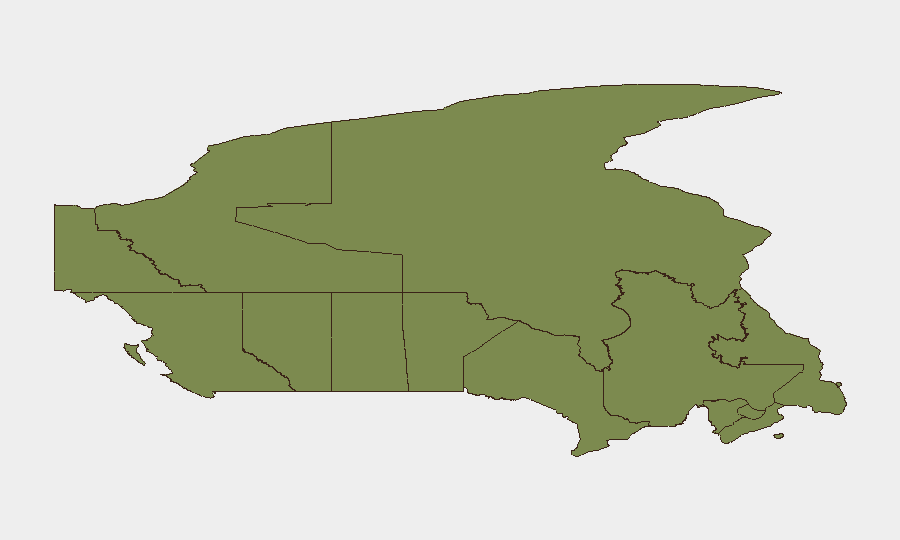
Situation Summary
Canada remains a moderate-threat environment (global rank #127, composite score 6) with 1,409 tracked security events as of 12 July 2026. The security posture is dominated by two high-risk jurisdictions—British Columbia and Ontario—which together account for the majority of actionable threat signals. Recent event signals span public statements, law enforcement response, inter-governmental tensions, and isolated armed incidents, suggesting a fragmented but active threat landscape rather than a coordinated national crisis. The trajectory is one of elevated localized risk in Pacific and Central regions with emerging indigenous advocacy and parliamentary friction.
Key Developments
- 2026-07-11 · Small Arms Combat – An armed incident occurred involving an unspecified actor; location and casualty status remain unclear pending official statement from police or provincial authorities.
- 2026-07-10 · Unconventional Violence – Police reported an incident classified as unconventional violence (likely protest-related, infrastructure sabotage, or asymmetric action); geographic scope and outcome not yet confirmed.
- 2026-07-11 · Public Statement (Worker/Government) – Workers and government officials issued public statements on 11 July; content likely related to labour disputes, regulatory disagreement, or infrastructure/resource policy.
- 2026-07-10 · Inter-Governmental Tension – Parliament initiated a reduction in relations with Ontario; background involves disputes over jurisdiction, resource allocation, or policy alignment. No immediate operational impact confirmed.
- 2026-07-10 · Conventional Military Force (Richmond vs. Canada) – A military signal was recorded between Richmond (likely British Columbia) and federal authorities; nature and scale unclear; may reflect training exercise, border management, or escalating command dispute.
- 2026-07-11 · Indigenous Investigation – Indigenous peoples initiated or came under investigation; context suggests advocacy, rights claim, or resource dispute in a jurisdiction with significant First Nations presence.
- 2026-07-10 · Media/Employee Threat – A threat was registered between media outlets and employees; likely reflects labour dispute, editorial conflict, or workplace security incident.
- 2026-07-10 · International Disapproval (AFAR) – Foreign actors expressed disapproval of Canadian policy or action; no direct operational threat but signals diplomatic friction.
Highest-Risk Areas
British Columbia (31.5) and Ontario (23.6) drive national risk, with BC showing approximately 2.7× the threat score of the national baseline and Ontario 3.0×. BC's elevated score reflects Pacific-region strategic sensitivity (ports, transnational crime, indigenous sovereignty issues), while Ontario concentrates federal-provincial institutional friction and metropolitan security incidents. Nunavut (18.3) represents a remote but critical concern, likely tied to resource security and Arctic sovereignty. The remaining nine provinces cluster below 10, indicating that risk in Canada is geographically concentrated rather than distributed.
How GeoBit Would Assist
Security teams operating in Canada should deploy AOI Monitoring & Early Warning on BC, Ontario, and Nunavut to detect escalating signals (armed activity, inter-governmental action, indigenous mobilization) before they impact operations. Network & Actor Analysis will map relationships between government, indigenous groups, labour organizations, and international actors to clarify intent behind public statements and military signals. OSINT fusion & corroboration (X/Twitter, police feeds, provincial emergency management channels, radio SIGINT) will disambiguate ambiguous event codes and provide real-time confirmation of incidents affecting personnel or assets.
7-Day Outlook
No imminent nationwide escalation is indicated, but the concentration of armed-incident and military-force signals in BC and the inter-governmental friction in Ontario suggest sustained operational tempo in those regions. Indigenous advocacy and labour movements will likely continue to generate public statements and localized disruptions. Corporate and government duty-of-care teams should maintain heightened awareness in high-risk provinces and validate supply-chain and personnel-movement plans against emerging provincial or labour friction.
Highest-Risk Areas — Ranked
| # | State / Region | Risk |
|---|---|---|
| 1 | British Columbia | 31.5 |
| 2 | Ontario | 23.6 |
| 3 | Nunavut | 18.3 |
| 4 | Manitoba | 9.4 |
| 5 | Newfoundland and Labrador | 9.2 |
| 6 | Quebec | 7.9 |
| 7 | Alberta | 5 |
| 8 | Saskatchewan | 2.7 |
| 9 | Northwest Territories | 2.3 |
| 10 | New Brunswick | 2.3 |
| 11 | Yukon | 1.5 |
| 12 | Prince Edward Island | 1.5 |
Sources
Previous Daily Briefs
A new Canada brief is written every day — each with its own risk map and downloadable CSV. Here's the last week; use the calendar to go further back.
📅 Browse every day by calendar →
Highlighted days have a brief. Tap a day for that day's map & analysis, or “csv” for that day's dataset ($5).
Atlas — our AI intelligence desk — emails them this snapshot personally. Nothing else, no list.