Situation Summary
Cuba remains at composite threat level 6 globally (#132), with 232 tracked events. Recent signals (27–28 July) indicate elevated political and social tension, including unconventional violence incidents involving the president and a politician, public disapproval statements directed at Washington and the regime, media criticism, and a business investigation underway. The trajectory reflects underlying infrastructure stress (blackouts, water shortages documented 24–25 July) and political friction, but no imminent large-scale security breakdown is evident in current reporting.
Key Developments
- Havana (multiple municipalities) | 24–25 July: Protests over power cuts (*apagones*) and water shortages were reported in Boyeros, Santiago de las Vegas, and other neighborhoods. Police deployed; cacerolazo (pot-banging protests) and road blockages occurred. Internet disruptions and detention claims were cited by independent monitors.
- National level | 26–27 July: Government held a rally or demonstration (26 July); president issued a public statement (26 July) amid disapproval from Washington and counter-statements from the regime (27 July).
- Executive/political violence signals | 27–28 July: Two separate unconventional violence events involving the president and a politician were recorded in event streams; analytical basis unclear from available summary data.
- Media criticism escalation | 27 July: Two distinct disapproval incidents involving Cuban entities and media were logged, suggesting information environment friction.
- Intelligence rejection | 27 July: A rejection event attributed to intelligence agencies was recorded.
- Business investigation | 28 July: A new investigation involving business has been initiated; scope and location not yet detailed.
*Note: Web research confirms infrastructure protests (24–25 July) but does not yet substantiate all political/violence signals from 27–28 July at operational detail. Analysts should monitor official Cuban media and international wire feeds for clarification.*
Highest-Risk Areas
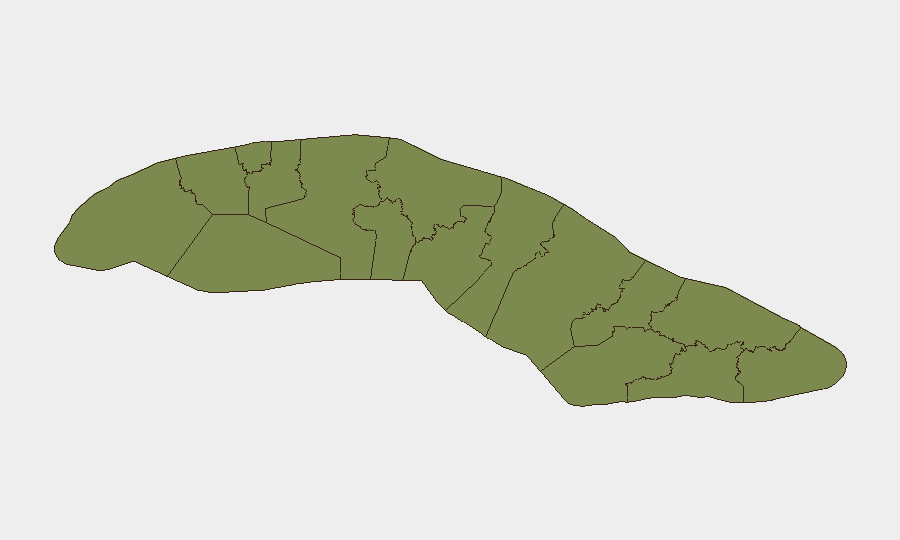
Havana dominates risk (33.4), driven by density, infrastructure fragility, and political/administrative centrality. Santiago de Cuba (23.6) follows as the second-largest city and a historical flashpoint; Artemisa (13.5) is elevated, likely reflecting suburban spillover from Havana. These three provinces account for the majority of tracked risk events. Remaining provinces score below 10 and reflect lower incident frequency or geographic isolation. Infrastructure stress (blackouts, water) in Havana is the primary catalyst for public unrest; political signals at the national level (president, regime, Washington friction) amplify medium-term volatility in the capital.
How GeoBit Would Assist
Intel Sweep & OSINT Fusion would aggregate breaking political statements, protest calls, and regime responses across X/Twitter, Telegram, and independent news feeds in real time, filtering signal from noise and tracking actor intent. AOI Monitoring & Early Warning (persistent watch on Havana, Santiago de Cuba, and Artemisa with automated alerting) would flag new protest mobilization, infrastructure incidents, or official statements within hours. Sentiment & Temporal Analysis applied to Cuban media, opposition channels, and government communications would surface escalation or de-escalation trends ahead of street-level manifestation. Regime-stability & conflict search tools would contextualize political friction and unconventional violence events against historical patterns, informing duty-of-care decisions for corporate staff.
7-Day Outlook
Infrastructure stress and political friction are likely to persist or intensify over the next week, particularly if blackouts continue and new protest calls circulate. Havana and Santiago de Cuba remain flashpoints; unplanned gatherings, roadblocks, and police response are probable. No evidence of a coordinated opposition campaign or organized armed activity is presently visible, but the convergence of economic hardship and high-level political signals warrants elevated vigilance and contingency review for teams with ground presence.
Highest-Risk Areas — Ranked
| # | State / Region | Risk |
|---|---|---|
| 1 | Havana | 33.4 |
| 2 | Santiago de Cuba | 23.6 |
| 3 | Artemisa | 13.5 |
| 4 | Matanzas | 9.5 |
| 5 | Camagüey | 7.5 |
| 6 | Pinar del Rio | 7.1 |
| 7 | Las Tunas | 5 |
| 8 | Cienfuegos | 4.6 |
| 9 | Granma | 4.6 |
| 10 | Isle of Youth | 3.8 |
| 11 | Guantánamo | 3.8 |
| 12 | Mayabeque | 3.4 |
Sources
Previous Daily Briefs
A new Cuba brief is written every day — each with its own risk map and downloadable CSV. Here's the last week; use the calendar to go further back.
📅 Browse every day by calendar →
Highlighted days have a brief. Tap a day for that day's map & analysis, or “csv” for that day's dataset ($5).
Atlas — our AI intelligence desk — emails them this snapshot personally. Nothing else, no list.