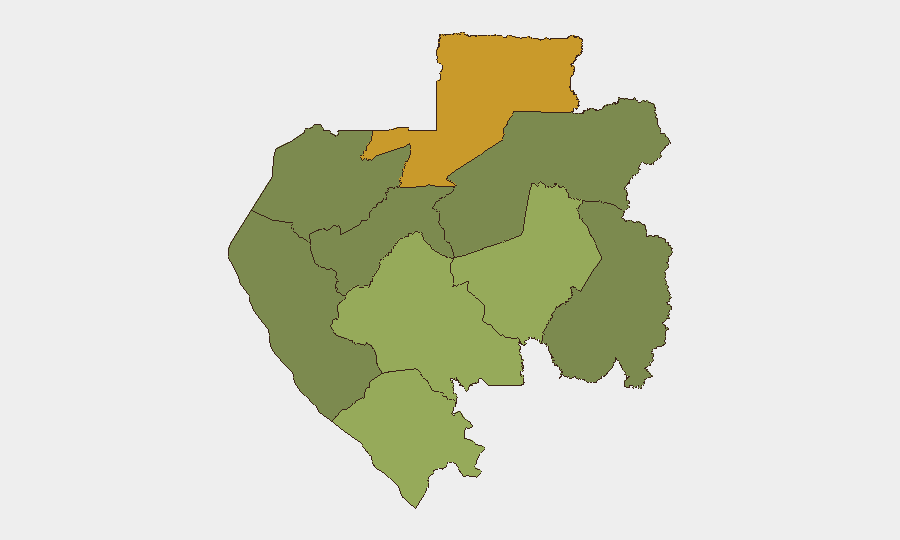
Situation Summary
Gabon faces an acute political and economic crisis following a military announcement on October 11 declaring the cancellation of 2023 election results, dissolution of state institutions, and closure of national borders; gunfire was reported in multiple districts of Libreville during the announcement. The crisis compounds a fuel-supply emergency that has persisted throughout the week, with diesel and gasoline shortages causing widespread disruption to transport and commerce in the capital and inland areas. The combined effect—political instability overlaid on economic dysfunction—creates immediate uncertainty for movement, commerce, and the security operating environment. Risk trajectory is sharply upward.
Key Developments
- Libreville, October 5: Petroleum authorities convened fuel marketers and tanker operators to address severe diesel-supply shortages and coordinate distribution to service stations.
- Libreville, October 6: Severe diesel and gasoline shortages triggered long queues at fuel stations across the capital; authorities attributed the disruption to declining SOGARA refinery stocks and maritime-transport failures.
- Libreville and surrounding communes, October 8–9: Fuel rationing and intermittent station closures persisted despite new deliveries; shortages expanded to inland localities, disrupting transport and commercial activity.
- Libreville, October 8: Government directed all fuel stations to remain open around the clock until supply normalization and requested defense-force deployment to enforce compliance.
- Libreville, October 8: Council of Ministers declared refinery modernization, strategic fuel-reserve expansion, and preliminary work on a new refinery as national priorities in response to the crisis.
- Libreville, October 11: Military personnel announced cancellation of 2023 election results, dissolution of state institutions, and closure of national borders; AFP journalists reported gunfire in multiple districts of the capital during the broadcast announcement.
Highest-Risk Areas
Woleu-Ntem Province (risk score 72) and Ogooué-Lolo Province (risk score 58) drive the country's overall risk profile and warrant heightened monitoring; both regions remain remote, under-resourced, and historically susceptible to smuggling and informal armed activity. The capital region (Estuaire Province, risk score 15) carries lower baseline risk but is now the epicenter of acute political instability and economic disruption following the military announcement. Mid-tier provinces including Ngounié, Nyanga, and Haut-Ogooué carry moderate risk, with potential for secondary effects from capital-based unrest or fuel-supply degradation affecting commerce and security operations.
How GeoBit Would Assist
Security teams should activate Area-of-Interest (AOI) Monitoring & Early Warning on Libreville, military installations, and key fuel/transport chokepoints to detect further civil unrest, checkpoint activity, or border enforcement; simultaneously, Conflict & Military mapping and Network & Actor Analysis can track military communications and factional positions to assess coup consolidation or counter-coup risks. Economic & Trade monitoring paired with Routing & Network Analysis will identify fuel-supply recovery timelines and alternative logistics corridors to maintain staff and asset mobility during supply disruption. Real-time OSINT fusion from local media, Telegram, and radio SIGINT will provide early warning of curfews, movement restrictions, or security-force escalation before they affect operations.
7-Day Outlook
Immediate focus should be containment of political uncertainty and military consolidation; the military announcement suggests a coup or forced transition, and the next 7–14 days will clarify whether parallel governance structures emerge or whether institutional collapse accelerates. The fuel crisis is unlikely to resolve within one week and will worsen security-of-supply risk for people and assets dependent on commercial transport. Border closure and potential curfews in Libreville and other urban centers will constrain movement and should be assumed until official reversal is confirmed through independent sources.
Highest-Risk Areas — Ranked
| # | State / Region | Risk |
|---|---|---|
| 1 | Woleu-Ntem | 72 |
| 2 | Ogooué-Lolo Province | 58 |
| 3 | Ngounié Province | 48 |
| 4 | Nyanga Province | 42 |
| 5 | Haut-Ogooué Province | 35 |
| 6 | Moyen-Ogooué Province | 28 |
| 7 | Ogooué-Maritime Province | 25 |
| 8 | Estuaire Province | 15 |
| 9 | Ogooué-Ivindo | 0 |
Sources
Previous Weekly Briefs
A new Gabon brief is written every Monday, covering the week — each with its own risk map and downloadable CSV. Use the calendar to go further back.
- October 5, 2026
- September 28, 2026
- September 21, 2026
- September 14, 2026
- September 7, 2026
- September 1, 2026
- August 30, 2026
📅 Browse past briefs by calendar →
Highlighted days have a brief. Tap a day for that day's map & analysis, or “csv” for that day's dataset ($5).
Atlas — our AI intelligence desk — emails them this snapshot personally. Nothing else, no list.