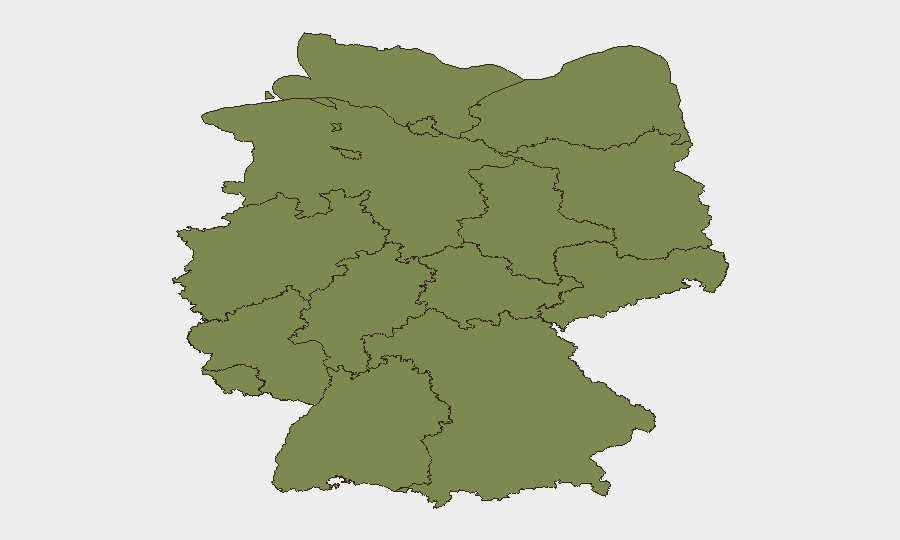
Situation Summary
Germany's composite threat score of 24 places it outside the global top-risk tier, but a high-profile terrorist attack in Berlin on 1–2 August 2026 has sharply elevated short-term security posture. A vehicle-ramming incident at Christopher Street Day (Pride) celebrations near the Brandenburg Gate killed one person and injured more than twenty; the suspect was shot dead by police in Berlin-Spandau on 2 August following a nationwide manhunt. German authorities are treating the incident as an Islamist terrorist attack. The attack has triggered visible institutional response—Interior Ministry and Chancellery public disapproval statements—and raises tactical alertness in Berlin and potentially other major cities through the weekend.
Key Developments
- Berlin, Tiergarten/Brandenburg Gate (1 August 2026) — A vehicle drove into crowds at Christopher Street Day celebrations, killing 1 person and injuring 20+. Reuters and Deutsche Welle both confirmed the incident; German Interior Ministry characterized preliminary evidence as pointing to Islamist terrorist motivation. [Reuters; DW; Tagesschau]
- Berlin-Spandau (2 August 2026) — Police shot dead the suspect in the Pride attack during an operation at an allotment garden complex after a nationwide manhunt. Reuters reports the suspect allegedly attacked officers with a bladed weapon during the operation. [Reuters; Tagesschau]
- Institutional response (1–2 August 2026) — Interior Ministry, Chancellor's office, and judicial officials issued public disapproval statements and administrative sanctions related to the attack and response. These signals reflect heightened governmental visibility and inter-agency coordination. [GeoBit event signals]
- International attention (2 August 2026) — Russian state statements and employer-sector statements referenced the German government response, indicating the incident received regional and transnational coverage within 24 hours. [GeoBit event signals]
Highest-Risk Areas
Berlin dominates the risk profile with a composite score of 31.2—more than 2.6 times higher than any other German state. The attack on 1–2 August underscores why: the capital hosts large public gatherings (cultural, political, diplomatic), diverse populations, and international visibility that may attract both ideologically motivated actors and state-level interest. Bavaria (11.7) ranks second but remains substantially lower; Lower Saxony (7.0) is third. All other states score between 1.2 and 2.5, indicating that risk is highly concentrated geographically. Berlin's hosting of major events and its density of government, media, and infrastructure make it the primary focus for near-term security planning.
How GeoBit Would Assist
Security teams should deploy AOI (Area-of-Interest) Monitoring & Early Warning on Berlin's major public venues and transport hubs to flag gathering-related risk signals in real time. Intel Sweep, multi-language OSINT fusion, and Telegram/X analysis enable rapid identification of emerging threat narratives, actor positioning, and copycat or retaliatory signals within 12–24 hours of an incident. Network & Actor Analysis can map relationships between domestic and transnational Islamist networks to assess likelihood of secondary attacks or coordinated activity.
7-Day Outlook
Security posture in Berlin and major German cities will remain elevated through the weekend as police conclude immediate investigation and threat assessment. Public events, transport interchanges, and government buildings are likely to see increased police and private security presence. Authorities will monitor for secondary incidents, retaliatory statements, or copycat signaling; the risk of escalation or splinter-group activity remains material over 7–14 days if the incident receives sustained transnational amplification.
Highest-Risk Areas — Ranked
| # | State / Region | Risk |
|---|---|---|
| 1 | Berlin | 31.2 |
| 2 | Bavaria | 11.7 |
| 3 | Lower Saxony | 7 |
| 4 | Schleswig-Holstein | 2.5 |
| 5 | Saxony | 2.5 |
| 6 | North Rhine-Westphalia | 2.5 |
| 7 | Rhineland-Palatinate | 1.2 |
| 8 | Baden-Württemberg | 1.2 |
| 9 | Thuringia | 1.2 |
| 10 | Mecklenburg-Vorpommern | 1.2 |
| 11 | Saxony-Anhalt | 1.2 |
| 12 | Brandenburg | 1.2 |
Sources
Previous Daily Briefs
A new Germany brief is written every day — each with its own risk map and downloadable CSV. Here's the last week; use the calendar to go further back.
📅 Browse every day by calendar →
Highlighted days have a brief. Tap a day for that day's map & analysis, or “csv” for that day's dataset ($5).
Atlas — our AI intelligence desk — emails them this snapshot personally. Nothing else, no list.