Situation Summary
Israel remains at composite threat level #6 globally, driven by active war dynamics and 451 tracked events. The security environment is characterized by elevated strategic tension with Iran following July 9 public statements from senior leadership that major operations remain pending, combined with ongoing West Bank military operations and internal political-security friction (arrest/detention activity, settler-Israeli tensions, and embassy-state disputes on July 12). The trajectory reflects sustained operational readiness rather than de-escalation.
Key Developments
- Hatzerim Air Base, July 9, 2026 – Prime Minister Netanyahu, IDF Chief of Staff Eyal Zamir, and Defense Minister Israel Katz publicly stated the Iran conflict "has not ended" and that "major operations are still expected," signaling continued military readiness and potential for renewed strikes.
- West Bank village, July 9, 2026 – Three Palestinians were wounded by live fire during an Israeli army raid, consistent with ongoing conventional military operations in Israeli-controlled Palestinian territory.
- Iranian explosions (Bushehr, Choghadak, Konarak), July 9, 2026 – Multiple detonations reported in Iran; US Central Command stated no American involvement, indicating continued regional escalation affecting Israel's threat posture.
- Arrest/detention activity, July 12, 2026 – Multiple arrest/detention events recorded involving Israeli nationals, settlers, and international media (Associated Press), suggesting internal security operations or enforcement actions; specific locations and causes require real-time source verification.
- Embassy rejections, July 12, 2026 – Two separate diplomatic "reject" events involving embassy actors and Israeli/Israeli state entities, indicating diplomatic friction or formal objections to policy actions.
- Settler-Israeli and settler-settler tensions, July 12, 2026 – Multiple "disapprove" and arrest/detention events between settlers and Israeli security forces, and between settler groups, pointing to elevated internal community friction.
*Note: Web research accessible to GeoBit at time of brief preparation did not contain reliable 24–48h verification of additional discrete incidents on July 10–11 beyond the above. Duty-of-care teams should cross-reference with real-time government alerts, IDF channels, and premium news wires for confirmed intraday updates.*
Highest-Risk Areas
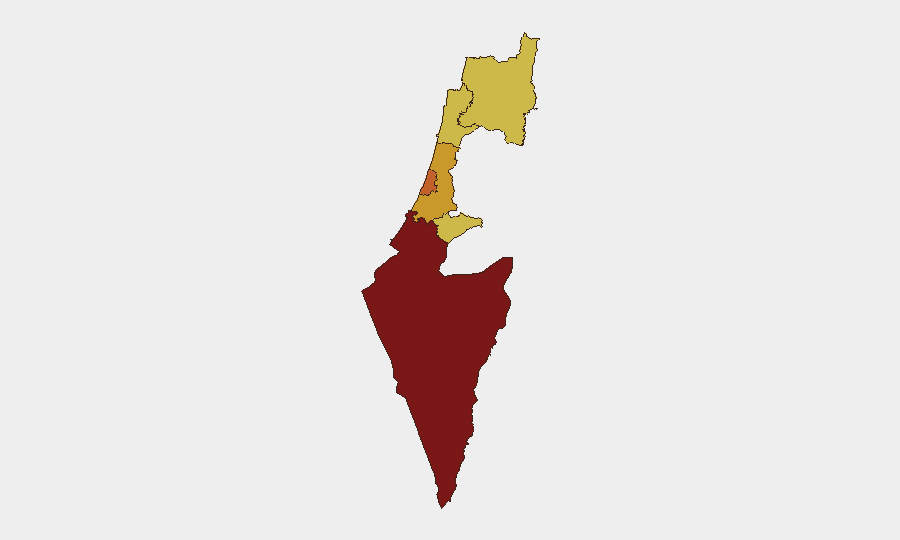
The South District dominates risk (score 100), driven by proximity to active conflict zones and potential Iranian ballistic/drone strike exposure. Tel-Aviv, Center, North, Haifa, and Jerusalem districts cluster at 70–73.5, reflecting distributed vulnerability to both conventional military operations (West Bank incursions, northern border tensions) and indirect fire. The concentration of commercial, diplomatic, and residential activity in Tel-Aviv and Center districts, combined with their connectivity to conflict zones, explains their elevated composite scores. West Bank operations and settler tensions contribute materially to Center and South rankings.
How GeoBit Would Assist
Security teams should deploy AOI Monitoring & Early Warning on South District, West Bank operational zones, and key diplomatic/commercial hubs in Tel-Aviv and Jerusalem to track escalation signals in real time. Intel Sweep, X/Twitter & Telegram OSINT, and conflict event feeds enable continuous triage of arrest/detention, military, and diplomatic activity to separate routine enforcement from novel threat indicators. Satellite & Imagery analysis and battle mapping provide geospatial validation of military operations and settler confrontations, while network and actor analysis clarifies internal Israeli political-security faction dynamics driving institutional friction.
7-Day Outlook
Strategic risk will likely remain elevated pending Iranian response or Israeli follow-on operations, with July 9 leadership statements suggesting a multi-week operational window. Internal tensions (settler activity, arrest patterns, diplomatic friction) are unlikely to resolve quickly and may complicate routine security operations. Personnel and asset exposure in South, Tel-Aviv, and Center districts should be reassessed against duty-of-care thresholds within 48–72 hours.
Highest-Risk Areas — Ranked
| # | State / Region | Risk |
|---|---|---|
| 1 | South District | 100 |
| 2 | Tel-Aviv District | 73.5 |
| 3 | Center District | 71.2 |
| 4 | North District | 70.5 |
| 5 | Haifa District | 70.1 |
| 6 | Jerusalem District | 70 |
Sources
Previous Daily Briefs
A new Israel brief is written every day — each with its own risk map and downloadable CSV. Here's the last week; use the calendar to go further back.
📅 Browse every day by calendar →
Highlighted days have a brief. Tap a day for that day's map & analysis, or “csv” for that day's dataset ($5).
Atlas — our AI intelligence desk — emails them this snapshot personally. Nothing else, no list.