Situation Summary
Libya remains in a state of compounded infrastructure and political stress, with Tripoli experiencing acute instability driven by cascading power cuts and associated public anger. Security deployments across the capital have intensified over the past 48 hours, and disruption of critical energy infrastructure—including the Mellitah complex—is amplifying both civilian hardship and the risk of uncontrolled escalation. The composite threat score of 67 (rank #27 globally) reflects chronic fragmentation and the absence of monopoly control over violence, rather than acute conflict; however, the current trajectory shows deterioration in public order and deepening state-capability gaps.
Key Developments
- Tripoli, 27–28 July — Protesters stormed the Mellitah Oil & Gas complex west of the capital, forcing shutdown of gas lines supplying power generation. State security reported regaining control and restoring supplies, but the incident underscores vulnerability of energy infrastructure to mass action and the absence of secure perimeter control.
- Tripoli, 27 July — Protests over prolonged electricity shortages spread across central and coastal districts (including Janzour), with demonstrators blocking roads and public buildings. Coastal road closures disrupted commercial movement and signaled loss of state ability to maintain traffic flow.
- Tripoli, 26–27 July — Protest activity broadened to include gatherings outside the West Tripoli power station and municipal council building, indicating coordinated civic pressure on energy management and local governance.
- Tripoli, 24–25 July — Armed security formations deployed heavily across central districts; gunfire was reported around Al-Mansoura and residents took shelter indoors. The scale of deployment and civilian response suggest fear of renewed militia confrontation.
- Tripoli, 24 July — Commercial activity and civilian movement were disrupted in central districts following delayed military-level talks, indicating political tension below the surface of public order.
- National power grid, 27–28 July — Mellitah disruption cascaded to partial shutdowns at El Feel and Wafa oilfields, worsening nationwide electricity shortages and compounding economic and social strain.
Highest-Risk Areas
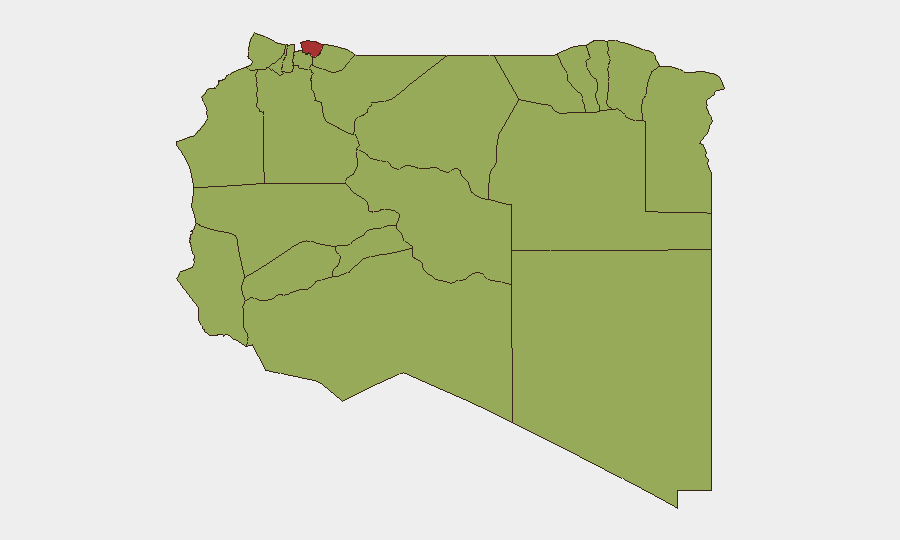
Tripoli dominates the risk landscape with a composite score of 76.7—nearly 30 points above the second tier. The capital concentrates state institutions, energy infrastructure, armed groups, and dense population, making it the primary flashpoint for political, security, and economic shocks. The remaining ten tracked regions (Nalut, Ghat, Az Zawiya, Kufra, and others) cluster at 46.7, indicating distributed but lower-intensity risk across the country. Western Libya (Mellitah, Surman, Az Zawiya) shows elevated exposure to energy-sector disruption and resource-driven tension, while southern and southeastern regions (Ghat, Murzuq, Kufra) remain prone to smuggling, militia activity, and transnational criminal networks.
How GeoBit Would Assist
Security teams should activate Area-of-Interest (AOI) Monitoring & Early Warning on Tripoli's power infrastructure, protest congregation points, and armed-group movement corridors to detect escalation before it reaches operational severity. Intel Sweep and X/Telegram OSINT would provide real-time crowd and militia sentiment, coordination signals, and planned actions across 24–48-hour windows. Conflict & Military force-structure tracking and Network & Actor Analysis are essential for understanding which armed factions control checkpoints, secure routes, and safe havens—critical inputs for duty-of-care decisions on personnel movement and facility hardening.
7-Day Outlook
Electricity shortages and public anger are likely to sustain or increase protest activity over the next week, with secondary risk of security-force overreaction or militia exploitation of civil unrest. Energy infrastructure remains a target of opportunity, and further disruptions could deepen economic stress and erode state legitimacy. Personnel safety and asset availability in Tripoli should be reassessed on a 48-hour cycle.
Highest-Risk Areas — Ranked
| # | State / Region | Risk |
|---|---|---|
| 1 | Tripoli | 76.7 |
| 2 | Nalut | 46.7 |
| 3 | Ghat | 46.7 |
| 4 | Baladiyah Surman | 46.7 |
| 5 | Az Zawiya District | 46.7 |
| 6 | Wadi al Shatii | 46.7 |
| 7 | Wadi al Hayaa | 46.7 |
| 8 | Murzuq | 46.7 |
| 9 | Kufra | 46.7 |
| 10 | Nuqat al Khams | 46.7 |
| 11 | Jafara | 46.7 |
| 12 | Murqub | 46.7 |
Sources
Previous Daily Briefs
A new Libya brief is written every day — each with its own risk map and downloadable CSV. Here's the last week; use the calendar to go further back.
📅 Browse every day by calendar →
Highlighted days have a brief. Tap a day for that day's map & analysis, or “csv” for that day's dataset ($5).
Atlas — our AI intelligence desk — emails them this snapshot personally. Nothing else, no list.