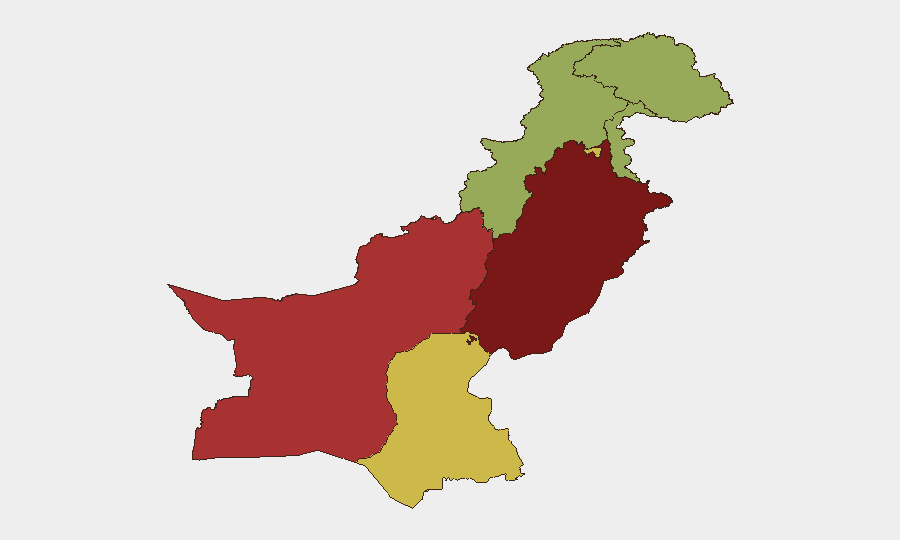
Situation Summary
Pakistan remains the 24th-highest-threat country globally, driven primarily by active insurgency and militant operations concentrated in western and northern border provinces. Over the past 48 hours, Pakistani security forces have intensified counterterrorism operations in Balochistan, reporting 23 militant kills in a 24-hour window as part of "Operation Shaaban," while intelligence assessments indicate thousands of TTP and Baloch insurgent fighters are active across major districts in Khyber Pakhtunkhwa and Balochistan. Concurrently, Pakistan's political establishment is engaged in high-level regional mediation on Iran-related diplomatic matters, which may affect resource allocation and official attention. The near-term security trajectory is sustained elevated militant activity coupled with active state counterterrorism response.
Key Developments
- Balochistan, multiple districts – 9–10 July 2026: Pakistani security forces killed 23 militants, including 13 described as TTP "khwarij," during a 24-hour counterterrorism surge in "Operation Shaaban." Specific district locations were not disclosed; rural and remote areas remain the operational focus.
- Balochistan & Khyber Pakhtunkhwa border zones – 9–10 July 2026: Intelligence-based operations are ongoing against TTP and Baloch insurgent cells; security commentaries note infiltration of thousands of militants into Peshawar, Dera Ismail Khan, Bannu, and Swat districts, elevating risk to road and inter-city travel in these zones.
- National level – 9–10 July 2026: Pakistan's armed forces issued public statements reaffirming commitment to counterterrorism and continued intelligence-based operations, signaling sustained security posture and likely elevated checkpoints and movement restrictions in conflict-affected provinces.
- Islamabad political/diplomatic sphere – 9–10 July 2026: Pakistani government is actively mediating a regional agreement (the "Islamabad Memorandum of Understanding") involving Iran, with reports indicating signature imminent. This suggests concentration of senior political and security leadership on diplomatic crisis management.
Highest-Risk Areas
Punjab (86.2) and Balochistan (78.4) are the primary risk drivers: Punjab combines large population density with persistent militant network activity, while Balochistan is the current epicenter of both insurgent operations (Baloch separatists) and foreign-linked terrorism (TTP, Afghan border infiltration). Sindh (69.9) and Islamabad Capital Territory (63.7) face secondary but material risk from militant cells and occasional high-profile attacks, while Khyber Pakhtunkhwa (57.5) remains a key transit and operational zone for cross-border insurgent activity. The ranking reflects both tactical militant concentration and state response intensity.
How GeoBit Would Assist
Security teams should employ AOI Monitoring & Early Warning on Balochistan and Khyber Pakhtunkhwa districts to track ongoing counterterrorism operations and militant movement in near real-time via OSINT fusion and sentiment analysis of Pakistani defence/security social feeds. Routing & Network Analysis capabilities enable identification of safer inter-city corridors and checkpoint avoidance in high-risk provinces, particularly around Peshawar, Dera Ismail Khan, and Swat. Intel Sweep and multi-language OSINT (X, Telegram, Pakistani broadcast media) provide daily corroboration of security operations, militant statements, and policy shifts affecting duty-of-care protocols.
7-Day Outlook
Counterterrorism intensity in Balochistan and Khyber Pakhtunkhwa is expected to remain elevated over the next week, with likely further military/police operations and checkpoints impacting civilian movement. The parallel diplomatic engagement on Iran may temporarily draw senior attention from domestic security operations, creating potential window of reduced state presence in remote areas. Militant groups (TTP, Baloch factions) typically escalate operations during periods of perceived reduced enforcement; monitor for incident uptick mid-to-late July.
Highest-Risk Areas — Ranked
| # | State / Region | Risk |
|---|---|---|
| 1 | Punjab | 86.2 |
| 2 | Balochistan | 78.4 |
| 3 | Sindh | 69.9 |
| 4 | Islamabad Capital Territory | 63.7 |
| 5 | Khyber Pakhtunkhwa | 57.5 |
| 6 | Azad Kashmir | 57 |
| 7 | Gilgit-Baltistan | 56.2 |
Sources
Previous Daily Briefs
A new Pakistan brief is written every day — each with its own risk map and downloadable CSV. Here's the last week; use the calendar to go further back.
📅 Browse every day by calendar →
Highlighted days have a brief. Tap a day for that day's map & analysis, or “csv” for that day's dataset ($5).
Atlas — our AI intelligence desk — emails them this snapshot personally. Nothing else, no list.