Situation Summary
Russia faces an acute convergence of external military pressure and internal security strain as of early July 2026. Ukrainian long-range drone campaigns against Russian energy infrastructure have inflicted measurable damage—most notably refinery strikes that President Putin has publicly acknowledged are causing fuel shortages—while Russian authorities have responded with heightened air-defense postures and intensified domestic security sweeps targeting dissent and alleged sabotage. The combination of infrastructure vulnerability, logistics disruption, and tightened internal controls is elevating risk across major population centers and border regions simultaneously.
Key Developments
- Moscow, July 2–3 – Russian authorities have intensified detentions and police checks in central Moscow, targeting individuals accused of spreading "false information" about military operations or aiding Ukrainian strikes. Metro stations and government buildings show elevated security presence, raising civil-liberties and operational risk for residents and business travelers.
- Moscow region, July 2–3 – Ukrainian drones have struck at least one major Russian oil refinery and associated energy facilities, prompting Putin to publicly acknowledge resulting fuel shortages. Cascading impacts on transport and logistics supply chains are already evident.
- Southern Russia (Black Sea energy routes), July 2–3 – Russian air-defense deployments around critical oil installations and transit infrastructure have been substantially reinforced. Russian military bloggers report new flight restrictions and movement controls in civilian areas adjacent to these sites, creating immediate travel bottlenecks.
- Western Russia (Ukraine border regions), July 2–3 – Ukrainian long-range drone and missile activity targeting Russian military and logistical assets has continued at elevated tempo. Local reports document power outages and rail disruptions attributed to air-defense activity and debris, with temporary infrastructure failures affecting civilian populations.
- Russian military logistics hubs (nationwide), July 2–3 – Ukraine has maintained pressure on Russian ammunition and fuel depots in rear areas. Explosions, emergency cordons, and heightened security around storage facilities pose direct safety risk to nearby civilian infrastructure and personnel.
- Nationwide, July 2–3 – Putin's public acknowledgment of fuel shortages has triggered widespread discussion in Russian social media about potential panic buying, price spikes, and localized protest risk, particularly if visible rationing or transport disruptions emerge in major cities over coming days.
- Russia–Ukraine border and adjacent regions, July 2–3 – Elevated cross-border missile and drone activity, coupled with frequent air-raid sirens in Russian border communities, signals sustained military intensity and elevated threat exposure for residents and traveling personnel in frontier areas.
Highest-Risk Areas
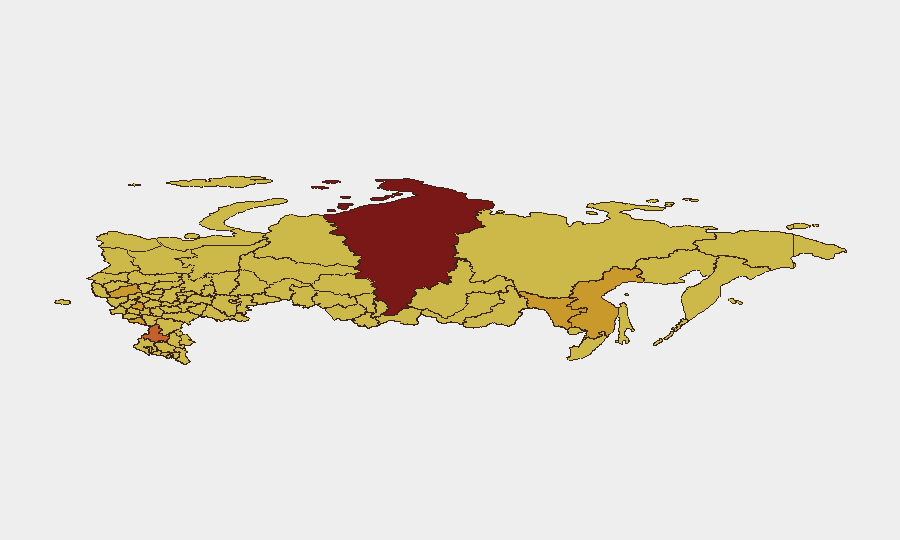
Moscow (risk 100) and Krasnoyarsk Krai (90.9) dominate the sub-national ranking, driven by a combination of factors: Moscow concentrates political targets, critical infrastructure, and security apparatus activity, making it both a logical target for external strikes and a focus for internal security crackdowns. Krasnoyarsk Krai, home to significant energy and industrial assets, faces direct exposure to Ukrainian targeting and subsequent Russian air-defense activity. Rostov Oblast, Saint Petersburg, and western border regions (Tver, Belgorod, Tula) rank high because of proximity to Ukrainian strike range, logistical importance, and infrastructure vulnerability. Border-adjacent areas also experience elevated cross-border violence and civilian disruption from air-raid activity.
How GeoBit Would Assist
Security teams should deploy AOI Monitoring & Early Warning on critical infrastructure sites, refineries, and logistics hubs to detect attacks or security posture changes in real time. OSINT Fusion (X, Telegram, Russian-language channels, and milblog monitoring) provides early signals of detentions, travel restrictions, and air-defense movements before they cascade into operational disruptions. Routing & Network Analysis capabilities enable rapid identification of alternative transport corridors when primary routes are disrupted by strikes, air-defense activity, or security lockdowns.
7-Day Outlook
Fuel shortages are likely to deepen in the near term if Ukrainian strikes continue uninterrupted, creating logistics bottlenecks and raising civil-unrest risk. Russian security tightening will persist, with further detentions and movement controls in Moscow and other major centers. Infrastructure disruption in border regions and around energy assets should be anticipated as a baseline operating condition through mid-July.
Highest-Risk Areas — Ranked
| # | State / Region | Risk |
|---|---|---|
| 1 | Moscow | 100 |
| 2 | Krasnoyarsk Krai | 90.9 |
| 3 | Rostov Oblast | 73.5 |
| 4 | Saint Petersburg | 73.4 |
| 5 | Tver Oblast | 71.7 |
| 6 | Amur Oblast | 71.4 |
| 7 | Khabarovsk Krai | 71.1 |
| 8 | Tula Oblast | 71.1 |
| 9 | Belgorod Oblast | 71 |
| 10 | Ingushetia | 70.8 |
| 11 | Moscow Oblast | 70.7 |
| 12 | Samara Oblast | 70.7 |
Sources
Previous Daily Briefs
A new Russia brief is written every day — each with its own risk map and downloadable CSV. Here's the last week; use the calendar to go further back.
📅 Browse every day by calendar →
Highlighted days have a brief. Tap a day for that day's map & analysis, or “csv” for that day's dataset ($5).