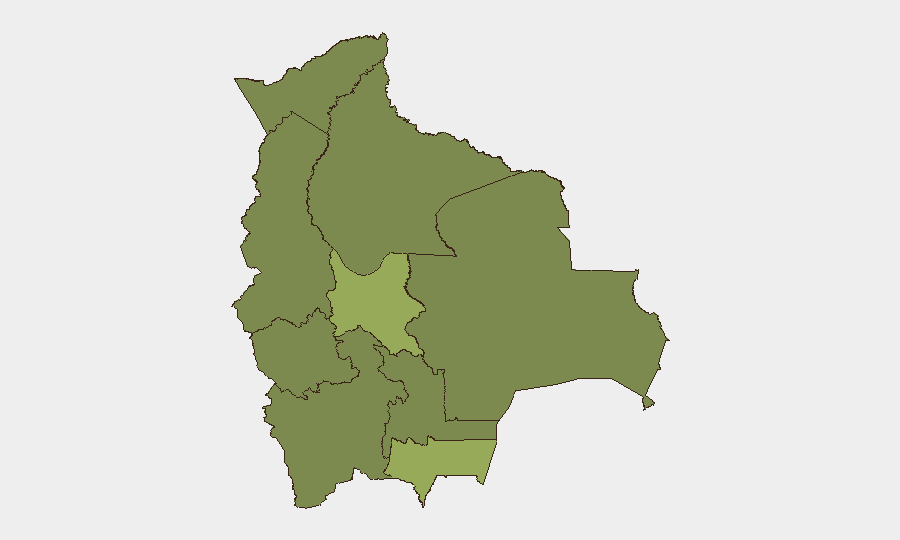
Situation Summary
Bolivia is experiencing a sustained wave of anti-government protests and transport disruptions across multiple departments in response to a national state of emergency decree. Security forces have deployed widely and clashes with demonstrators have occurred in urban centers, particularly La Paz and El Alto, though fatalities have not been reported. The unrest remains volatile but largely contained to localized protest activity and roadblocks rather than organized armed conflict. Trajectory indicates continued friction between civic groups and authorities over the next 7–10 days absent substantive policy reversal.
Key Developments
- La Paz city (7 July, evening): Anti-government protesters clashed with police near Plaza San Francisco and Avenida Mariscal Santa Cruz; tear gas deployed and arrests made as demonstrators attempted to extend road blockades toward the central business district.
- El Alto, La Paz department (7 July): Sporadic road blockades and burning barricades reported around the Ceja de El Alto transport hub; brief confrontations with security forces occurred but no major injuries reported; significant traffic disruption persisted toward La Paz.
- La Paz–Oruro highway (Route 1) (7 July): Intermittent obstruction of the main inter-departmental highway by protest groups forced buses and cargo trucks to detour or delay several hours; police and military units patrolled and negotiated clearance.
- Santa Cruz de la Sierra (7 July, afternoon): Protest roadblocks on the 4to anillo ring road and airport access routes were cleared by police by late afternoon; Viru Viru International Airport operations continued normally despite heightened security measures.
- Cochabamba city (7 July): Student and civic groups staged marches in the city center against the emergency decree; heavy police presence but largely non-confrontational; minor traffic disruption around Plaza 14 de Septiembre.
- Potosí city (7 July): Mining-sector strikes and partial blockades on access roads protested economic conditions and emergency measures; demonstrations remained mostly peaceful but contributed to inter-departmental transport delays.
- Tarija city (7 July, evening): Protests outside departmental government offices called for easing the state of emergency and guarantees on fuel and food supplies; gatherings remained peaceful; authorities reinforced security at key buildings.
Highest-Risk Areas
Cochabamba (55.6) carries the highest composite risk score and has emerged as a focal point for organized civic and student opposition. La Paz (34.2) ranks third but continues to generate the most intense police–protester interactions and road-access disruptions, particularly in the El Alto satellite city and along the critical La Paz–Oruro corridor. Tarija (42.8) shows elevated risk driven by supply-chain pressures and departmental-level demands for policy reversal. These three departments account for the bulk of recent event signals and represent the greatest exposure for corporate assets, supply chains, and personnel movement.
How GeoBit Would Assist
Security teams monitoring Bolivia should employ Intel Sweep and X/Twitter OSINT to track real-time protest mobilization, roadblock announcements, and police deployments across departments. AOI Monitoring & Early Warning on key transport hubs (La Paz–Oruro highway, El Alto, airport access routes, and Cochabamba city center) would provide persistent alerts on blockade onset and duration, enabling duty-of-care teams to reroute personnel and supplies proactively. Routing & Network Analysis and sentiment & temporal analysis would help identify which roads remain passable and forecast the intensity and likely duration of disruptions.
7-Day Outlook
Protests are expected to continue at current intensity unless the government signals a rollback of the emergency decree or negotiates supply-side relief. Police and military deployments should remain elevated; clashes are likely to remain localized and non-lethal. Corporate supply-chain and personnel-movement risk is moderate to high in Cochabamba, La Paz, and Tarija over the next week.
Highest-Risk Areas — Ranked
| # | State / Region | Risk |
|---|---|---|
| 1 | Cochabamba | 55.6 |
| 2 | Tarija | 42.8 |
| 3 | La Paz | 34.2 |
| 4 | Potosí | 27.5 |
| 5 | Pando | 25.6 |
| 6 | Beni | 25.6 |
| 7 | Oruro | 25.6 |
| 8 | Chuquisaca | 25.6 |
| 9 | Santa Cruz | 25.6 |
Sources
Previous Daily Briefs
A new Bolivia brief is written every day — each with its own risk map and downloadable CSV. Here's the last week; use the calendar to go further back.
📅 Browse every day by calendar →
Highlighted days have a brief. Tap a day for that day's map & analysis, or “csv” for that day's dataset ($5).
Atlas — our AI intelligence desk — emails them this snapshot personally. Nothing else, no list.