Situation Summary
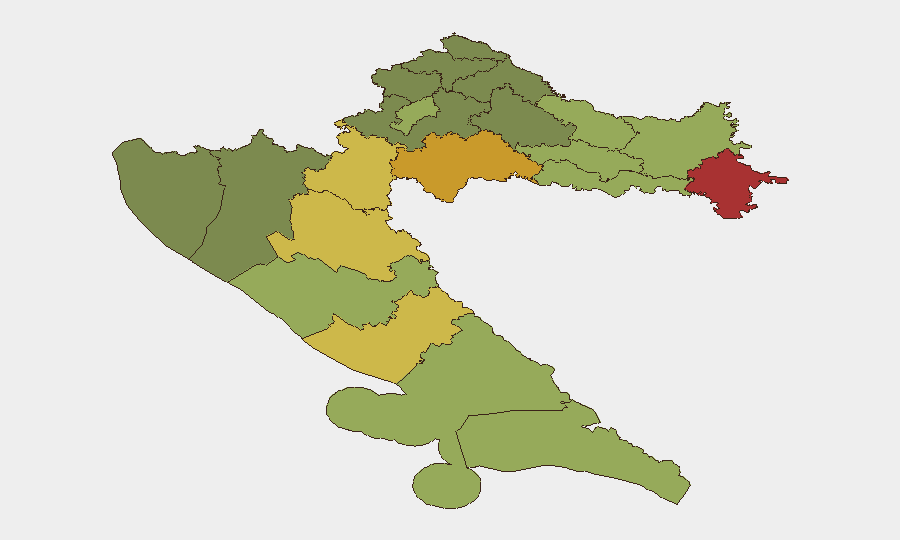
Croatia remains a low-threat environment (global rank #140, composite score 7) with no tracked active crisis. However, recent incidents—including a targeted police shooting, transnational child exploitation, state-institution cyberattack, and hate-speech allegations tied to sensitive commemorations—indicate persistent vulnerabilities across criminal, cyber, and social-friction domains. Risk is heavily concentrated in eastern border counties (Vukovar-Srijem, Sisak-Moslavina, Karlovac) where historical tensions and infrastructure fragility elevate exposure. Zagreb and coastal tourist zones remain relatively stable but face localized crime and fraud targeting.
Key Developments
- Zagreb, 2026-08-07: Croatian authorities arrested a Serbian citizen and businessman on suspicion of hacking multiple Croatian state institutions; investigators are examining possible links to Serbia's intelligence service (BIA), signaling state-level cyber targeting of government networks.
- Krapina, 2026-08-05: A police officer was shot dead inside a café at a shopping center; incident assessed as targeted, with investigation ongoing—a rare high-profile violence incident suggesting personal or organized grievance.
- Istria, 2026-08-07: Police arrested a 45-year-old Italian national for covert filming of nude minors, exposing transnational child-exploitation vulnerability despite EU membership.
- Knin, 2026-08-07: Three civil associations filed complaints alleging hate speech and display of Ustaše symbols during VRO Oluja (military commemoration) events, reflecting lingering post-conflict sensitivities in sensitive eastern regions.
- National, 2026-08-07: Police issued a public warning of a phishing campaign using fake arrest threats and false child-pornography allegations to extort civilians, indicating active organized cybercrime.
- Zadar, 2026-08-08: Police arrested 27 jet skiers and continue investigation of burglaries in ongoing coastal enforcement operation; separate fraud investigation into fake accommodation scheme affecting tourists.
Highest-Risk Areas
Eastern continental counties dominate risk rankings, with Vukovar-Srijem (78), Sisak-Moslavina (72), and Karlovac (68) reflecting legacy post-1990s war infrastructure, border proximity to Serbia, and ongoing organized-crime networks. These areas combine weak institutional capacity, cross-border trafficking routes, and occasional ethno-nationalist tension. Zagreb (rank 50) and coastal tourist zones (Split-Dalmatia 48, Zadar 55) carry lower but material risk—primarily fraud, transnational crime, and seasonal crowd-management challenges. Tourist-dependent economies make these zones vulnerable to scams and organized theft.
How GeoBit Would Assist
Corporate security teams operating in Croatia should employ AOI Monitoring & Early Warning on high-risk eastern counties (Vukovar-Srijem, Sisak-Moslavina) to detect emerging organized-crime activity, cross-border trafficking signals, or ethnic-tension escalation before operational impact. Intel Sweep, multi-language OSINT fusion, and Telegram/X monitoring enable rapid detection of hate-speech campaigns, phishing operations, and extremist narratives tied to commemorative events or political friction—critical for Zagreb and Knin. Cyber threat tracking and network analysis provide visibility into state and organized-crime hacking campaigns targeting business and government systems, particularly relevant given the August 7 Serbian intelligence-linked arrest.
7-Day Outlook
No imminent systemic crisis is evident, but the frequency of targeted violence, cyber intrusions, and transnational crime incidents suggests active criminal and state actors testing defenses. Expect continued police enforcement activity in coastal and eastern zones; commemoration-related social friction may spike around August 5 (Oluja) anniversary cycles. Risk trajectory remains contained but fragmented across criminal, cyber, and social domains rather than centralized threat.
Highest-Risk Areas — Ranked
| # | State / Region | Risk |
|---|---|---|
| 1 | Vukovar-Srijem County | 78 |
| 2 | Sisak-Moslavina County | 72 |
| 3 | Karlovac County | 68 |
| 4 | Lika-Senj County | 65 |
| 5 | Šibenik-Knin County | 62 |
| 6 | Brod-Posavina County | 58 |
| 7 | Zadar County | 55 |
| 8 | Osijek-Baranja County | 52 |
| 9 | City of Zagreb | 50 |
| 10 | Split-Dalmatia County | 48 |
| 11 | Požega-Slavonia County | 45 |
| 12 | Virovitica-Podravina County | 42 |
Sources
Previous Daily Briefs
A new Croatia brief is written every day — each with its own risk map and downloadable CSV. Here's the last week; use the calendar to go further back.
📅 Browse every day by calendar →
Highlighted days have a brief. Tap a day for that day's map & analysis, or “csv” for that day's dataset ($5).
Atlas — our AI intelligence desk — emails them this snapshot personally. Nothing else, no list.