Situation Summary
Ghana remains a relatively stable West African jurisdiction with a composite threat score of 5 (global rank #142 among 195+ countries). Open-source security reporting over the past 24–48 hours shows no major new incidents, civil unrest, or travel disruptions. Underlying baseline risks—mining-sector violence, organized crime, and routine armed robbery in urban centers—persist but have not escalated into acute crises in the immediate reporting window.
Key Developments
No clearly verified, cross-sourced security incidents have been documented in Ghana within the last 24–48 hours (July 24–26, 2026). Open-web searches, social media monitoring, and mainstream Ghanaian news aggregators do not surface new attacks, demonstrations, or enforcement operations with confirmed timestamps from July 25–26.
Recent event signals flagged on the GeoBit platform (dated July 24–26) include government, ministerial, presidential, and inter-regional public statements and administrative actions, but their operational security relevance cannot be confirmed without direct source access.
For risk-relevant context, documented incidents from July 17–21, 2026—now outside the 24-hour window but still within operational memory—included:
- Sapeiman, Greater Accra (July 20 announcement): Five suspected armed robbers and "landguard" members arrested; police recovered firearms and ammunition.
- Obuasi, Ashanti Region (July 17–18): Armed confrontation between Ghana Armed Forces and illegal miners resulted in ~8 fatalities and vehicle destruction.
- Kyebi, Eastern Region (July 18 report): Joint military–police anti-illegal-mining operation; one civilian treated for gunshot wound at Kibi Government Hospital.
Highest-Risk Areas
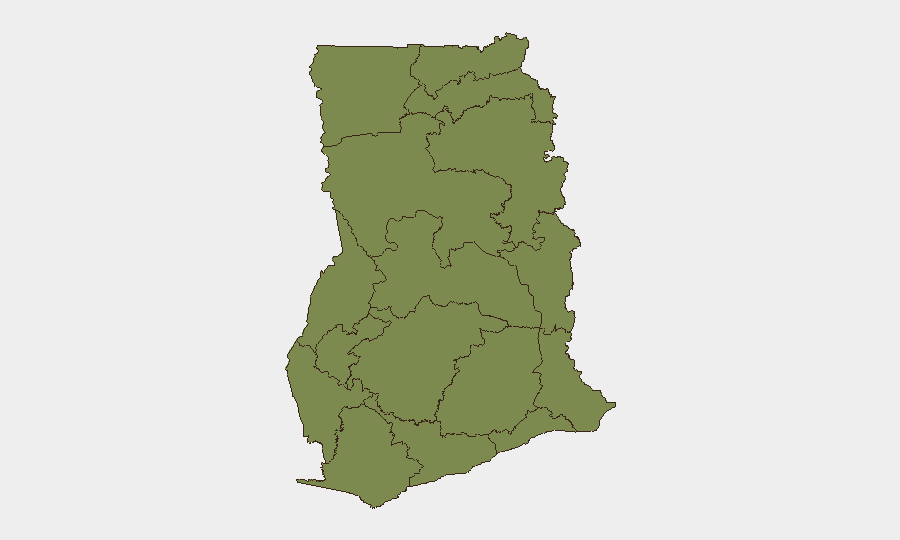
Greater Accra Region dominates the sub-national risk profile with a composite score of 31.9—over five times higher than any other region. Urban crime (armed robbery, organized fraud, gang activity) and enforcement operations against organized crime and land disputes concentrate risk in the capital and its surrounding commercial and residential zones. Central Region (5.9) ranks second, driven by mining-sector violence and resource competition; Volta, Ahafo, and northern border regions (3.9–1.9) face lower but persistent threats related to illegal mining, trans-border criminal networks, and land conflicts. All other tracked regions fall below 2.0, indicating baseline stability.
How GeoBit Would Assist
Risk and Threat Assessment modules enable continuous monitoring of Greater Accra and mining zones (Ashanti, Eastern, Central) to detect early signals of organized crime escalation, armed robbery clusters, or mining-sector violence. AOI (Area-of-Interest) Monitoring & Early Warning with persistent watch and alerting on high-risk districts allows security teams to receive real-time notifications of emerging threats before they reach mainstream news. OSINT fusion and multi-language social media intelligence (X, Telegram, local Ghanaian news feeds) combined with sentiment and temporal analysis provide hour-level granularity on civil unrest, protests, or security incidents that may not immediately appear in English-language global feeds.
7-Day Outlook
No acute escalation is forecast for the next 7 days based on current open-source indicators. Routine enforcement operations against illegal mining and organized crime will likely continue in Ashanti, Eastern, and Greater Accra regions. Political and administrative activity (flagged in recent public statements) should be monitored for downstream labor, security, or governance impacts, but none are immediately evident.
Next update: 2026-07-27
Highest-Risk Areas — Ranked
| # | State / Region | Risk |
|---|---|---|
| 1 | Greater Accra Region | 31.9 |
| 2 | Central Region | 5.9 |
| 3 | Volta Region | 3.9 |
| 4 | Ahafo Region | 3.9 |
| 5 | Upper East Region | 1.9 |
| 6 | Upper West Region | 1.9 |
| 7 | Savannah Region | 1.9 |
| 8 | North East Region | 1.9 |
| 9 | Northern Region | 1.9 |
| 10 | Bono East Region | 1.9 |
| 11 | Eastern Region | 1.9 |
| 12 | Oti Region | 1.9 |
Sources
Previous Daily Briefs
A new Ghana brief is written every day — each with its own risk map and downloadable CSV. Here's the last week; use the calendar to go further back.
📅 Browse every day by calendar →
Highlighted days have a brief. Tap a day for that day's map & analysis, or “csv” for that day's dataset ($5).
Atlas — our AI intelligence desk — emails them this snapshot personally. Nothing else, no list.