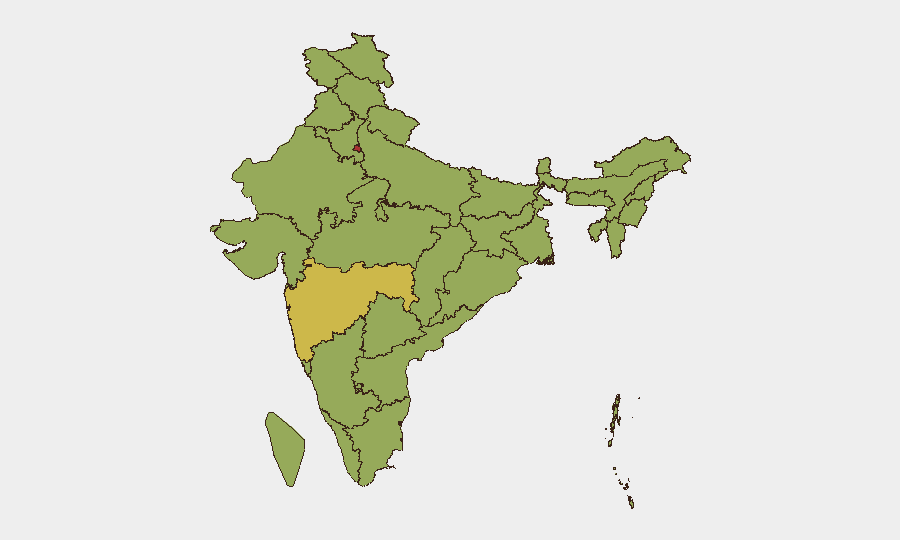
Situation Summary
India's composite threat score remains moderate (70/100, rank #18 globally), but recent 24–48-hour developments show elevated localized risk in the capital, a major industrial accident in Sikkim, and renewed military-diplomatic tension with Pakistan. Delhi's risk score (78.8) reflects ongoing protest activity and security operations, while weather-driven infrastructure failures and a significant casualty event in maritime labor underscore multi-domain vulnerabilities. The threat environment is characterized by institutional friction and tactical incidents rather than coordinated mass violence, but warrant close monitoring across transport, energy, and border sectors.
Key Developments
- Samardung village, Sikkim (Teesta hydro project) – July 27: A methane gas explosion and tunnel collapse at NHPC's construction site killed at least 13 workers and trapped 17 others; hazardous-gas conditions are hampering rescue operations and pose ongoing risk to rescue personnel and nearby facilities. ([2], [11])
- Central Delhi (Parliament vicinity, Jantar Mantar) – July 27: Police maintained heavy security and dismantled protest tents following the "Chalo Sansad" march by the Cockroach Janta Party; Delhi Metro shut 11+ central stations "until further notice," severely disrupting commuter movement across the capital. ([6])
- New Delhi – July 27: India's Ministry of External Affairs summoned a senior Russian diplomat to protest a missile/drone strike on commercial vessel MV Golden Leo departing Odesa, which killed four Indian nationals; the incident underscores elevated risk for Indian seafarers in the Black Sea. ([2], [10])
- India–Pakistan border – July 27: India accused Pakistan of violating a fresh DGMO-level ceasefire understanding (effective 17:00 IST); both sides issued contradictory compliance statements, indicating ongoing military alertness along the border and in air/sea domains. ([8])
- Delhi (citywide) – July 26–27: At least four deaths recorded in a building collapse attributed to monsoon-heavy rains; emergency services responded to multiple weather-linked structural failures and landslides, adding short-term infrastructure and transport risk. ([3])
- Indian maritime labor – July 27: Following the MV Golden Leo incident, Indian authorities issued a safety advisory to seafarers and crewing companies operating in the Black Sea, citing extreme caution due to heightened missile and drone attack risk on shipping lanes. ([10])
Highest-Risk Areas
Delhi dominates the sub-national ranking (78.8) due to active protest dynamics, heavy police presence, and metro disruptions centered on Parliament and central commercial zones. Maharashtra (60.8) and Uttar Pradesh (57.7) follow, driven by mixed institutional and civil tensions. Punjab (55.8) and Madhya Pradesh (54.1) reflect ongoing factional and regulatory pressures rather than acute violence. Risk is concentrated in state capitals and major transport hubs; rural and peripheral areas show lower immediate threat, though Sikkim's industrial accident highlights non-security hazards in remote project sites.
How GeoBit Would Assist
Security teams should deploy AOI Monitoring & Early Warning on central Delhi (Jantar Mantar, Parliament, Metro hub closures) and Punjab border zones to detect protest escalation or ceasefire violations in near-real time. Routing & Network Analysis and Maritime & Aviation tracking enable alternative commute planning and updated guidance for Indian nationals transiting the Black Sea or operating in high-risk Indian infrastructure projects. Multi-language OSINT and sentiment analysis on institutional and protest communications help forecast pressure points and tactical police responses before they affect staff movement or supply chains.
7-Day Outlook
Protest activity in Delhi is likely to remain elevated but episodic, with police maintaining heavy presence and periodic transit disruptions. Military-diplomatic friction with Pakistan may persist in rhetoric and border operations, though a broader escalation is not imminent. Weather-related infrastructure failures will continue in monsoon-affected states; travel delays and service outages should be anticipated in Delhi, Maharashtra, and UP through early August.
Highest-Risk Areas — Ranked
| # | State / Region | Risk |
|---|---|---|
| 1 | Delhi | 78.8 |
| 2 | Maharashtra | 60.8 |
| 3 | Uttar Pradesh | 57.7 |
| 4 | Punjab | 55.8 |
| 5 | Madhya Pradesh | 54.1 |
| 6 | Gujarat | 53.7 |
| 7 | Bihar | 52.4 |
| 8 | Haryana | 52.1 |
| 9 | Uttarakhand | 52.1 |
| 10 | West Bengal | 51.7 |
| 11 | Assam | 51.5 |
| 12 | Rajasthan | 51.2 |
Sources
Previous Daily Briefs
A new India brief is written every day — each with its own risk map and downloadable CSV. Here's the last week; use the calendar to go further back.
📅 Browse every day by calendar →
Highlighted days have a brief. Tap a day for that day's map & analysis, or “csv” for that day's dataset ($5).
Atlas — our AI intelligence desk — emails them this snapshot personally. Nothing else, no list.