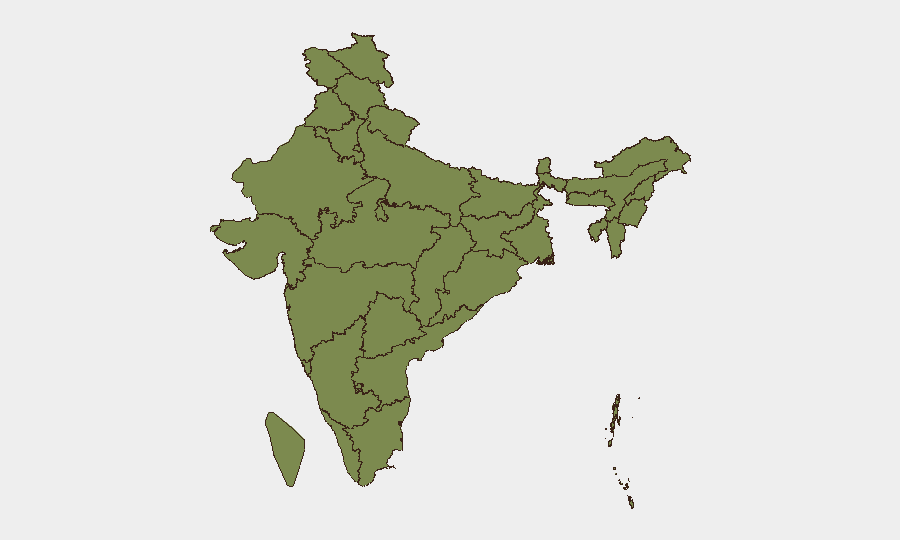
Situation Summary
India's composite security risk remains moderate at rank #73 globally (score 18), but acute instability is concentrated in Delhi, which faces elevated civil unrest, organized crime, and infrastructure vulnerability. The past 48 hours have witnessed sustained protest-related violence in the capital, a significant militant attack in Kashmir, and a major gang-related armed encounter in the NCR region. Weather-related infrastructure failures are compounding operational risk across multiple states.
Key Developments
- New Delhi (Connaught Place/Tolstoy Marg), evening 22 July 2026: Violent clashes during Cockroach Janta Party (CJP) protest resulted in stone and bottle attacks on police, injuring at least one ACP and multiple personnel; tear gas and baton charges deployed to restore order.
- New Delhi (Jantar Mantar/Sansad Marg), night 22–23 July 2026: Sustained civil unrest with clashes between demonstrators and security forces; at least six police personnel injured including two ACP-rank officers; heavy police and paramilitary deployment with barricades established on approach roads.
- New Delhi (Connaught Place CJP protest site), 22–23 July 2026: Rapid Action Force officer attacked with swords by mob during attempted rescue; video evidence circulating on social media; Delhi Police filed FIRs and opened conspiracy investigations, including probing use of encrypted messaging apps during coordinated 'Sansad Chalo' march.
- Anantnag (Lal Chowk market), Jammu & Kashmir, 22 July 2026: Police head constable Ashiq Hussain Qureshi fatally shot in targeted militant attack—the first major terror strike in Kashmir since 2025 Pahalgam incident; United Liberation Council reportedly claimed responsibility; over 2,000 suspects detained or questioned in counter-terrorism operation.
- Gurugram (Sushant Lok), Haryana, 23 July 2026: Armed police encounter with Deepak Nandal gang members following alleged hostage-taking of businessman; four gang members killed, one injured, three police officers wounded; sophisticated weapons used in firefight.
- New Delhi (multiple sites), 22–23 July 2026: Delhi Police filed multiple FIRs across districts related to assaults on security personnel, weapons use, and property damage; investigating larger conspiracy behind coordinated protest violence.
- Delhi (unspecified locality), 23 July 2026: At least four fatalities in building collapse during heavy monsoon rains; pattern of rain-related structural failures, landslides, and travel disruption highlighting infrastructure vulnerability.
Highest-Risk Areas
Delhi dominates the risk profile at 33.4—nearly double the second-ranked Bihar (15.1)—driven by sustained protest-related civil unrest, security-force confrontations, and organized crime activity. Bihar, Uttar Pradesh, and Maharashtra together account for a secondary risk tier (14.1–15.1), primarily from labor and administrative disputes and historical criminality. Jammu & Kashmir's recent militant resurgence elevates it to the top ten; Punjab's ranking reflects border-region sensitivities and ongoing labor activism. Northern corridor states—Delhi, Haryana, and Punjab—present compounded risk from overlapping civil unrest, organized crime, and weather-related infrastructure failure.
How GeoBit Would Assist
Security teams should deploy Area-of-Interest (AOI) Monitoring with alerting on Delhi protest zones (Connaught Place, Jantar Mantar, Sansad Marg) and Anantnag (Kashmir) for real-time civil and security-force activity detection. Network & Actor Analysis of CJP leadership, Deepak Nandal gang structure, and United Liberation Council cell composition would clarify threat networks and predict secondary incident locations. Intel Sweep and multi-language OSINT across social media, encrypted platforms, and regional news would track protest messaging, militant communication, and gang movements 24–72 hours ahead of escalation.
7-Day Outlook
Sustained CJP protest activity is likely in Delhi through the weekend, with incremental risk of renewed clashes if security postures harden or counter-demonstrations mobilize. Kashmir's militant cell structure warrants heightened counter-terrorism sweeps; the United Liberation Council's operational capability and targeting of uniformed personnel suggest tactical maturity. Monsoon season will continue to compound infrastructure and travel risk across northern and central states.
Highest-Risk Areas — Ranked
| # | State / Region | Risk |
|---|---|---|
| 1 | Delhi | 33.4 |
| 2 | Bihar | 15.1 |
| 3 | Uttar Pradesh | 14.1 |
| 4 | Maharashtra | 12.9 |
| 5 | Assam | 8.7 |
| 6 | Madhya Pradesh | 8.7 |
| 7 | Punjab | 8.6 |
| 8 | Jammu and Kashmir | 8.1 |
| 9 | Karnataka | 8.1 |
| 10 | Gujarat | 7.9 |
| 11 | Haryana | 7.4 |
| 12 | West Bengal | 7.2 |
Sources
Previous Daily Briefs
A new India brief is written every day — each with its own risk map and downloadable CSV. Here's the last week; use the calendar to go further back.
📅 Browse every day by calendar →
Highlighted days have a brief. Tap a day for that day's map & analysis, or “csv” for that day's dataset ($5).
Atlas — our AI intelligence desk — emails them this snapshot personally. Nothing else, no list.