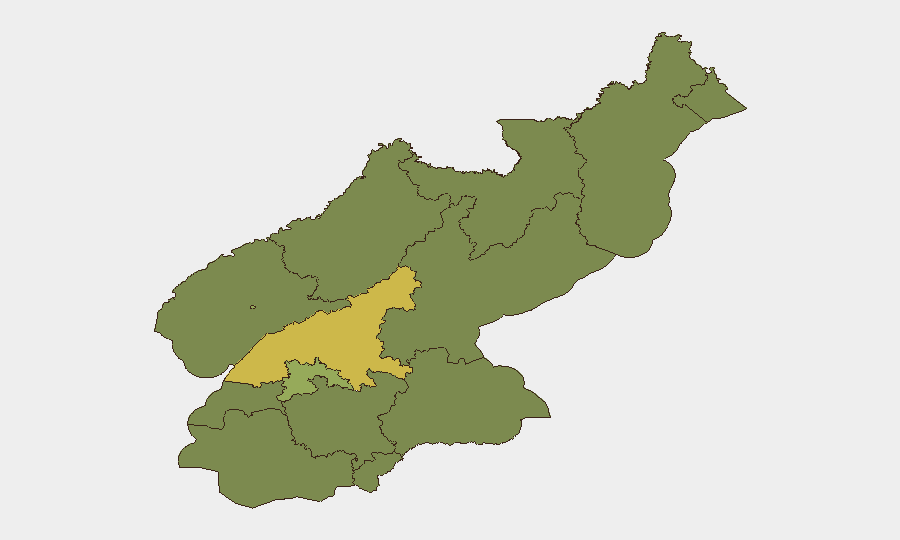
Situation Summary
North Korea remains at composite threat level #37 globally (score 55/100), with no credible reports of new security incidents, civil unrest, or infrastructure failures within the last 24–48 hours in open-source channels. The country's opaque media environment and tight information control mean that discrete on-the-ground events are rarely confirmed until days after occurrence. Risk trajectory is stable relative to baseline strategic tensions on the peninsula; no imminent domestic instability indicators are visible in available reporting.
Key Developments
No verified incidents meeting the 24–48-hour recency threshold have been documented in credible open sources as of 2026-07-15.
Open-source intelligence on North Korea is severely constrained by state media monopoly and restricted foreign access. International and South Korean media outlets have not reported confirmed security, conflict, or civil-unrest events occurring inside North Korea in the past two days beyond routine propaganda messaging.
Context (outside the 24–48-hour window, but operationally relevant):
- Pyongyang, 9 July 2026: Central Military Commission approved expansion of nuclear forces and modernization of military bases and naval shipyard capacity—signals ongoing strategic escalation but is 6+ days old.
- Pyongyang, 10–11 July 2026: State media condemned NATO summit and U.S.–allied military cooperation; reaffirmed rejection of denuclearization—political rhetoric rather than physical incident.
- Cross-border/Peninsula level (13–14 July): Event signals suggest inter-agency investigations and military-related statements involving South Korean Navy and Unification Ministry; specific North Korean domestic incidents are not corroborated in open reporting.
Highest-Risk Areas
South Pyongan province (risk 68.6) and P'yŏngyang capital (59.5) carry the highest composite risk scores, reflecting concentration of military command infrastructure, nuclear facilities, and state-security apparatus in these regions. The remaining 10 provinces cluster at risk 38.6, indicating either lower reporting capacity or more dispersed threat signatures. Risk rankings are driven by proximity to military/industrial assets and historical event density rather than imminent acute threats; personnel and assets in South Pyongan and P'yŏngyang face the broadest exposure to state-security operations, restricted-zone enforcement, and potential collateral effects of inter-agency activity.
How GeoBit Would Assist
Teams with personnel or assets in North Korea should deploy persistent Area-of-Interest (AOI) Monitoring & Early Warning on key facilities and checkpoints in South Pyongan and P'yŏngyang to detect movement anomalies or security posture changes. Multi-language OSINT fusion (state media, social platforms, and radio SIGINT) provides earliest detection of policy shifts or operational directives before they manifest on the ground; sentiment and temporal analysis flags escalation in official rhetoric signaling imminent enforcement actions. Routing & Network Analysis enables contingency journey planning if cross-border transit or internal movement becomes necessary.
7-Day Outlook
No acute destabilizing events are forecast for the next 7 days based on available signals. The regime's focus remains on military modernization and peninsular messaging rather than domestic repression or infrastructure disruption. Monitoring should continue on South Korean military response and any signals of unscheduled leadership activity or security-force deployments, which historically precede policy changes affecting foreign nationals.
Report Date: 2026-07-15 | Confidence: Medium (limited source access) | Next Update: 2026-07-16
Highest-Risk Areas — Ranked
| # | State / Region | Risk |
|---|---|---|
| 1 | South Pyongan | 68.6 |
| 2 | P'yŏngyang | 59.5 |
| 3 | Ryanggang | 38.6 |
| 4 | North Hamgyong | 38.6 |
| 5 | North Pyongan | 38.6 |
| 6 | Chagang | 38.6 |
| 7 | Nampo | 38.6 |
| 8 | South Hwanghae | 38.6 |
| 9 | North Hwanghae | 38.6 |
| 10 | South Hamgyong | 38.6 |
| 11 | Kaesong | 38.6 |
| 12 | Kangwon | 38.6 |
Previous Daily Briefs
A new North Korea brief is written every day — each with its own risk map and downloadable CSV. Here's the last week; use the calendar to go further back.
📅 Browse every day by calendar →
Highlighted days have a brief. Tap a day for that day's map & analysis, or “csv” for that day's dataset ($5).
Atlas — our AI intelligence desk — emails them this snapshot personally. Nothing else, no list.