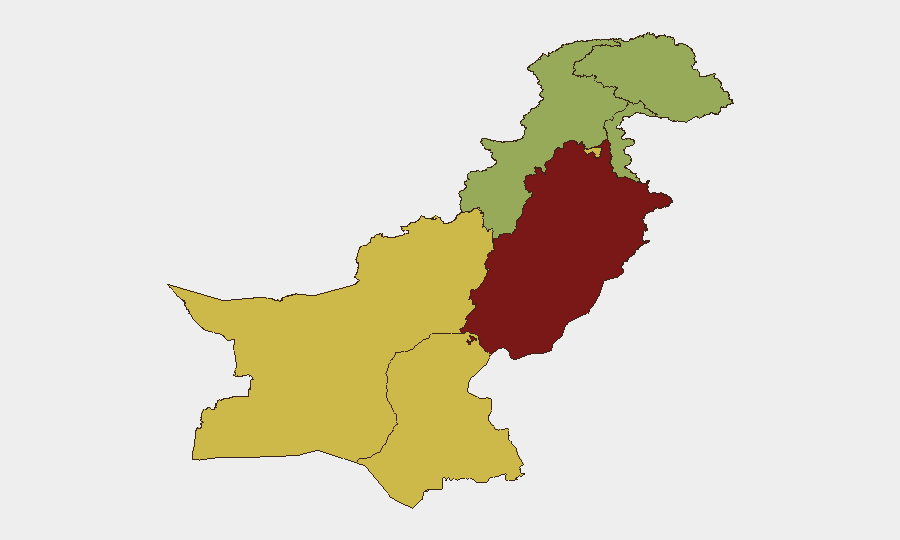
Situation Summary
Pakistan remains at composite threat level 22 globally (score 80), with insurgency as the primary driver across 411 tracked events. Sub-national risk is highly concentrated: Punjab, Balochistan, and the Islamabad Capital Territory account for the highest threat densities, while separatist activity and Iran–Pakistan border dynamics have generated escalation signals in the past 72 hours. The security environment is characterized by active state-actor engagement (Iran, U.S.), ongoing Taliban–Pakistan friction, and persistent criminal investigations into aviation and corporate conduct.
Key Developments
- 2026-07-11 · Iran–Pakistan Military Posture: Conventional military force engagement reported between Iran and Pakistani forces; related U.S.–Iran military activity also confirmed, suggesting heightened border or maritime tension in the Iran–Pakistan theater (specific location not independently verified in available brief materials).
- 2026-07-11 · Diplomatic Appeal: Pakistan made formal appeal to foreign ministries; assessed as de-escalatory response to regional military activity, consistent with Qatar-brokered mediation calls reported on 2026-07-10 involving U.S. and Iranian officials.
- 2026-07-09 · Separatist Disapproval: Separatist actor issued formal disapproval statement directed at Islamabad; no specific incident or casualty count available, but timing coincides with military activity signals.
- 2026-07-09 · Taliban Confrontation: Pakistan military reported physical assault engagement with Taliban elements; location not specified in current brief.
- 2026-07-09 · Aviation Investigation: Pakistani authorities and Boeing launched formal investigations following public corporate statement; nature of incident (accident, maintenance, security concern) not clarified in available signals.
- 2026-07-11 · Cross-Border Assault: Physical assault event recorded between Lebanese and Pakistani actors; context and location not specified; assess as lower-priority indicator pending corroboration.
- 2026-07-10 · Criminal Investigation: Police initiated criminal investigation; subject matter not detailed in available signals.
Note: Live web research for 24–48 hour Pakistan incidents yielded insufficient corroboration for additional independent events. Diplomatic mediation activity (Qatar, U.S., Iran) is confirmed but does not constitute a Pakistan domestic security incident.
Highest-Risk Areas
Punjab (85.7) and Balochistan (70.8) drive the national composite score and warrant priority focus. Punjab's elevated risk reflects both state-capital proximity and dense population concentration, creating dual targets for insurgent and criminal activity. Balochistan's ranking reflects persistent separatist movements, cross-border sanctuary, and historical instability. Islamabad Capital Territory (64.8) ranks third, consistent with its symbolic and administrative importance and historical vulnerability to coordinated attacks. Khyber Pakhtunkhwa (56.7) and Azad Kashmir (56.4) remain secondary focus areas due to Taliban presence and border dynamics respectively.
How GeoBit Would Assist
Intel Sweep and OSINT Fusion enable rapid corroboration of aviation, military, and separatist signals across open sources, X/Telegram, and multi-language feeds—critical for validating the Boeing investigation and military engagement reports. AOI Monitoring & Early Warning on Punjab, Balochistan, and the Iran–Pakistan border would provide persistent alerting for escalation in military posture, separatist activity, and cross-border incidents. Network & Actor Analysis would map Taliban, separatist, and state-force relationships to predict spillover risk to corporate or personnel locations in high-risk provinces.
7-Day Outlook
Near-term trajectory remains sensitive to Iran–Pakistan border dynamics and diplomatic de-escalation outcomes. If mediation succeeds, military posture should normalize within 7–10 days; failure carries risk of further conventional force engagement and separatist exploitation. Domestic criminal and aviation investigations should yield clarity by mid-week, affecting corporate and civil-aviation risk posture.
Highest-Risk Areas — Ranked
| # | State / Region | Risk |
|---|---|---|
| 1 | Punjab | 85.7 |
| 2 | Balochistan | 70.8 |
| 3 | Islamabad Capital Territory | 64.8 |
| 4 | Sindh | 62.5 |
| 5 | Khyber Pakhtunkhwa | 56.7 |
| 6 | Azad Kashmir | 56.4 |
| 7 | Gilgit-Baltistan | 55.7 |
Sources
Previous Daily Briefs
A new Pakistan brief is written every day — each with its own risk map and downloadable CSV. Here's the last week; use the calendar to go further back.
📅 Browse every day by calendar →
Highlighted days have a brief. Tap a day for that day's map & analysis, or “csv” for that day's dataset ($5).
Atlas — our AI intelligence desk — emails them this snapshot personally. Nothing else, no list.