Situation Summary
South Korea remains a stable, low-threat environment globally (rank #68; composite score 2.2) with no major security, civil-unrest, or infrastructure incidents confirmed in the last 24–48 hours. Event signals from 4–6 July indicate localized political and regulatory friction—primarily involving government administration and Seoul-based disputes—but do not reflect active violence, mass protest, or travel restrictions. The security posture is stable; ongoing regulatory disputes (notably involving e-commerce investigations dating to early July) are administrative in nature and pose minimal direct risk to most corporate operations or personnel.
Key Developments
- No major security or civil-unrest incidents confirmed in the last 24–48 hours by multiple independent open-source sources. Available reporting is either undated social-media content or regulatory/political developments from 3–5 July.
- Seoul / National level (3–5 July, prior window): Presidential office rejected allegations of discriminatory regulatory treatment in an ongoing Coupang data-breach investigation; dispute involves domestic law enforcement coordination across multiple agencies. Does not indicate active security threat, but reflects regulatory-political friction affecting a major platform.
- Event signals (4–6 July) indicate scattered administrative and investigative activity: Seoul authorities initiated investigation on 6 July; Seoul rejected business claims on same date. No escalation to public disorder or operational disruption reported.
- All remaining signals (public statements by community, residents, investors, students, authorities) lack corroboration by independent media sources within the 24–48 hour window. Without verifiable incident reports, these cannot be assessed as confirmed developments.
Highest-Risk Areas
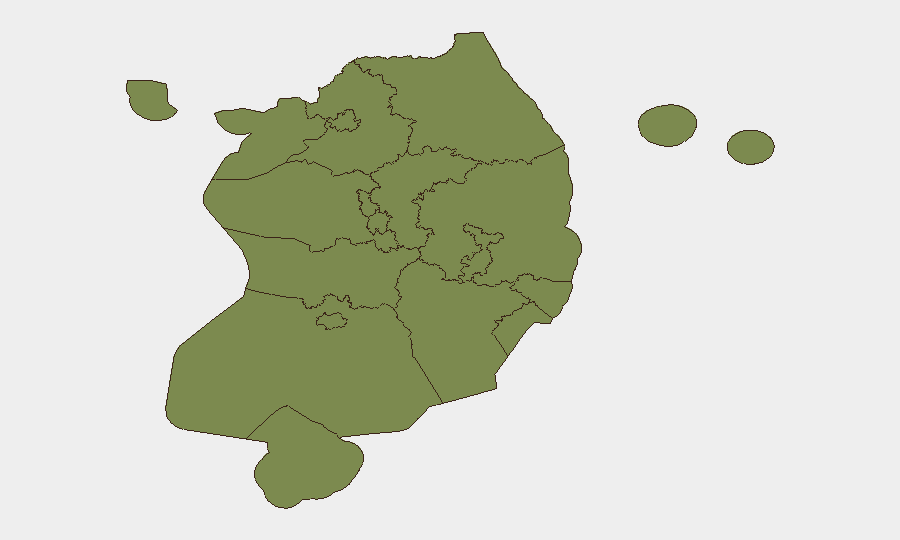
North Chungcheong province carries disproportionate risk (score 31.5)—substantially higher than all other regions and warranting dedicated monitoring, though the underlying drivers remain unclear from current open-source data. Seoul (score 21.2) ranks second and is the locus of recent administrative investigations and regulatory disputes; any escalation would be concentrated in the capital and immediate surroundings. All other regions score below 8, with most below 2.5, indicating risk is highly concentrated geographically. Teams with assets or personnel in North Chungcheong should maintain heightened situational awareness; Seoul-based operations should monitor regulatory developments but face low direct security risk.
How GeoBit Would Assist
A corporate security team would deploy AOI Monitoring & Early Warning on North Chungcheong and Seoul districts to detect any escalation in event frequency or severity ahead of mainstream reporting. Intel Sweep and multi-source OSINT fusion (X/Twitter, Telegram, Korean-language media, and sentiment analysis) would provide real-time corroboration of unverified signals and distinguish administrative friction from emerging threats. Network & Actor Analysis would map connections between government agencies, businesses, and protest actors to forecast cascading risk if regulatory disputes intensify.
7-Day Outlook
No material deterioration in South Korea's security environment is forecast over the next seven days. Ongoing regulatory disputes will likely continue at administrative level without escalating to civil unrest or operational disruption. Teams should monitor Seoul and North Chungcheong via persistent intelligence watch but maintain normal duty-of-care protocols; no advisory changes are warranted.
Highest-Risk Areas — Ranked
| # | State / Region | Risk |
|---|---|---|
| 1 | North Chungcheong | 31.5 |
| 2 | Seoul | 21.2 |
| 3 | North Gyeongsang | 7.8 |
| 4 | Jeju | 2.9 |
| 5 | Gyeonggi | 2 |
| 6 | South Jeolla | 2 |
| 7 | Daegu | 2 |
| 8 | Incheon | 1.5 |
| 9 | Gangwon State | 1.5 |
| 10 | South Chungcheong | 1.5 |
| 11 | Sejong | 1.5 |
| 12 | Jeonbuk State | 1.5 |
Sources
Previous Daily Briefs
A new South Korea brief is written every day — each with its own risk map and downloadable CSV. Here's the last week; use the calendar to go further back.
📅 Browse every day by calendar →
Highlighted days have a brief. Tap a day for that day's map & analysis, or “csv” for that day's dataset ($5).
Atlas — our AI intelligence desk — emails them this snapshot personally. Nothing else, no list.