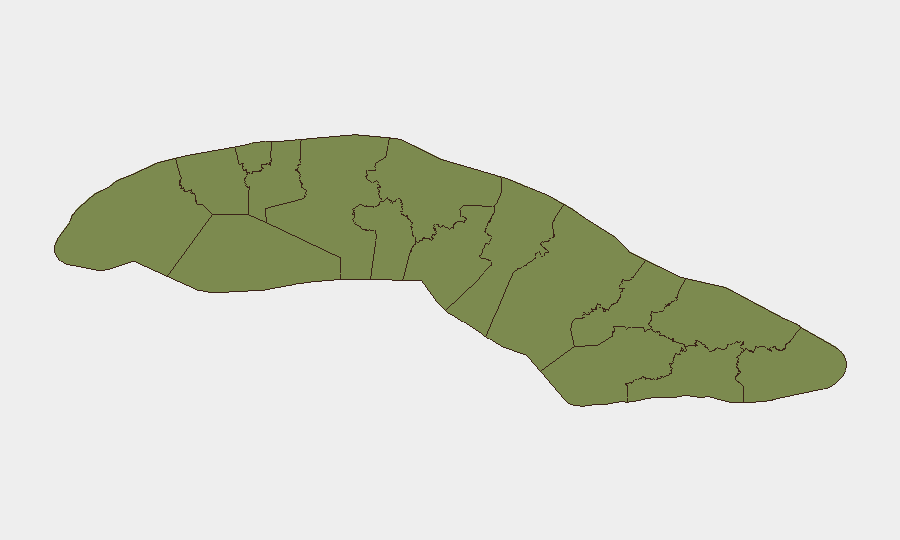
Situation Summary
Cuba faces acute civil unrest driven by a severe, recurring power crisis that has triggered coordinated nationwide protests over the past 48 hours. The national electrical grid experienced total collapse around 24–25 July, leaving multiple provinces without power and water for extended periods. Concurrent with domestic discontent, state security forces have conducted visible military exercises in key regions, and external military messaging from the US has intensified perceptions of external pressure. The composite threat environment remains elevated, with Havana accounting for the majority of tracked risk events.
Key Developments
- Havana (multiple neighborhoods: Jaimanitas, La Güinera, Centro Habana, Santiago de las Vegas) – Night of 24–25 July 2026: Residents held street protests and *cacerolazos* (coordinated pot-banging) demanding restoration of electricity and water. Video documentation shows crowds gathering near police stations in Santiago de las Vegas, signaling confrontation risk as anger targeted state authorities.
- National power grid failure – 24–25 July 2026: Cuba's Sistema Electroenergético Nacional experienced total grid collapse, triggering mass blackouts nationwide. The Unión Eléctrica confirmed the "desconexión total," with repeated failures at key thermoelectric plants cited as the cause.
- Santiago de Cuba (city) – Late July 2026: The local electrical microsystem failed, leaving the city without power and exacerbating public frustration ahead of broader island-wide protests. This represents a recurrence of similar outages across the same period.
- Island-wide protest coordination – 24–25 July 2026: Demonstrations spread across multiple provinces beyond Havana, with opposition groups and activists amplifying protest calls via X/Twitter and other social networks. El Toque protest tracker and Martí Noticias documented "numerous protests" extending to unspecified towns and rural barrios.
- Cuban state military posture – Recent hours, late July 2026: Special forces, infantry, artillery, and air-defense units conducted tactical exercises in the Matanzas military region, signaling heightened readiness amid domestic unrest and external military messaging.
- US military messaging in Caribbean – Last 24–48 hours: US Southern Command video highlighting a "versatile, synchronized and lethal" Marine littoral combat force was amplified by the US Embassy in Cuba via X/Twitter, intensifying regime security perceptions of external military threat.
Highest-Risk Areas
Havana dominates the risk landscape with a composite score of 33.4—nearly four times higher than Santiago de Cuba (8.8), the second-highest-risk province. The capital's concentration of government, diplomatic, and commercial activity, combined with high population density and visible protest activity in working-class neighborhoods, creates compounded civil unrest and potential confrontation risk. Santiago de Cuba and the northwestern provinces (Artemisa, Matanzas, Pinar del Río) show elevated but secondary risk, driven primarily by power grid failures and localized demonstrations. The power crisis is the primary driver across all high-risk zones.
How GeoBit Would Assist
Security teams should deploy AOI Monitoring & Early Warning on Havana's highest-risk neighborhoods (Jaimanitas, Centro Habano, Santiago de las Vegas) to detect protest activity and movement patterns in near-real time. Intel Sweep and X/Twitter OSINT capabilities enable continuous tracking of opposition coordination calls and activist messaging that precede coordinated unrest. Routing & Network Analysis can support alternative journey planning for personnel in Havana and Santiago de Cuba to avoid active protest zones and congested areas during power outages.
7-Day Outlook
The immediate outlook remains volatile. Recurrent grid failures are likely to trigger additional rounds of street protests in Havana and other provinces through the coming week, particularly if power restoration remains delayed. The visible military posture and external security messaging suggest the regime will maintain heightened alert status; this posture, combined with ongoing civil discontent, increases the risk of confrontation during protests or infrastructure incidents.
Highest-Risk Areas — Ranked
| # | State / Region | Risk |
|---|---|---|
| 1 | Havana | 33.4 |
| 2 | Santiago de Cuba | 8.8 |
| 3 | Artemisa | 4.8 |
| 4 | Matanzas | 4.8 |
| 5 | Pinar del Rio | 4.3 |
| 6 | Camagüey | 4.3 |
| 7 | Isle of Youth | 3.9 |
| 8 | Mayabeque | 3.4 |
| 9 | Cienfuegos | 3.4 |
| 10 | Villa Clara | 3.4 |
| 11 | Sancti Spiritus | 3.4 |
| 12 | Ciego de Avila | 3.4 |
Sources
Previous Daily Briefs
A new Cuba brief is written every day — each with its own risk map and downloadable CSV. Here's the last week; use the calendar to go further back.
📅 Browse every day by calendar →
Highlighted days have a brief. Tap a day for that day's map & analysis, or “csv” for that day's dataset ($5).
Atlas — our AI intelligence desk — emails them this snapshot personally. Nothing else, no list.