Situation Summary
France remains a moderate-threat environment (global rank #98, composite score 13) with 415 tracked events, but faces a convergence of acute security pressures: localized militant activity (anti-synagogue plot, foiled bank attack), conventional violence (random stabbing in Paris), geopolitical strain (U.S.–France diplomatic friction, maritime sanctions enforcement), and environmental hazards (national heatwave, major wildfires). The risk profile is heavily concentrated in two regions—Nouvelle-Aquitaine and Île-de-France—while most of the country remains low-risk. Trajectory suggests sustained vigilance rather than imminent systemic crisis.
Key Developments
- Paris (Porte de Clichy), 27 July, 11:30 a.m. – A male suspect armed with two kitchen knives stabbed three women (aged 19, 24, 36), seriously injuring two with lower-back and abdominal wounds before being restrained by bystanders and arrested by an off-duty police officer. Interior Ministry stated victims hospitalized, not critical, and suspect made "incoherent" statements; motive unclear.
- Sarcelles (Val-d'Oise, north of Paris), 26–29 July – French anti-terrorism prosecutors detained six individuals suspected of preparing a synagogue attack; investigation centers on weapons trafficking and vehicle delivery. This follows 12 July evacuation of ~300 people when a suspicious vehicle was found near the same target.
- Paris (16th arrondissement), 29 July – Reinforced visible security deployed around major U.S. bank headquarters (Goldman Sachs, Bank of America offices) following a foiled attack on Bank of America Paris facilities; several institutions (e.g., Citi) moved staff to remote work as precautionary measure.
- Western Mediterranean (off French coast), 29 July – French Navy intercepted and seized an oil tanker President Macron linked to Russian "shadow fleet" and sanctions evasion, indicating heightened maritime enforcement activity with implications for commercial shipping and energy transport.
- La Hague (Normandy), 29 July – An employee at the Orano La Hague nuclear fuel facility died from meningitis; company stated no confirmed link to UK outbreak but case highlights health/operational risk at critical nuclear infrastructure.
- France (49 departments), 27–29 July – Red heatwave alert (highest level) issued across nearly half the country with temperatures reaching ~40°C; wildfire danger, transport disruption, and public-safety constraints activated. Military cargo aircraft deployed to drop flame retardant on major wildfires in southern regions; Tour de France final-stage security personnel reassigned to fire response.
Highest-Risk Areas
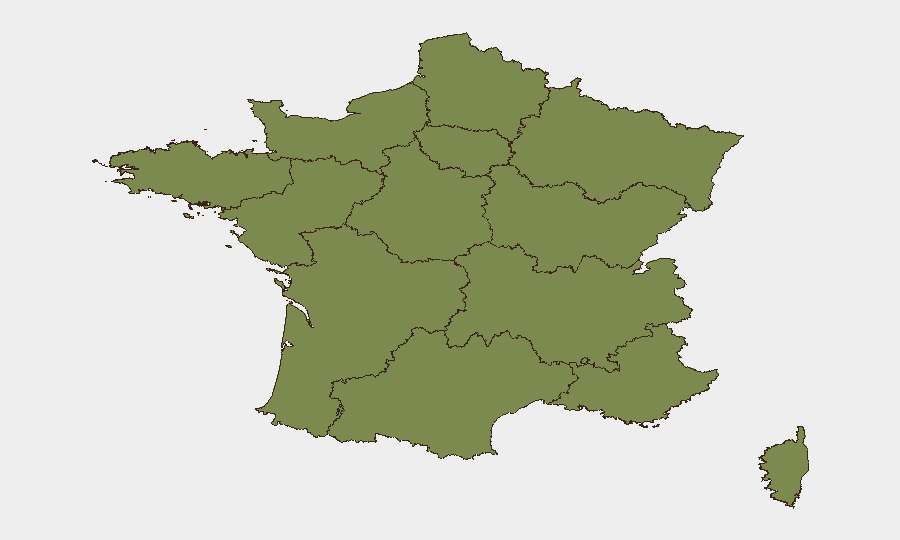
Nouvelle-Aquitaine (risk 31.8) and Île-de-France (risk 20.8) together account for the majority of France's measured threat. Nouvelle-Aquitaine's elevated score reflects wildfire activity, evacuation disruptions, and civil-protection strain in the south. Île-de-France dominance is driven by recent militant plots (Sarcelles synagogue), conventional violence (Paris stabbings), foiled financial-sector attacks, and diplomatic friction affecting the capital and its business districts. All other regions score below 8, indicating risk is highly localized to Paris metropolitan area and southwest wildfire zones.
How GeoBit Would Assist
Teams should employ AOI Monitoring & Early Warning on Île-de-France (Paris, 16th arrondissement, Sarcelles) and Nouvelle-Aquitaine (wildfire perimeters) to track emerging militant activity, security operations, and environmental hazards in real time. Multi-language OSINT (X/Telegram), network actor analysis, and sentiment tracking would provide early signals of extremist coordination or plot acceleration. Maritime & Aviation tracking plus economic & trade intelligence support monitoring of sanctions enforcement and port/logistics disruption affecting U.S. and international business operations.
7-Day Outlook
Militant threat activity (synagogue plot, random violence) is likely to sustain elevated police and intelligence focus on Île-de-France through early August. Heatwave conditions will persist, maintaining wildfire and transport disruption risks in the south through at least early August. Diplomatic tension with the U.S. and maritime enforcement operations suggest continued security visibility at financial institutions and ports; remote-work and asset-movement contingencies remain prudent for international firms.
Highest-Risk Areas — Ranked
| # | State / Region | Risk |
|---|---|---|
| 1 | Nouvelle-Aquitaine | 31.8 |
| 2 | Ile-de-France | 20.8 |
| 3 | Bourgogne – Franche-Comté | 7.7 |
| 4 | Centre-Val de Loire | 5.7 |
| 5 | Normandy | 4.7 |
| 6 | Grand Est | 3 |
| 7 | Provence-Alpes-Côte d'Azur | 3 |
| 8 | Auvergne-Rhône-Alpes | 2.1 |
| 9 | Hauts-de-France | 2 |
| 10 | Pays de la Loire | 2 |
| 11 | Occitania | 2 |
| 12 | Brittany | 1.8 |
Sources
Previous Daily Briefs
A new France brief is written every day — each with its own risk map and downloadable CSV. Here's the last week; use the calendar to go further back.
📅 Browse every day by calendar →
Highlighted days have a brief. Tap a day for that day's map & analysis, or “csv” for that day's dataset ($5).
Atlas — our AI intelligence desk — emails them this snapshot personally. Nothing else, no list.