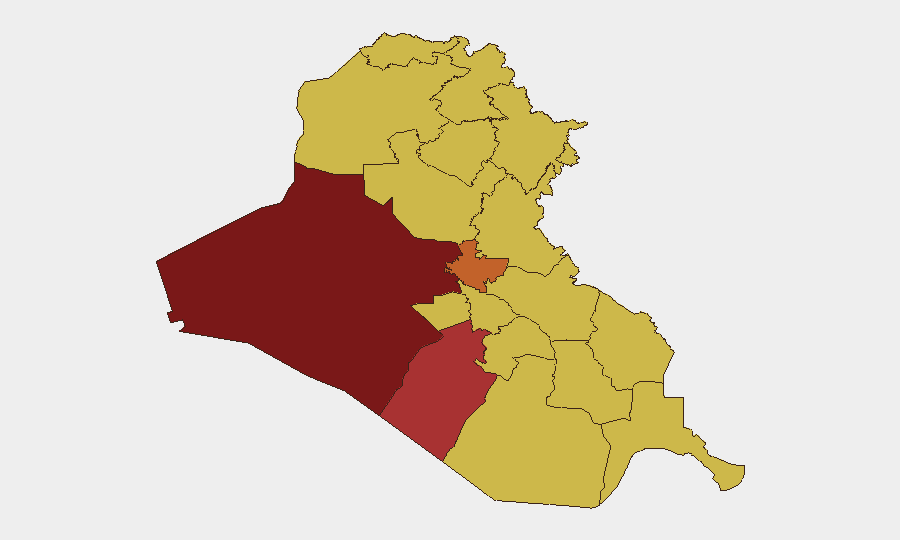
Situation Summary
Iraq remains a tier-2 global security concern (rank #15, composite threat score 91) with insurgency as the primary driver across 283 tracked events. The security picture is currently shaped by two parallel vectors: escalating Iran–US regional conflict with documented spillover into Iraqi territory (drone strikes on US-linked installations, July 9–10), and an active domestic anti-corruption campaign targeting political and security elites that is widening internal instability and elite tension. Al-Anbar Governorate remains the highest-risk sub-national area (93.6), but Baghdad and southern governorates are experiencing concurrent pressure from both external military activity and internal governance crisis, creating a compounding risk environment for corporate operations.
Key Developments
- Drone strike on CIA-linked facility, Iraq (location undisclosed) – July 9, 2026. Iranian forces conducted a confirmed strike on a US intelligence-linked site; the facility was reported empty with no US casualties, but confirms active use of Iraqi territory as a theater for Iran–US kinetic operations.
- Iranian multi-target strike campaign on US installations across Gulf region, including Iraq – July 9, 2026. Iran claimed strikes on US military infrastructure in Iraq as part of broader regional escalation; reporting indicates continued targeting of US-associated facilities on Iraqi soil.
- Arrest of Oil Products Distribution Company director-general, Baghdad – July 9, 2026. Hussein Talib detained on corruption charges hours before parliamentary oath; signals active arrest and asset seizure operations by government security forces in the capital.
- Anti-corruption campaign expands to parliament and senior officials – Iraq (national) – July 9, 2026. Iraqi security and legal sources confirm Prime Minister Ali al‑Zaidi ordered a widening campaign targeting politicians, lawmakers, and security elites named in Oil Ministry undersecretary Adnan al‑Jumaili's confessions; 14 billion dinars (~$10.7M) seized in Oil Ministry case.
- US resumes cash transfers to Iraq, signaling political support – Baghdad – July 9, 2026. US financial shipments resumed after delay, confirming continued US backing for current Iraqi government and implying stabilization intent despite regional conflict.
- Iraqi leadership reaffirms weapons-control policy and non-alignment in regional conflict – national statement, July 9–10, 2026. President Nizar Amidi publicly reiterated Iraq's commitment to restricting weapons to the state and rejection of use of Iraqi territory for attacks on neighbors, addressing both domestic militia control and regional pressure.
Highest-Risk Areas
Al-Anbar Governorate (93.6) dominates the risk landscape, driven by sustained insurgent activity and proximity to Syrian border ungoverned space. Baghdad (73.2) ranks third but is now experiencing acute dual risk from both Iran–US military spillover and internal anti-corruption enforcement actions that destabilize elite networks and security institutions. Southern governorates (Al-Najaf 79.5, Karbala 68.8, and others at 63.6+) face lower but sustained baseline threat from sectarian militias and Iranian-aligned armed groups, with current anti-corruption operations creating secondary institutional friction. The concentration of risk in Al-Anbar and Baghdad suggests that operations in those areas face elevated kinetic and governance instability; southern operations risk longer-term institutional disruption from political purges.
How GeoBit Would Assist
Teams with personnel or assets in Iraq should use GeoBit's Intel Sweep and global event feeds with multi-language OSINT fusion to track real-time Iran–US military activity and its proximity to corporate locations, and persistent AOI (Area-of-Interest) Monitoring with alerting on Baghdad and Al-Anbar to detect escalation or arrest operations affecting staff, suppliers, or partners. Network & Actor Analysis and entity extraction on Iraqi political and security figures under anti-corruption investigation will flag emerging risks to business continuity from government upheaval.
7-Day Outlook
Iran–US tit-for-tat strikes are likely to continue with intermittent use of Iraqi territory as a proxy theater; no major US or Iranian escalation is signaled but risk of unintended civilian or asset impact remains elevated. Iraq's anti-corruption campaign will likely expand arrests and asset seizures over the next week, creating unpredictable institutional friction and potential brief periods of security-force distraction; monitoring of arrests and legal developments is essential for corporate compliance and duty-of-care planning.
Highest-Risk Areas — Ranked
| # | State / Region | Risk |
|---|---|---|
| 1 | Al-Anbar Governorate | 93.6 |
| 2 | Al-Najaf Governorate | 79.5 |
| 3 | Baghdad Governorate | 73.2 |
| 4 | Karbala | 68.8 |
| 5 | Duhok Governorate | 64.1 |
| 6 | Babil Governorate | 63.8 |
| 7 | Wasit Governorate | 63.6 |
| 8 | Al-Qadisiyah Governorate | 63.6 |
| 9 | Dhi Qar Governorate | 63.6 |
| 10 | Al-Muthanna Governorate | 63.6 |
| 11 | Maysan Governorate | 63.6 |
| 12 | Al-Basra Governorate | 63.6 |
Sources
Previous Daily Briefs
A new Iraq brief is written every day — each with its own risk map and downloadable CSV. Here's the last week; use the calendar to go further back.
📅 Browse every day by calendar →
Highlighted days have a brief. Tap a day for that day's map & analysis, or “csv” for that day's dataset ($5).
Atlas — our AI intelligence desk — emails them this snapshot personally. Nothing else, no list.