Situation Summary
South Korea remains at a low composite threat level (rank #180 globally; score 3.0) with no major physical-security or civil-unrest incidents reported in the past 24–48 hours. Current risk drivers are concentrated in the diplomatic, cyber-regulatory, and strategic-deterrence domains rather than acute street-level or infrastructure threats. North Chungcheong province exhibits disproportionately elevated risk (31.5), followed by Seoul (23.6), though the nature of these signals reflects political and administrative activity rather than kinetic incidents. The security landscape is shaped by ongoing US–South Korea regulatory friction over data protection and cyber-sovereignty, trilateral security coordination with the US and Japan on North Korean threats, and closed-door strategic talks with Russia.
Key Developments
- Seoul (Presidential Office), 3–5 July 2026 – Government rejects US and Coupang allegations of discriminatory treatment in cyber-security probe; National Security Adviser Wi Sung‑lac stated investigations were conducted on a "non-discriminatory" basis. Signals regulatory and political friction in cyber/data-protection domain but no physical-security impact.
- Seoul (Foreign Ministry), early July 2026 – First trilateral foreign ministers' meeting planned with US (Secretary of State Marco Rubio) and Japan (Foreign Minister Motegi Toshimitsu) on NATO summit sidelines in Turkey; agenda focused on North Korean nuclear and missile programs, Russia ties, and Indo-Pacific security.
- Moscow (closed-door consultations), early July 2026 – South Korean and Russian officials held consultations on North Korea's nuclear program and regional security issues; reflects strategic maneuvering around peninsula stability.
- National (cyber domain), early July 2026 – Fallout from Coupang data breach continues; South Korea plans consolidation of public-sector cloud-security certification under the National Intelligence Service (NIS), creating elevated cyber and regulatory friction with US technology companies over perceived discriminatory treatment.
- No large-scale civil unrest, terror attacks, armed clashes, or infrastructure disruptions reported in last 24–48 hours across major South Korean cities, ports, or transport hubs.
Highest-Risk Areas
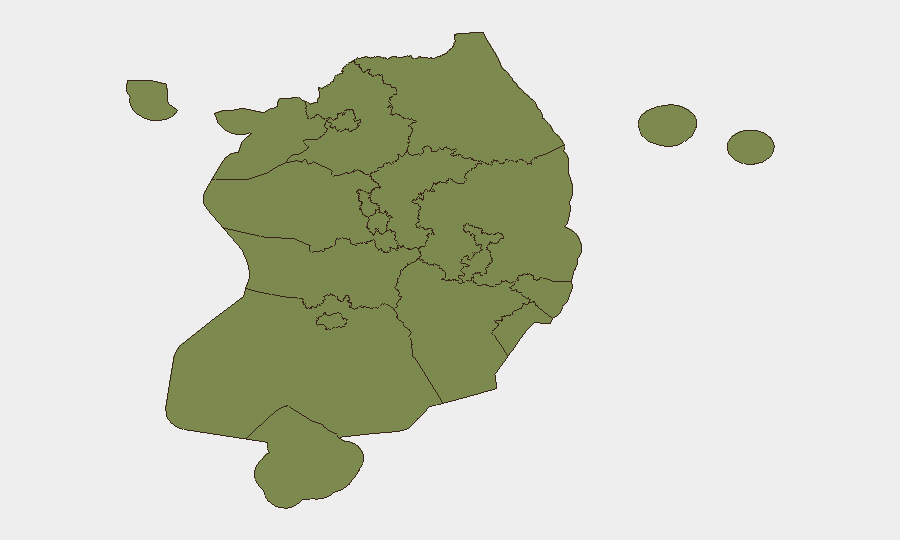
North Chungcheong (31.5) and Seoul (23.6) account for the majority of tracked risk signals, driven primarily by administrative investigations, political statements, and regulatory activity rather than kinetic incidents. North Gyeongsang (7.0) shows secondary elevated risk. The concentration in North Chungcheong and Seoul reflects government decision-making centers, diplomatic activity, and cyber-regulatory proceedings; all remaining provinces score below 2.5, indicating risk is heavily centralized in administrative and political domains rather than distributed across provincial civil or security incidents.
How GeoBit Would Assist
Corporate security and duty-of-care teams should deploy Intel Sweep and global event feeds to track ongoing US–South Korea regulatory disputes and cyber-domain developments affecting business operations; Network & Actor Analysis to map diplomatic and government stakeholder positions on data-sovereignty and cloud-security policy; and AOI Monitoring & Early Warning anchored on Seoul and North Chungcheong to detect escalation in civil unrest, protests, or infrastructure disruption. These capabilities enable early warning of policy shifts and political friction that may affect foreign business continuity, market access, or personnel safety.
7-Day Outlook
Diplomatic and regulatory friction is likely to persist through the trilateral foreign ministers' meeting and ongoing NIS-led cloud-security consolidation process. Near-term risk of acute physical-security or civil-unrest incidents remains low absent a major geopolitical or domestic political shock. Continued monitoring of North Korea–US–South Korea–Russia strategic dynamics is warranted to detect any shift toward heightened peninsula tensions.
Highest-Risk Areas — Ranked
| # | State / Region | Risk |
|---|---|---|
| 1 | North Chungcheong | 31.5 |
| 2 | Seoul | 23.6 |
| 3 | North Gyeongsang | 7 |
| 4 | Jeju | 2.9 |
| 5 | Gyeonggi | 2 |
| 6 | South Jeolla | 2 |
| 7 | Daegu | 2 |
| 8 | Incheon | 1.5 |
| 9 | Gangwon State | 1.5 |
| 10 | South Chungcheong | 1.5 |
| 11 | Sejong | 1.5 |
| 12 | Jeonbuk State | 1.5 |
Sources
Previous Daily Briefs
A new South Korea brief is written every day — each with its own risk map and downloadable CSV. Here's the last week; use the calendar to go further back.
📅 Browse every day by calendar →
Highlighted days have a brief. Tap a day for that day's map & analysis, or “csv” for that day's dataset ($5).
Atlas — our AI intelligence desk — emails them this snapshot personally. Nothing else, no list.