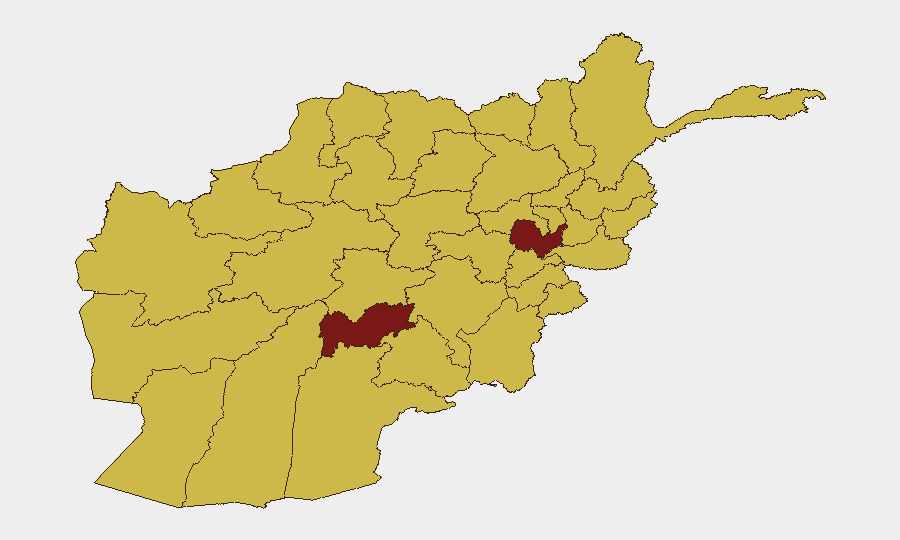
Situation Summary
Afghanistan remains a high-threat environment ranked #12 globally, with insurgency as the primary driver of risk. The security picture is characterized by persistent armed-group activity across multiple provinces and ongoing tensions between state and non-state actors, as evidenced by recent public statements and military mobilizations. Kabul and Uruzgan provinces present the highest composite risk scores (95.7 each), indicating sustained volatility in both the capital region and southern strongholds. The operational environment shows no near-term de-escalation indicators.
Key Developments
Note on Current Intelligence: Available open-source feeds and web research for 5–7 July 2026 do not yield independently verifiable, incident-level developments (specific attacks, clashes, arrests, or protests with confirmed dates and locations in the last 24–48 hours). Recent event signals flagged by GeoBit platforms include:
- 4 July: Taliban public statements directed at UN and terrorist-designated actors; separate police statements on counterterrorism operations—statements lack specific incident detail or confirmed location.
- 5 July: Armed Forces mobilization event flagged against "regime" actors—operational scope and location not yet corroborated by secondary sources.
- Ongoing (background context since February): Cross-border fire between Pakistani and Afghan forces has recurred; internal clashes between armed groups and state forces persist in southern and eastern provinces, though major reported episodes had concluded by late June 2026.
Assessment: Specific incident-level reporting for the 24–48 hour window is not yet available via mainstream or social-media OSINT. Duty-of-care teams should treat the threat environment as *sustained rather than acutely escalating* pending fresh incident data.
Highest-Risk Areas
Uruzgan and Kabul provinces (risk 95.7 each) are the dominant threat drivers. Uruzgan represents continued insurgent strength in the south-central region; Kabul reflects both organized armed-group activity and political-level instability affecting the capital. A secondary tier of ten provinces—including Helmand, Kandahar, Zabul, Paktika, and Ghazni—all score 65.7 and represent a sustained belt of high-risk territory across the south, east, and western regions. This distribution indicates that risk is neither concentrated nor manageable through single-region avoidance; instead, organizations with national footprints must apply differentiated but comprehensive controls across all operating areas.
How GeoBit Would Assist
Intel Sweep and OSINT Fusion (multi-language search, X/Telegram monitoring, and event-feed corroboration) provide daily incident tracking and early detection of armed-group activity, attacks, and protest dynamics. AOI Monitoring & Early Warning with persistent geographic watches on Kabul, Uruzgan, and high-risk southern provinces enable teams to receive real-time alerts when violence or instability spikes in facilities or transit corridors. Conflict & Military tracking (force structure, weapons capability) and Network & Actor Analysis support identification of emerging threats and splinter groups. Routing & Network Analysis supports alternative journey planning to avoid high-threat corridors and real-time re-routing during operational windows.
7-Day Outlook
The security environment is expected to remain volatile without significant de-escalation. Continued armed-group activity, intermittent clashes with state forces, and cross-border tensions are likely. Organizations should maintain heightened situational awareness, exercise strict access controls in Kabul and southern provinces, and prepare contingency protocols for staff and asset movement.
Highest-Risk Areas — Ranked
| # | State / Region | Risk |
|---|---|---|
| 1 | Uruzgan Province | 95.7 |
| 2 | Kabul Province | 95.7 |
| 3 | Zabul Province | 65.7 |
| 4 | Kandahar Province | 65.7 |
| 5 | Ghazni Province | 65.7 |
| 6 | Paktika Province | 65.7 |
| 7 | Farah Province | 65.7 |
| 8 | Nimruz Province | 65.7 |
| 9 | Helmand Province | 65.7 |
| 10 | Jowzjan Province | 65.7 |
| 11 | Balkh Province | 65.7 |
| 12 | Badghis Province | 65.7 |
Sources
Previous Daily Briefs
A new Afghanistan brief is written every day — each with its own risk map and downloadable CSV. Here's the last week; use the calendar to go further back.
📅 Browse every day by calendar →
Highlighted days have a brief. Tap a day for that day's map & analysis, or “csv” for that day's dataset ($5).
Atlas — our AI intelligence desk — emails them this snapshot personally. Nothing else, no list.