Situation Summary
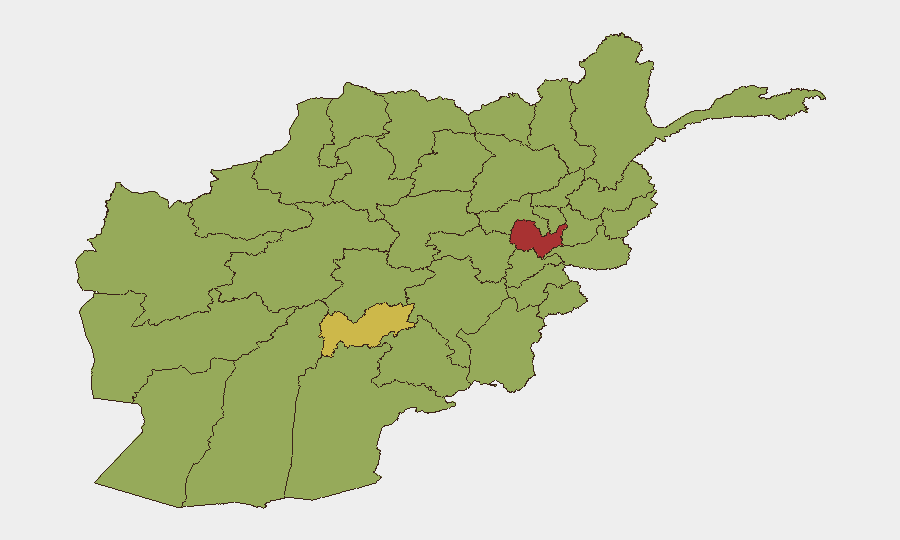
Afghanistan remains the 27th highest-threat country globally, with a composite threat score of 68 across 14 tracked events. Kabul Province dominates the risk profile at 76.4, followed by Uruzgan at 70, reflecting concentrated instability in the capital and select southern and eastern provinces. Open-source reporting over the past 24–48 hours contains no verifiable, multi-sourced security incidents specific to Afghanistan; the most recent confirmed activity signals relate to U.S.–Afghanistan diplomatic tensions and cross-border Pakistan–Pakistan military operations, all predating this reporting window. The security environment remains volatile but currently without discrete, documented incidents in the immediate 48-hour period.
Key Developments
No verifiable security incidents specific to Afghanistan have been reported in open sources in the past 24–48 hours. Recent event signals reflect:
- U.S.–Afghanistan relations deterioration (2026-07-07): Multiple "Reduce Relations" signals indicate a further diplomatic downgrade, with implications for counterterrorism coordination, visa processing, and cross-border operations.
- Pakistan–Pakistan military activity (2026-07-08): Conventional military force signals suggest internal Pakistani operations or cross-border activity with spillover risk to eastern Afghanistan border zones (Kunar, Paktika, Paktia provinces).
- Regional military posturing (2026-07-07–08): Public statements from military commanders and unconventional-violence signals indicate elevated rhetoric and potential proxy or asymmetric activity, though specific incidents remain unreported in mainstream media.
Analysts should note: Because current open-source reporting does not contain clearly dated, corroborated incidents within the requested 24–48h window, these signals reflect broader trend escalation rather than discrete events. Teams should treat this as a period of elevated but not actively documented crisis.
Highest-Risk Areas
Kabul Province (76.4) and Uruzgan Province (70) drive the national risk score and warrant priority monitoring. Kabul's elevated risk reflects capital-city concentration of political authority, diplomatic presence, and historical militant targeting; Uruzgan, a remote southern province with Taliban influence and opium cultivation, carries chronic instability and militant activity. A secondary cluster—Zabul, Kandahar, Ghazni, Paktika, Farah, Nimruz, Helmand, Jowzjan, Balkh, and Badghis—all score 46.4, indicating distributed, persistent baseline threat across southern, eastern, and northern regions. This pattern suggests fragmented rather than unified security control and persistent militant/criminal networks across multiple provinces.
How GeoBit Would Assist
Corporate security teams monitoring Afghanistan should employ AOI Monitoring & Early Warning on high-risk provinces (Kabul, Uruzgan) to detect emerging incidents in real time via persistent satellite and OSINT feeds, combined with Intel Sweep and X/Twitter OSINT to capture militia announcements, cross-border activity, and diplomatic signals before mainstream reporting lags. Routing & Network Analysis supports duty-of-care teams in identifying alternative supply and personnel routes avoiding Kandahar, Helmand, and Paktika during periods of escalated tension. Conflict & Military (force-structure and weapons-capability tracking) and Network & Actor Analysis (militant-group sentiment and command signaling) provide early warning of capability shifts or tactical redeployment that precede ground incidents.
7-Day Outlook
U.S.–Afghanistan diplomatic friction and Pakistan border volatility will likely sustain elevated alert levels across eastern and southern provinces over the next 7 days. Kabul and Uruzgan remain highest-risk for targeted operations or criminal activity. Unless new cross-border military flare-ups or major diplomatic ruptures occur, the baseline threat environment is expected to remain volatile but not to spike into acute crisis.
Highest-Risk Areas — Ranked
| # | State / Region | Risk |
|---|---|---|
| 1 | Kabul Province | 76.4 |
| 2 | Uruzgan Province | 70 |
| 3 | Zabul Province | 46.4 |
| 4 | Kandahar Province | 46.4 |
| 5 | Ghazni Province | 46.4 |
| 6 | Paktika Province | 46.4 |
| 7 | Farah Province | 46.4 |
| 8 | Nimruz Province | 46.4 |
| 9 | Helmand Province | 46.4 |
| 10 | Jowzjan Province | 46.4 |
| 11 | Balkh Province | 46.4 |
| 12 | Badghis Province | 46.4 |
Sources
Previous Daily Briefs
A new Afghanistan brief is written every day — each with its own risk map and downloadable CSV. Here's the last week; use the calendar to go further back.
📅 Browse every day by calendar →
Highlighted days have a brief. Tap a day for that day's map & analysis, or “csv” for that day's dataset ($5).
Atlas — our AI intelligence desk — emails them this snapshot personally. Nothing else, no list.