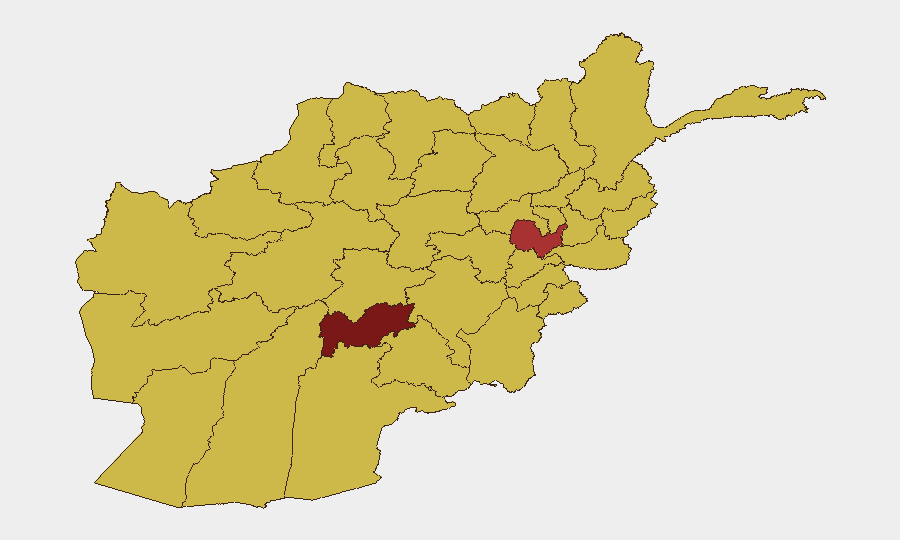
Situation Summary
Afghanistan remains at composite threat ranking #11 globally, driven primarily by active insurgency, cross-border militant activity, and large-scale internal displacement affecting 7 million people. The past 48 hours have seen an escalation in Pakistan–Afghanistan air operations, with Pakistani strikes killing at least 36 civilians and prompting Afghan retaliatory strikes, creating a cycle of cross-border violence that significantly elevates risk in border provinces. Underlying drivers—displacement, poverty, drought, and earthquake damage in eastern regions—continue to destabilize communities and constrain humanitarian access, while diplomatic friction between Kabul and Islamabad is intensifying.
Key Developments
- Kabul, 6–7 July 2026: UN High Commissioner for Refugees and UNDP Administrator arrived for three-day visit to assess displacement crisis, drought impact, and earthquake recovery; inspections of eastern earthquake-affected districts confirmed 74% of populations unable to meet basic needs, signaling sustained humanitarian and infrastructure vulnerability.
- Afghanistan–Pakistan border, 5–7 July 2026: Pakistani airstrikes reported to have killed at least 36 civilians; Afghan Ministry of Defence claimed retaliatory strikes on alleged ISIS bases inside Pakistan, with official statements warning it would "target every threat," marking a resumption of direct cross-border air operations.
- Afghanistan–Pakistan border, 6–7 July 2026: Afghan and Pakistani sources report both nations "back in a cycle of air retaliations," with escalation occurring within the past 48 hours; funerals held in Afghanistan for nationals killed in Pakistan, including individuals linked to Tehrik-i-Taliban Pakistan (TTP).
- United States–Afghanistan diplomatic relations, 7 July 2026: Multiple instances of U.S. State Department "Reduce Relations" statements recorded on 7 July, coinciding with Pakistani airstrike aftermath and cross-border escalation, indicating U.S. policy response to regional instability.
- National displacement assessment, early July 2026: UNDP socio-economic update reports approximately 7 million internally displaced persons, with ongoing pressures from conflict, migrant returns, climate impacts, and reduced women's participation identified as current destabilizing factors.
Highest-Risk Areas
Uruzgan Province leads sub-national risk at 96.9, followed by a significant cluster of provinces (Zabul, Kandahar, Ghazni, Paktika, Farah, Nimruz, Helmand, Jowzjan, Balkh, Badghis) all at 66.9, with Kabul at 79.8. The concentration of high risk in southern, eastern, and western provinces reflects ongoing insurgency operations, cross-border militant infiltration from Pakistan, and limited state capacity to provide security or services. Kabul's elevated score reflects its function as the political and administrative center, where diplomatic tensions, displacement flows, and potential for targeted violence create compound risk for expatriate communities and NGOs.
How GeoBit Would Assist
Security teams with personnel or assets in Afghanistan should deploy AOI Monitoring & Early Warning on Uruzgan, the southern cluster, and key border crossings to detect militant activity and cross-border operations in near-real time. Conflict & Military mapping combined with Network & Actor Analysis would enable tracking of Pakistani and Afghan force posturing and TTP/ISIS operationalization during this escalation cycle. Alternative route planning and routing analysis are essential for NGO and corporate movement, particularly around eastern earthquake zones and the Pakistan border where air operations create secondary civilian-movement hazards.
7-Day Outlook
The Pakistan–Afghanistan air-retaliation cycle will likely persist or intensify absent diplomatic de-escalation, maintaining elevated risk in border provinces through mid-July. Internal displacement and humanitarian need will continue to drive population movement toward Kabul and northern cities, increasing density of vulnerable populations and potential for secondary security incidents. Expatriate duty-of-care teams should anticipate possible further U.S.–Afghanistan diplomatic downgrade and intermittent border-region flight restrictions.
Highest-Risk Areas — Ranked
| # | State / Region | Risk |
|---|---|---|
| 1 | Uruzgan Province | 96.9 |
| 2 | Kabul Province | 79.8 |
| 3 | Zabul Province | 66.9 |
| 4 | Kandahar Province | 66.9 |
| 5 | Ghazni Province | 66.9 |
| 6 | Paktika Province | 66.9 |
| 7 | Farah Province | 66.9 |
| 8 | Nimruz Province | 66.9 |
| 9 | Helmand Province | 66.9 |
| 10 | Jowzjan Province | 66.9 |
| 11 | Balkh Province | 66.9 |
| 12 | Badghis Province | 66.9 |
Sources
Previous Daily Briefs
A new Afghanistan brief is written every day — each with its own risk map and downloadable CSV. Here's the last week; use the calendar to go further back.
📅 Browse every day by calendar →
Highlighted days have a brief. Tap a day for that day's map & analysis, or “csv” for that day's dataset ($5).
Atlas — our AI intelligence desk — emails them this snapshot personally. Nothing else, no list.