Situation Summary
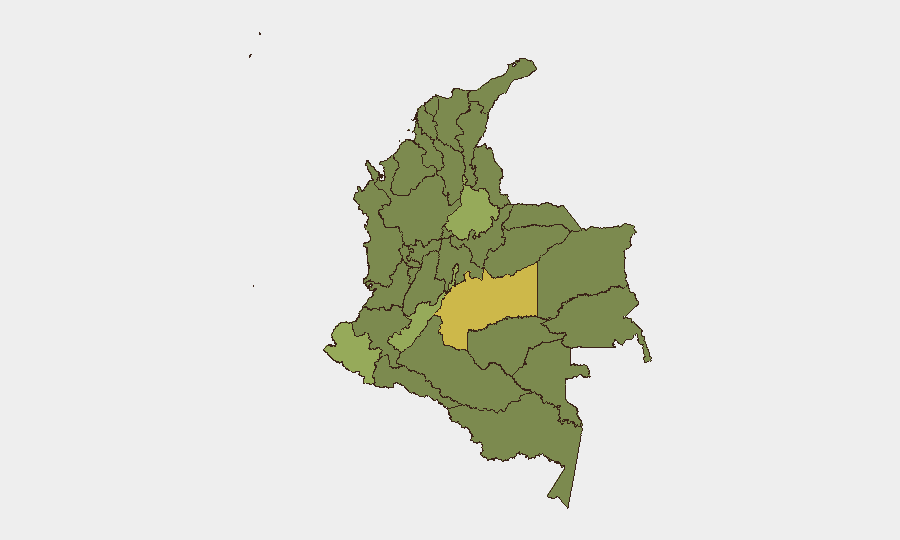
Colombia remains at moderate global risk ranking (#34, composite score 60) with 890 tracked security events, but sub-national concentrations in Meta, the Capital District, and southern departments (Nariño, Cauca) drive substantially elevated threat levels. The last 24–48 hours have seen a sharp uptick in kinetic activity: explosive-drone attacks on police and military installations, a major cyber-ransom operation against national energy infrastructure, armed clashes between state forces and criminal organizations, and coordinated mob violence in rural zones. The pattern suggests sustained competition among ELN, FARC dissidents, and Clan del Golfo for territorial and criminal control, coupled with emerging cyber-extortion targeting critical national assets.
Key Developments
- Explosive-drone attack on police station, San Pablo (Bolívar) – 17 July 2026: Assailants used drone-delivered explosives against a local police installation, injuring four officers and causing structural damage and power loss. Attribution to ELN reflects a documented escalation in drone warfare by the group over recent weeks.
- Cyberattack and data exfiltration, Ecopetrol (Bogotá) – 17 July 2026: A major breach compromised approximately 3,300 corporate accounts and affected 15 companies in the Ecopetrol Group, with associated extortion demands. This represents the first large-scale cyber-ransom operation against Colombian energy infrastructure in recent months.
- Combined drone and car-bomb attack on military base, Tibú (Norte de Santander) – 17 July 2026: A military installation near the Venezuela border sustained multi-vector attack resulting in personnel injuries and infrastructure damage. The incident reflects persistent ELN and FARC-dissident use of armed drones in border regions.
- Armed clashes, Jericó (Antioquia) – 17 July 2026: Colombian National Army units engaged Clan del Golfo operatives in sustained small-arms firefights, part of ongoing territorial competition in a key criminal corridor.
- Attempted mob assault on military position, rural Cauca – 17 July 2026: Security forces disrupted a collective violent action, detaining one minor and recording four civilian injuries. The incident underscores heightened civil-military tension in Cauca.
- Multiple small-arms engagements across Meta, Nariño, and Cauca – 14–17 July 2026: Consolidated security feeds indicate sustained kinetic activity linked to ELN and FARC-dissident competition over coca production and territory, with elevated risk of snap roadblocks and checkpoints affecting regional travel.
Highest-Risk Areas
Meta Department (risk 67.1) and the Capital District (47.5) anchor the national risk profile; southern departments Nariño (46.3) and Cauca (39.8) drive sustained violence rooted in narcotics trafficking, territorial fragmentation among armed groups, and periodic civil unrest. Norte de Santander (39.8) and the border region remain volatile due to ELN presence and cross-border criminal flows. Bolívar and Antioquia show elevated risk tied to Clan del Golfo operations and drone-enabled asymmetric warfare. Personnel and supply chains operating in Meta, the southwestern corridor, and border departments face compounded exposure to armed clashes, ambushes, and infrastructure disruptions.
How GeoBit Would Assist
Security teams should deploy AOI Monitoring & Early Warning on Meta, Cauca, and Norte de Santander to track kinetic activity and roadblock formation in near-real time. Routing & Network Analysis capabilities enable rapid alternative-route planning for personnel and assets affected by clashes or security cordons. Conflict & Military mapping combined with Network & Actor Analysis provides tactical context on ELN, FARC-dissident, and Clan del Golfo positioning, informing travel risk and facility-security protocols.
7-Day Outlook
Drone-enabled attacks and cyber-ransom operations are likely to persist through the near term, particularly targeting energy and military assets in border and rural zones. Increased state-force operations in Meta and Cauca may trigger temporary roadblocks and civil unrest; organizations should monitor checkpoint activity and maintain flexible logistics. The window for additional coordinated attacks or kidnapping risk in high-risk departments remains elevated.
Highest-Risk Areas — Ranked
| # | State / Region | Risk |
|---|---|---|
| 1 | Meta Department | 67.1 |
| 2 | Capital District | 47.5 |
| 3 | Nariño | 46.3 |
| 4 | Santander Department | 41 |
| 5 | Huila Department | 40.2 |
| 6 | Cauca | 39.8 |
| 7 | Norte de Santander Department | 39.8 |
| 8 | Atlántico Department | 38.6 |
| 9 | Caquetá Department | 38.3 |
| 10 | Amazonas | 38 |
| 11 | Chocó Department | 37.9 |
| 12 | Bolívar Department | 37.9 |
Sources
Previous Daily Briefs
A new Colombia brief is written every day — each with its own risk map and downloadable CSV. Here's the last week; use the calendar to go further back.
📅 Browse every day by calendar →
Highlighted days have a brief. Tap a day for that day's map & analysis, or “csv” for that day's dataset ($5).
Atlas — our AI intelligence desk — emails them this snapshot personally. Nothing else, no list.