Situation Summary
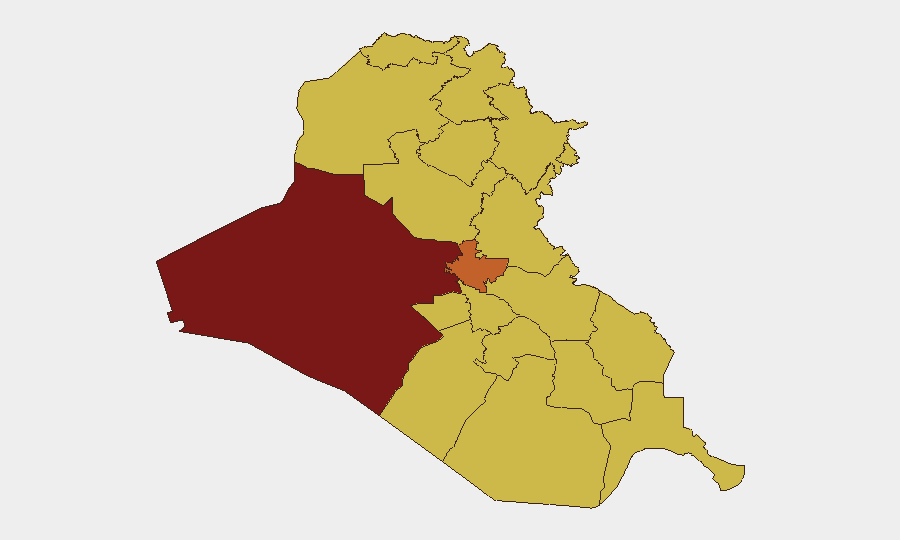
Iraq remains at elevated composite threat level (#15 globally, score 88) driven primarily by active insurgency and regional military tensions. The last 48 hours have featured multiple conventional military engagements involving Iranian, U.S., and Iraqi government forces, alongside domestic property seizure and abduction incidents in Baghdad, signaling concurrent strain on both internal security and external border management. Al-Anbar Governorate continues to register the highest subnational risk (91.8), while Baghdad's volatile mix of political and militant activity sustains a composite score of 74.7. The security environment reflects no clear de-escalation trajectory.
Key Developments
- 07-10, Military Engagement (Location: Unspecified Military Base): Iran conducted conventional military operations against a military installation; reciprocal strike by military assets against Iranian positions reported on 07-11. Suggests active cross-border escalation.
- 07-11, Property Seizure/Damage (Iraq, Location Unspecified): Documented incident of property seize or destruction within Iraqi territory; no faction attribution confirmed in available data.
- 07-11, Norwegian Military Involvement (Location: Unspecified): Norwegian military engaged in conventional military operations, indicating possible multinational force activity or coordination tied to ongoing regional tensions.
- 07-09, Iranian Threat Statement (Source: Iran): Public threat issued by Iranian officials; context suggests linkage to concurrent U.S.–Iran military posturing reported same date.
- 07-09, Abduction/Hostage Incident (Baghdad): Kidnapping or hostage event confirmed in Baghdad Governorate, reinforcing pattern of non-state actor activity in capital region.
- 07-10, Government vs. State Military Clashes (Iraq): Documented conventional military engagement between Iraqi government and Iraqi state forces, indicating possible intra-governmental or sectarian military friction.
- 07-10, Islamic Faction Investigation (Location: Unspecified): Law enforcement investigation initiated targeting Islamic-affiliated entity; limited details on scope or jurisdiction.
- 07-10, Demonstration (Karbala): Public rally or protest linked to Imam-related grievance in Karbala Governorate; scale and outcome unconfirmed.
Highest-Risk Areas
Al-Anbar Governorate (91.8) dominates the risk landscape as a persistent hub of ISIS-affiliated and other Sunni militant operations, combined with weak state presence and tribal fragmentation. Baghdad (74.7) ranks second due to its role as both a high-value target for insurgent attacks and a seat of contested political and sectarian power dynamics, evidenced by recent abduction activity and intra-governmental military friction. A secondary tier of mid-range risk (Saladin, Duhok, Babil, Wasit, and southern governorates at 61.8–62.5) reflects residual insurgent presence, logistics corridors, and border vulnerability. Risk concentration in Al-Anbar and Baghdad suggests that corporate personnel and assets in or transiting these zones face disproportionate exposure to direct attack, kidnapping, and collateral damage from military operations.
How GeoBit Would Assist
Security teams with Iraq operations should employ Intel Sweep and multi-source OSINT fusion to track real-time faction statements, Iranian and U.S. military posture signaling, and militant command-and-control networks. AOI Monitoring & Early Warning with persistent watch on Al-Anbar, Baghdad, and Saladin, paired with sentiment and temporal analysis of social media and news feeds, enables detection of imminent attack windows or protest escalation. Battle mapping and force-structure tracking clarify which armed groups control specific routes, checkpoints, and facilities—critical input for duty-of-care routing and facility-security decisions.
7-Day Outlook
Cross-border military escalation involving Iran, U.S., and Iraqi government forces is likely to persist or intensify, raising risk of collateral impact on civilian infrastructure and expatriate communities near military installations or Iranian consulates. Domestic insurgent activity in Al-Anbar and Baghdad will remain consistent with historical patterns; any major attack or abduction in the capital would likely trigger security lockdowns affecting business continuity. Risk posture should be treated as elevated and volatile through mid-July.
Highest-Risk Areas — Ranked
| # | State / Region | Risk |
|---|---|---|
| 1 | Al-Anbar Governorate | 91.8 |
| 2 | Baghdad Governorate | 74.7 |
| 3 | Al-Najaf Governorate | 66.1 |
| 4 | Karbala | 64 |
| 5 | Saladin Governorate | 62.5 |
| 6 | Duhok Governorate | 62.3 |
| 7 | Babil Governorate | 61.8 |
| 8 | Wasit Governorate | 61.8 |
| 9 | Al-Qadisiyah Governorate | 61.8 |
| 10 | Dhi Qar Governorate | 61.8 |
| 11 | Al-Muthanna Governorate | 61.8 |
| 12 | Maysan Governorate | 61.8 |
Sources
Previous Daily Briefs
A new Iraq brief is written every day — each with its own risk map and downloadable CSV. Here's the last week; use the calendar to go further back.
📅 Browse every day by calendar →
Highlighted days have a brief. Tap a day for that day's map & analysis, or “csv” for that day's dataset ($5).
Atlas — our AI intelligence desk — emails them this snapshot personally. Nothing else, no list.