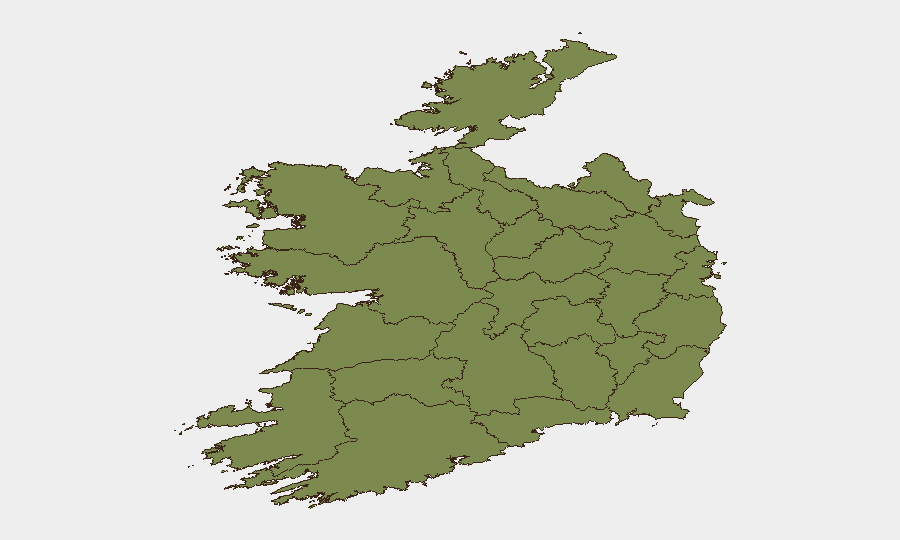
Situation Summary
Ireland remains at a low composite threat level (30/100 globally) but faces elevated dissident republican activity, particularly in border regions, underscored by the seizure of a significant improvised explosive device near Carrickmacross on 29 July. Dublin (risk 31.3) and County Wexford (18.8) carry disproportionate risk, driven by criminal and security incidents, while political cross-border tensions have escalated following judicial handling of bomb-seizure suspects. Property crime, wildfire disruption, and routine road-safety enforcement present secondary operational considerations for organizations with personnel or assets in Ireland.
Key Developments
- Carrickmacross, Co Monaghan (N2 road, 29 Jul): Gardaí intercepted a vehicle carrying an "extremely significant" improvised explosive device believed destined for dissident republican activity in Northern Ireland; two suspects arrested—a woman in her 20s at the scene and a man in his 40s shortly after; Army EOD rendered the device safe.
- Dublin Special Criminal Court (reported 30–31 Jul): A man in his 40s charged in connection with the Carrickmacross bomb seizure scheduled to appear before the court; bail decision for the 25-year-old law student co-suspect generated political friction after her release.
- Cross-border political reaction (29–31 Jul): DUP leader Gavin Robinson publicly stated Ireland's justice system has "serious questions to answer" regarding bail decisions in the Carrickmacross case, signaling heightened scrutiny and political tension between jurisdictions over dissident republican threat management.
- Cahir, Co Tipperary, Barrack Street (overnight 30–31 Jul): Multiple parked vehicles, including those belonging to Cahir Fire Brigade, targeted in break-ins and damage; Gardaí appealed for witnesses, indicating organized or targeted property crime affecting emergency service personnel.
- Slievenamaon Mountain, Co Tipperary (31 Jul ongoing): Firefighters actively suppressed a significant gorse blaze with potential local environmental and infrastructure impacts; Glencree Valley fire (Co Wicklow) extinguished by 31 Jul.
- National road network (31 Jul–4 Aug): Gardaí deployed extensive Bank Holiday road policing operation targeting speeding, driving under the influence, mobile phone use, and seatbelt violations; high-visibility checkpoints planned through Tuesday to reduce collision risk.
- SIPTU dementia facility strike (31 Jul resolution): Members at Ireland's largest dementia facility agreed to attend Workplace Relations Commission talks, averting strikes scheduled for Monday and mitigating short-term infrastructure and patient-care disruption.
Highest-Risk Areas
County Dublin (31.3) and County Wexford (18.8) drive Ireland's composite risk profile, with Dublin reflecting security incidents, criminal activity, and political/judicial events, while Wexford's elevation suggests localized conventional or organized crime developments. All other counties score between 1.3 and 2, indicating geographically dispersed but lower-intensity baseline risk. The Carrickmacross seizure underscores the northern border region's significance to dissident republican threat networks, though this specific incident occurred in County Monaghan (ranked 12th overall) and reflects cross-border operational capability rather than local destabilization.
How GeoBit Would Assist
Organizations should deploy AOI Monitoring & Early Warning on Dublin, border regions (Monaghan, Louth, Donegal), and key transport corridors to track dissident republican signaling and weapons movement; OSINT & Intel Sweep (X/Twitter, Telegram, political statements) to correlate judicial decisions, bail outcomes, and cross-border political reaction with threat escalation; and Routing & Network Analysis to identify safe alternative routes for personnel and asset movement during Bank Holiday enforcement and emergency response periods. Persistent sentiment & temporal analysis of Northern Irish and Irish political discourse will flag upstream judicial or political decisions likely to alter threat posture.
7-Day Outlook
Dissident republican activity remains elevated through early August; bail hearings and Special Criminal Court proceedings will likely sustain political tensions and media scrutiny, with potential secondary protest or counter-messaging. Bank Holiday road enforcement (31 Jul–4 Aug) will elevate Garda presence and collision risk; wildfire suppression operations in Tipperary may affect local travel. No imminent mass-casualty or infrastructure attacks are signaled, but border-region vigilance and judicial transparency will remain under scrutiny.
Highest-Risk Areas — Ranked
| # | State / Region | Risk |
|---|---|---|
| 1 | County Dublin | 31.3 |
| 2 | County Wexford | 18.8 |
| 3 | County Westmeath | 2 |
| 4 | County Louth | 2 |
| 5 | County Cork | 2 |
| 6 | County Mayo | 1.3 |
| 7 | County Sligo | 1.3 |
| 8 | County Galway | 1.3 |
| 9 | County Clare | 1.3 |
| 10 | County Limerick | 1.3 |
| 11 | County Donegal | 1.3 |
| 12 | County Leitrim | 1.3 |
Sources
Previous Daily Briefs
A new Ireland brief is written every day — each with its own risk map and downloadable CSV. Here's the last week; use the calendar to go further back.
📅 Browse every day by calendar →
Highlighted days have a brief. Tap a day for that day's map & analysis, or “csv” for that day's dataset ($5).
Atlas — our AI intelligence desk — emails them this snapshot personally. Nothing else, no list.