Situation Summary
Libya is experiencing acute civil unrest centered on energy infrastructure and services, with demonstrations and blockades across Tripoli and western Libya over the past 48 hours. The unrest has escalated from road closures and tire-burning to direct disruption of critical oil and gas facilities, including a forced shutdown of the Mellitah complex that feeds the national power grid. Security forces have redeployed to secure infrastructure and suppress protests, with reports of armed activity in central Tripoli creating a volatile operating environment. The situation reflects deep institutional frustration and poses immediate risk to movement, commerce, and facility operations in the capital and western regions.
Key Developments
- Mellitah Oil & Gas Complex (west of Tripoli, 27–28 July): Demonstrators stormed the facility and forced shutdown of gas lines feeding power generation; Libyan army subsequently secured the site and resumed supply. This direct action against critical infrastructure marks a significant escalation in protest tactics.
- Tripoli coastal/western districts (27 July, ongoing): Protesters blocked the Janzour coastal road, closed public buildings, and gathered outside West Tripoli power station; burning tires and roadblocks caused severe traffic disruption affecting commercial movement across major arteries including the Corniche and Second Ring Road.
- Central Tripoli armed activity (24–25 July): Heavy deployment of armed security formations in Al-Mansoura and surrounding central districts; reports of gunfire and residents sheltering indoors amid fears of militia confrontation linked to protest escalation.
- Tajoura district mobilization (from 27 July): The "Tajoura Families and Youth Movement" announced full civil disobedience and boycott of state institutions, explicitly rejecting both the Government of National Unity and House of Representatives, signaling coordinated organizational scope beyond spontaneous demonstrations.
- Secondary oilfield shutdowns (26–28 July): Protest-driven disruption at Mellitah triggered partial shutdowns at El Feel and Wafa oilfields, compounding nationwide electricity shortages and exposing vulnerability of energy infrastructure to unrest.
- Multi-location demonstration network (25–27 July): Coordinated roadblocks and tire-burning by youth groups in Bani Walid, Zawiya, Zanzour, and central Tripoli; sustained action across western Libya indicates organizational coordination beyond isolated incidents.
Highest-Risk Areas
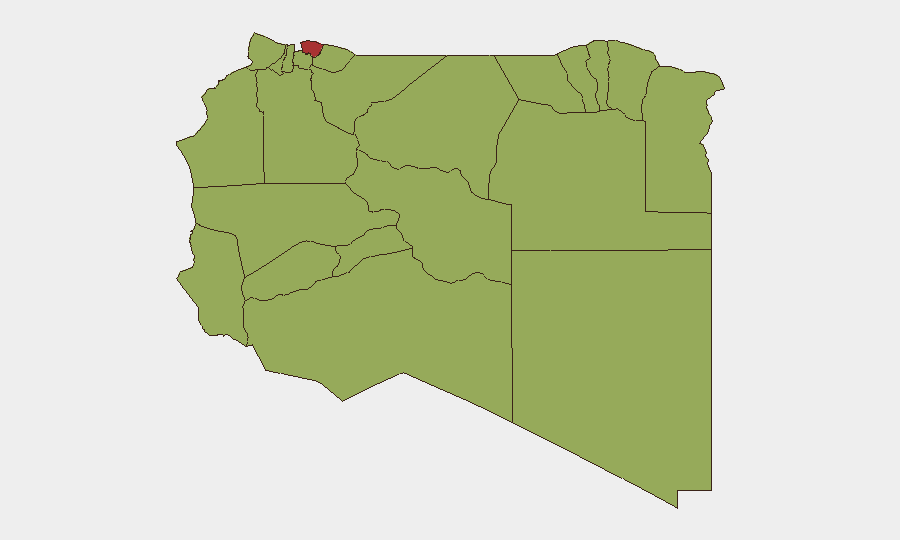
Tripoli dominates the risk landscape at score 77, driven by the concentration of demonstrations, armed-force deployment, infrastructure disruption, and road closures in coastal and central districts. The remaining top-ranked regions (Nalut, Ghat, Az Zawiya, Baladiyah Surman, and others) are flagged at score 47, reflecting secondary spillover or persistent baseline instability; however, active threat intensity is concentrated in Tripoli and its immediate western periphery. The sub-national ranking reflects Tripoli's role as the political and economic nerve center where protests against national services have the greatest operational impact on commercial, diplomatic, and logistical activity.
How GeoBit Would Assist
Security teams should deploy AOI Monitoring & Early Warning on Tripoli's coastal and central districts, power stations, and the Mellitah complex to detect protest mobilization and infrastructure threats in real time. OSINT Fusion & corroboration (X/Telegram, video intelligence, entity extraction) would track the organizational structure and messaging of protest movements—particularly the Tajoura coalition—to forecast escalation and identify allied or splinter groups. Routing & Network Analysis provides real-time alternative journey planning around Tripoli's blocked roads and can assess safe corridors for staff movement and supply chains.
7-Day Outlook
Protests are likely to sustain or intensify through early August absent immediate resolution of power shortages or visible government response. The targeting of energy infrastructure suggests protesters may attempt further direct action against Mellitah or other production facilities, raising risk of prolonged shutdowns and potential security force escalation. Monitor for expansion of the civil-disobedience campaign beyond Tripoli and for signs of factional security-force involvement.
Highest-Risk Areas — Ranked
| # | State / Region | Risk |
|---|---|---|
| 1 | Tripoli | 77 |
| 2 | Nalut | 47 |
| 3 | Ghat | 47 |
| 4 | Baladiyah Surman | 47 |
| 5 | Az Zawiya District | 47 |
| 6 | Wadi al Shatii | 47 |
| 7 | Wadi al Hayaa | 47 |
| 8 | Murzuq | 47 |
| 9 | Kufra | 47 |
| 10 | Nuqat al Khams | 47 |
| 11 | Jafara | 47 |
| 12 | Murqub | 47 |
Sources
Previous Daily Briefs
A new Libya brief is written every day — each with its own risk map and downloadable CSV. Here's the last week; use the calendar to go further back.
📅 Browse every day by calendar →
Highlighted days have a brief. Tap a day for that day's map & analysis, or “csv” for that day's dataset ($5).
Atlas — our AI intelligence desk — emails them this snapshot personally. Nothing else, no list.