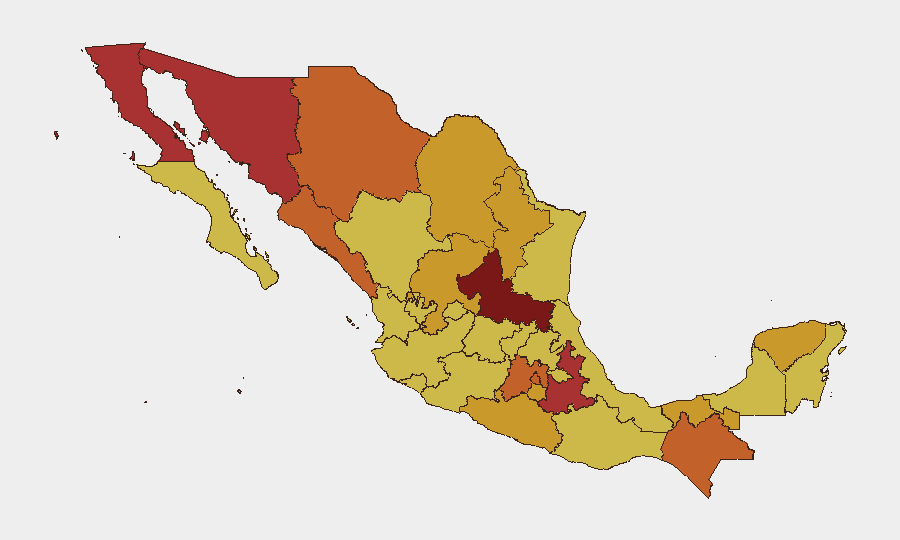
Situation Summary
Mexico's composite threat score of 100 (ranked #9 globally) reflects sustained pressure from cartel activity, economic contraction, and institutional strain. The past 48 hours have introduced a cluster of developments—cartel intimidation in a major tourism hub, a sovereign downgrade by Moody's to Baa3, seismic disruption in Chiapas, and elevated crowd-related crime during World Cup events—that collectively signal compounding risk across security, financial, and travel domains. San Luis Potosí remains the highest-risk sub-national zone (score 100), but risk is distributed across a broad geography, suggesting systemic rather than localized pressures. The trajectory points toward sustained volatility through the summer holiday season.
Key Developments
- Mexico City, July 17 – CJNG cartel operatives posted intimidation videos in a major tourist zone, claiming territorial encroachment and threatening rival criminal groups. Risk type: cartel violence signaling, extortion, and potential spillover into high-profile commercial and hospitality sectors.
- Nationwide, July 17 – Moody's downgraded Mexico's sovereign rating to Baa3 (lowest investment grade) following Q1 2026 GDP contraction of −0.6%. Risk type: macroeconomic deterioration likely to accelerate social discontent and compress state resources for security operations.
- Chiapas state, July 17 – Seismic event activated National Guard Plan DN-III-E, triggering military mobilization across municipalities and infrastructure-security inspections. Risk type: infrastructure vulnerability, federal force concentration in a historically sensitive border region, and potential diversion of security resources.
- Mexico City, Guadalajara, Monterrey, July 17 – World Cup–related crowd gatherings confirmed driving elevated petty crime, theft, and event-security risks across major urban centers. Risk type: opportunistic urban crime, crowd-management strain, and duty-of-care exposure for corporate staff and visitors.
- Nationwide (tourist corridors), July 17 – "Operativo Verano Seguro 2026" deployed approximately 18,000 security personnel to beaches, highways, and cultural sites ("Pueblos Mágicos") for the summer season. Risk type: widespread checkpoint operations, road delays, and implicit official concern about highway violence and accident rates.
- Mexico City, July 18 – Government, judiciary, embassy, and intelligence officials issued multiple public statements, and ongoing investigations by the Army continue. Risk type: internal institutional tensions and unresolved law-enforcement investigations of potential significance.
Highest-Risk Areas
San Luis Potosí (risk 100) and Puebla (78) anchor the top tier, with Sonora, Baja California, and Chiapas following closely. The concentration reflects long-standing cartel presence, transit-corridor vulnerability, and weak institutional capacity in border and central regions. Mexico City, despite ranking sixth at 73.9, has shown acute recent cartel signaling and crowd-related crime risk; its high population and economic importance amplify impact on corporate operations nationwide. State of Mexico and surrounding zones remain persistent sources of organized crime and extortion targeting businesses.
How GeoBit Would Assist
Intel Sweep and OSINT fusion would track cartel social-media signaling (X, Telegram, YouTube) and corroborate claims of territorial shifts in real time, enabling early warning of violence escalation. AOI Monitoring & Early Warning with persistent geo-tagged alerts on San Luis Potosí, Chiapas, and Mexico City would flag emerging events and crowd-risk zones, feeding duty-of-care protocols. Routing & Network Analysis would identify safe alternative travel corridors around active checkpoints, military deployments, and cartel-activity hotspots, protecting staff mobility and supply chains.
7-Day Outlook
Cartel competition for Mexico City and tourist-corridor territories is likely to intensify as summer travel peaks and economic stress mounts. Military deployments in Chiapas and nationwide checkpoint operations will persist, affecting logistics and travel predictability. No near-term de-escalation is expected; corporate security postures should remain elevated through late July.
Highest-Risk Areas — Ranked
| # | State / Region | Risk |
|---|---|---|
| 1 | San Luis Potosí | 100 |
| 2 | Puebla | 78 |
| 3 | Sonora | 76.8 |
| 4 | Baja California | 76.4 |
| 5 | Chiapas | 75.2 |
| 6 | Mexico City | 73.9 |
| 7 | Chihuahua | 73.8 |
| 8 | State of Mexico | 73.5 |
| 9 | Sinaloa | 73 |
| 10 | Guerrero | 72.7 |
| 11 | Coahuila | 71.5 |
| 12 | Tabasco | 71.5 |
Sources
Previous Daily Briefs
A new Mexico brief is written every day — each with its own risk map and downloadable CSV. Here's the last week; use the calendar to go further back.
📅 Browse every day by calendar →
Highlighted days have a brief. Tap a day for that day's map & analysis, or “csv” for that day's dataset ($5).
Atlas — our AI intelligence desk — emails them this snapshot personally. Nothing else, no list.