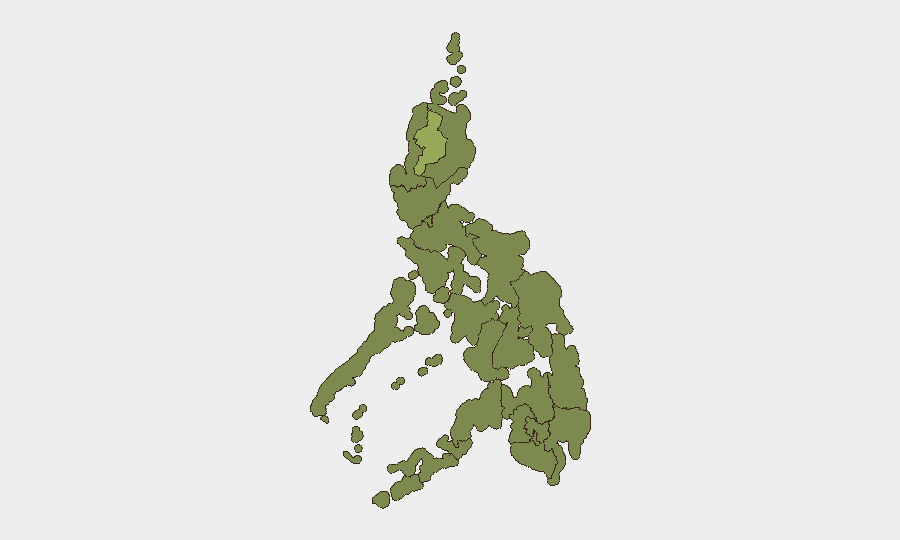
Situation Summary
The Philippines remains a #50 global threat (composite score 34), with sub-national risk concentrated in the Cordillera Administrative Region (53.5) and Bangsamoro (32.5). Recent political and institutional activity—including China–Philippines tensions and domestic legal proceedings—has generated event signals across multiple actors, but no cross-confirmed security incidents, civil unrest, major crime, or infrastructure disruption were identified in open-source channels over the last 24–48 hours. The security environment remains stable operationally, though underlying tensions warrant continued monitoring in high-risk regions and maritime zones.
Key Developments
No cross-confirmed security, conflict, crime, or civil-unrest incidents meeting professional verification standards were identified in the last 24–48 hours (as of 2026-08-03).
Recent event signals—primarily China–Philippines public statements, investor commentary, and disapprovals by legal actors (2026-08-02, 2026-07-31)—reflect institutional and diplomatic activity rather than discrete physical-security threats.
Background context (outside 24–48h window but relevant):
- Metro Manila, 2026-07-27: Two IED incidents (Department of Justice and Senate perimeter; >48 hours prior) remain under investigation and signal ongoing extremist or destabilizing activity in the capital.
- Mindanao & BARMM, June–July 2026: Armed clashes (Nabalawag, July 20), fire incidents, and localized law-enforcement operations have been recorded, indicating persistent sub-national instability but no new verified incidents in the current 24–48h period.
Highest-Risk Areas
Cordillera Administrative Region (53.5) and Bangsamoro (32.5) drive the Philippines' composite risk profile; both regions experience ongoing armed-group activity, tribal/communal disputes, and limited state capacity. Metro Manila (28) remains elevated due to its concentration of political institutions, critical infrastructure, and past targeting of government facilities (including recent IED incidents outside the 24–48h window). Northern Mindanao, Davao, and Cagayan Valley round out the top tier, reflecting maritime boundary tensions, drug-trafficking networks, and remote-area instability. Central Visayas and Mimaropa show mid-tier risk driven by localized crime and resource-competition dynamics.
How GeoBit Would Assist
A corporate security team with people or assets in the Philippines should deploy AOI Monitoring & Early Warning on Cordillera, Bangsamoro, and Metro Manila to detect emerging conflict, protest, or criminal activity before operational impact. Intel Sweep (multi-language OSINT fusion, X/Telegram, YouTube intelligence, and event-feed corroboration) would provide continuous situational awareness of political tensions, institutional instability, and extremist signaling. Routing & Network Analysis combined with GIS & Spatial Analysis would enable duty-of-care teams to plan alternative journeys and identify safer zones during escalation in Metro Manila, Mindanao, and maritime areas.
7-Day Outlook
China–Philippines diplomatic friction and domestic institutional activity are likely to generate further public statements and political positioning over the coming week, but no imminent large-scale security deterioration is forecast based on available signals. Localized armed clashes and law-enforcement operations in Mindanao and Bangsamoro will persist at historical baseline; personnel in those regions should maintain standard heightened protocols. Monitor Metro Manila for any developments relating to the late-July IED investigations, as judicial outcomes or security operations could trigger renewed targeting or protest activity.
Highest-Risk Areas — Ranked
| # | State / Region | Risk |
|---|---|---|
| 1 | Cordillera Administrative Region | 53.5 |
| 2 | Bangsamoro | 32.5 |
| 3 | Central Visayas | 31 |
| 4 | Metro Manila | 28 |
| 5 | Northern Mindanao | 25 |
| 6 | Cagayan Valley | 25 |
| 7 | Davao Region | 24.3 |
| 8 | Mimaropa | 24.3 |
| 9 | Caraga | 23.5 |
| 10 | Soccsksargen | 23.5 |
| 11 | Ilocos Region | 23.5 |
| 12 | Central Luzon | 23.5 |
Sources
Previous Daily Briefs
A new Philippines brief is written every day — each with its own risk map and downloadable CSV. Here's the last week; use the calendar to go further back.
📅 Browse every day by calendar →
Highlighted days have a brief. Tap a day for that day's map & analysis, or “csv” for that day's dataset ($5).
Atlas — our AI intelligence desk — emails them this snapshot personally. Nothing else, no list.