Situation Summary
South Korea faces a complex security landscape shaped by domestic policy shifts, elevated regional cyber and military tensions, and financial-market volatility. The enforcement of a new false-information law (effective 7 July) is creating civil-liberties and political-risk concerns, while coordinated trilateral messaging from Seoul, Washington, and Tokyo on North Korean cyber and nuclear threats signals heightened geopolitical awareness. Overall threat posture remains moderate (global ranking #178), but concentrated pockets of elevated risk—particularly Seoul and North Chungcheong—warrant active monitoring by corporate risk teams.
Key Developments
- Nationwide | 7 July 2026 – South Korea began enforcing amended communications legislation imposing steep financial penalties for spreading "false information" online. Media watchdogs and civil-liberties analysts have flagged potential restrictions on press freedom and political weaponization risks, affecting journalists, influencers, and activist communications across the country.
- Seoul | 8 July 2026 – South Korea's foreign minister, alongside US and Japanese counterparts at NATO-related meetings in Ankara, reaffirmed trilateral coordination against North Korean illicit cyber operations, cryptocurrency theft networks, and nuclear/missile funding mechanisms, signaling sustained focus on Korean Peninsula security dynamics and their Indo-Pacific implications.
- Seoul | 8 July 2026 – Financial authorities acknowledged heightened stock-market volatility after trading sidecars triggered on both KOSPI and KOSDAQ indices. Finance policymakers committed to close monitoring of risk factors, reflecting concern over asset-price instability and potential spillover effects for institutional and retail investors.
- Seoul | 8 July 2026 – South Korean officials, in coordination with US and Japanese partners, publicly highlighted enhanced countermeasures against North Korean cyber operations targeting financial systems and critical infrastructure, underscoring persisting cybersecurity and operational-technology risks for multinational corporations and government agencies in South Korea.
- Ankara/Seoul impact | 7–8 July 2026 – Diplomatic discussions at NATO-level forums tied Korean Peninsula denuclearization and stability explicitly to Taiwan Strait security and broader Indo-Pacific geopolitics, signaling potential escalation in regional threat perception and possible knock-on effects for corporate travel, supply-chain routing, and contingency planning in South Korea.
Highest-Risk Areas
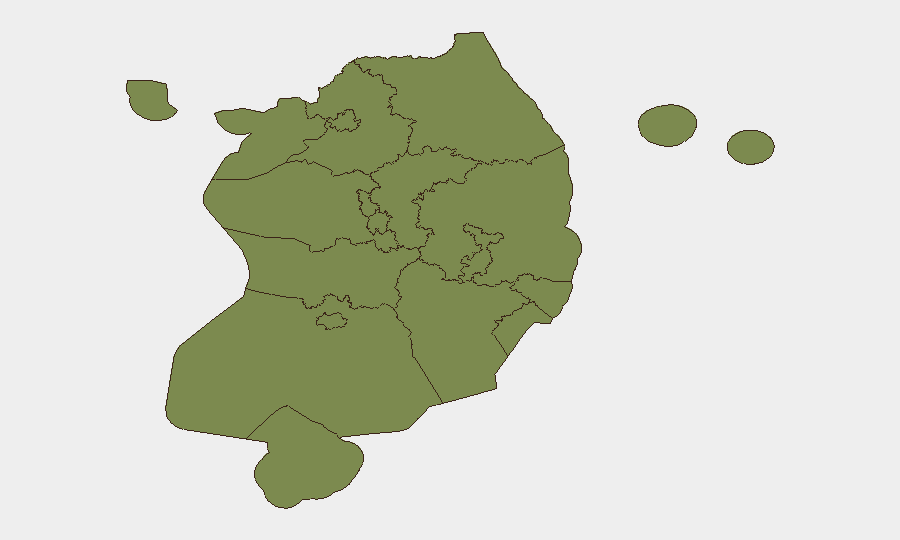
Seoul (risk score 32) and North Chungcheong (27.9) dominate the sub-national ranking and account for the majority of tracked threat events. Seoul's elevation reflects densely populated urban exposure to cybercrime, financial-market turbulence, and policy enforcement activities; North Chungcheong's high score likely correlates with proximity to the Korean Demilitarized Zone and associated military/infrastructure sensitivities. All other regions score below 8, indicating that risk concentration is acute in the capital and central corridor. Organizations with personnel or assets in Seoul or serving as nodes in North Chungcheong–based supply chains face disproportionate exposure to cyber incidents, regulatory enforcement, and geopolitical secondary effects.
How GeoBit Would Assist
Corporate security teams should deploy Intel Sweep and multi-language OSINT fusion to track real-time developments in South Korean media, government statements, and financial-market signals; cyber and critical-infrastructure search capabilities to map organizational exposure to North Korean threat actors and financial-system vulnerabilities; and AOI Monitoring & Early Warning on Seoul and North Chungcheong to receive persistent alerts on regulatory, protest, or security incidents affecting duty-of-care obligations. Network & Actor Analysis would help identify supply-chain partners and their exposure to false-information law enforcement or cyber targeting.
7-Day Outlook
Implementation of the false-information law is likely to generate legal and compliance uncertainty over the near term, with potential secondary effects on corporate communications and media engagement. Financial-market volatility may persist given geopolitical messaging and regional tensions; monitoring KOSPI/KOSDAQ trading halts and central-bank statements will be essential. North Korean cyber activity remains a baseline risk; no de-escalation signals are evident.
Highest-Risk Areas — Ranked
| # | State / Region | Risk |
|---|---|---|
| 1 | Seoul | 32 |
| 2 | North Chungcheong | 27.9 |
| 3 | North Gyeongsang | 7.1 |
| 4 | Jeju | 3.3 |
| 5 | Gyeonggi | 2.8 |
| 6 | Gangwon State | 2.4 |
| 7 | South Jeolla | 2.4 |
| 8 | Daegu | 2.4 |
| 9 | Incheon | 2 |
| 10 | South Chungcheong | 2 |
| 11 | Sejong | 2 |
| 12 | Jeonbuk State | 2 |
Sources
Previous Daily Briefs
A new South Korea brief is written every day — each with its own risk map and downloadable CSV. Here's the last week; use the calendar to go further back.
📅 Browse every day by calendar →
Highlighted days have a brief. Tap a day for that day's map & analysis, or “csv” for that day's dataset ($5).
Atlas — our AI intelligence desk — emails them this snapshot personally. Nothing else, no list.