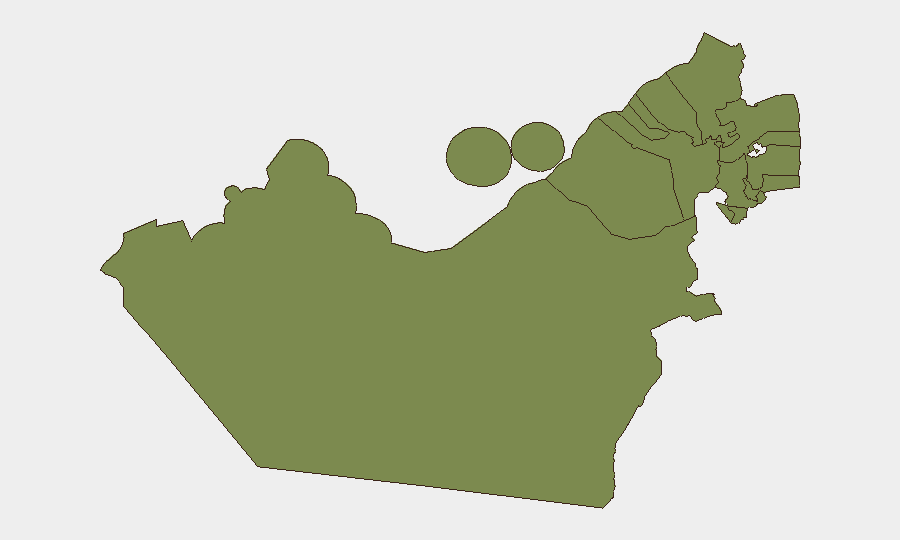
Situation Summary
The United Arab Emirates is experiencing acute regional escalation following Iranian missile and drone strikes on UAE territory and UAE-operated maritime assets in the Strait of Hormuz within the last 24–48 hours. Air defence systems across the country, particularly around Abu Dhabi, have been actively engaged in interception operations, with confirmed casualties (one crew member killed, eight injured on tanker strikes) and infrastructure impact. The threat environment has shifted from chronic regional tension to active kinetic operations directly affecting UAE airspace, shipping lanes, and civilian populations.
Key Developments
- Tanker strikes, Strait of Hormuz (19 July): Two UAE-operated crude oil tankers (MT Al Bahiyah and MT Mombasa) were struck by Iranian cruise missiles in the southern Strait shipping lane, resulting in fires, one fatality, and eight personnel injured. Direct threat to UAE maritime commerce and energy exports.
- Air defence engagements, countrywide (17–19 July): UAE Defence Ministry confirmed active air defence operations against incoming Iranian missiles and drones across the country, with explosions heard in multiple locations from interceptions. National Emergency Crisis and Disaster Management Authority issued shelter-in-place guidance.
- Abu Dhabi air defences under fire (17–19 July): Capital region air defence systems engaged Iranian missiles and drones as part of coordinated regional attacks also affecting Bahrain and Qatar, confirming direct targeting of UAE infrastructure.
- Strait of Hormuz closure declaration (19 July): Iran declared the Strait "closed until further notice" following its attacks, immediately constraining UAE maritime traffic and energy shipping operations.
- Downtown Dubai explosion reports and denial (18–19 July): Reuters reported sounds of explosions in Downtown Dubai; Government of Dubai Media Office publicly denied attacks occurred and urged reliance on official sources only. Status remains unclear; civil unrest/rumor control risk elevated.
- UAE–Saudi air corridor disruptions (last 48h): Flights between UAE and Abha International Airport (Saudi Arabia) were cancelled due to concurrent Houthi drone and missile activity in the region, constraining business and commercial travel.
- US–UAE diplomatic tension (17 July): US disapproved of UAE actions or statements; concurrent media criticism of UAE governance. Low-level diplomatic friction layered atop kinetic threat.
- Domestic unrest signal (18 July): Hunger strike recorded in UAE, indicating internal dissatisfaction or protest activity during crisis period.
Highest-Risk Areas
Abu Dhabi Emirate carries the dominant risk profile (31.8 composite score) as the seat of federal government, military command, and critical infrastructure. Its air defence systems are under direct Iranian attack, and port facilities along the Gulf coast face maritime targeting. Dubai (10.5 score) is secondary but significant due to population density, international business concentration, and the unconfirmed explosion reports that may indicate either interception debris or unconfirmed strikes. Remaining emirates carry minimal indexed risk but may face spillover effects from infrastructure disruption or secondary incidents.
How GeoBit Would Assist
Security teams should deploy AOI Monitoring & Early Warning on Abu Dhabi and Dubai to track air defence activations, missile/drone signatures, and casualty/impact reports in real time. Maritime & Aviation tracking combined with Routing & Network Analysis enables rapid rerouting of personnel and cargo away from the Strait of Hormuz and affected air corridors. Conflict & Military (force structure, air defence posture) and OSINT fusion (Telegram, X, local media monitoring) provide tactical situational awareness of ongoing strikes and government guidance updates faster than commercial news cycles.
7-Day Outlook
Kinetic activity is likely to persist or recur within 7 days if US–Iran strikes continue, maintaining active air defence posture and maritime risk in the Strait. Diplomatic de-escalation attempts may emerge but are unlikely to resolve underlying tensions within this timeframe. Corporate operations should anticipate continued disruptions to air and sea logistics, evolving shelter-in-place guidance, and potential secondary unrest if casualties or economic impact accumulate.
Highest-Risk Areas — Ranked
| # | State / Region | Risk |
|---|---|---|
| 1 | Abu Dhabi Emirate | 31.8 |
| 2 | Dubai | 10.5 |
| 3 | Fujairah Emirate | 2.2 |
| 4 | Sharjah Emirate | 1.8 |
| 5 | Ajman Emirate | 1.8 |
| 6 | Ras al-Khaimah | 1.8 |
| 7 | Umm al-Quwain | 1.8 |
Sources
Previous Daily Briefs
A new United Arab Emirates brief is written every day — each with its own risk map and downloadable CSV. Here's the last week; use the calendar to go further back.
📅 Browse every day by calendar →
Highlighted days have a brief. Tap a day for that day's map & analysis, or “csv” for that day's dataset ($5).
Atlas — our AI intelligence desk — emails them this snapshot personally. Nothing else, no list.