Situation Summary
Venezuela remains at moderate global threat rank (#35 globally, composite 46) with persistent political-institutional tension, ongoing earthquake recovery operations, and limited but credible population-level threat signals in Caracas as of July 25. Diplomatic friction with multiple state actors and civil-unrest indicators suggest a heightened but not acute risk environment over the next week. The security picture is dominated by structural instability—earthquake damage, sanctions-driven economic pressure, and diplomatic strain—rather than by reported large-scale violence or organized attack in the last 48 hours.
Key Developments
- Caracas (Federal District) – July 25, 2026 – Credible population-level threat flagged. A threat assessment identified a credible threat directed at the general population in the capital, with political and diplomatic tension components; nature and actor details remain unclear and unconfirmed as executed incident.
- National level – July 25–26, 2026 – Diplomatic and institutional tensions persist. Multiple public statements between Venezuela and Spain (July 25) and Venezuela and Berlin (July 27) alongside internal institutional friction indicate sustained diplomatic strain with expectations of continued tension through late July.
- La Guaira, Vargas State – July 26–27, 2026 – Reconstruction and building-safety operations ongoing. Acting President Delcy Rodríguez conducted on-site inspections of housing reconstruction in earthquake-affected La Guaira; repair work has progressed to yellow-tagged (partially damaged) structures, implying continued infrastructure stress and worksite activity with attendant safety and traffic disruption risk.
- National level – July 26, 2026 – U.S. OFAC licensing changes for energy, minerals, and aviation sectors. Updated general licenses (GL 54A, GL 59, others issued June–July 2026) continue to reshape transaction conditions in strategic sectors, with implications for economic stability and political leverage around oil, gold, and aviation assets.
- Border/Regional – July 25, 2026 – Diplomatic investigation opened with Colombia. Venezuela launched investigation into Colombia; concurrent reduction in relations with Peru signals broader regional diplomatic friction.
- Caracas – July 25, 2026 – Violent protest/riot reported. At least one violent protest or riot incident was flagged in Caracas on July 25, consistent with elevated civil-unrest signals.
Highest-Risk Areas
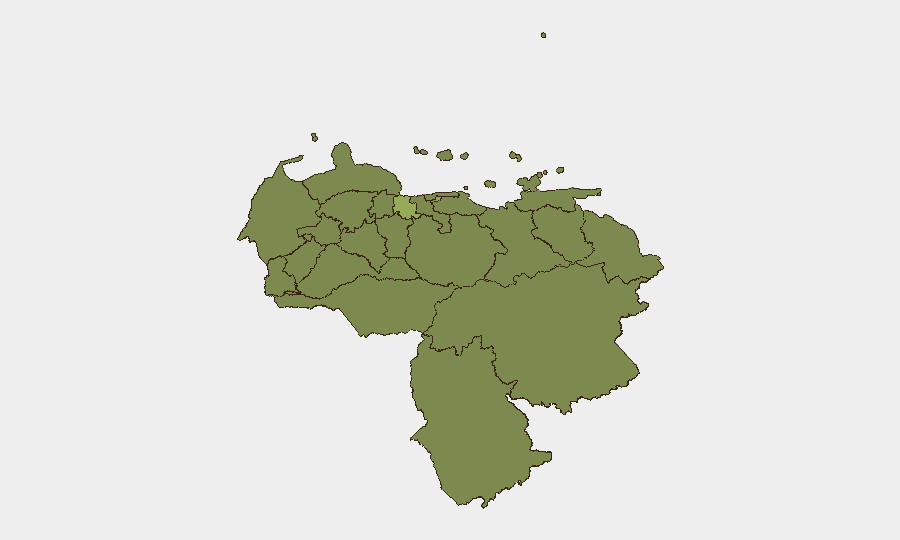
Carabobo State (risk 59) stands significantly above all other regions and warrants priority monitoring; Federal District/Caracas (46.7) remains the second-highest risk driver, anchored in political institutions, diplomatic activity, and population-density concentration. The gap between these two and the cluster of states scoring 29–30 (Tachira, Vargas, Aragua, Anzoategui, Monagas, Trujillo, Zulia, Falcon, Nueva Esparta, Federal Dependencies) suggests localized or sectoral volatility rather than evenly distributed national instability. Carabobo's elevated score likely reflects labor, criminal, or protest dynamics; Caracas risk is predominantly institutional and crowd-related.
How GeoBit Would Assist
Security teams should deploy AOI Monitoring & Early Warning on Caracas (Federal District) and Carabobo State to track protest, roadblock, and institutional activity in real time with automated alerting. Intel Sweep (X/Telegram OSINT, multi-language news fusion, sentiment analysis) will corroborate or clarify the July 25 population-threat signal and track diplomatic messaging. Routing & Network Analysis can pre-plan alternative travel corridors around La Guaira and other earthquake-affected zones to avoid infrastructure disruption and active worksites.
7-Day Outlook
Diplomatic and political tension is expected to persist or deepen through early August; no major escalation is currently forecasted, but the July 25 population-level threat and ongoing institutional friction create a non-zero risk of short-notice protests or unrest in Caracas. Earthquake recovery operations will continue to generate infrastructure constraints and safety hazards in Vargas and coastal areas. Teams with personnel or critical assets in Carabobo or Federal District should maintain heightened situational awareness and contingency protocols through at least August 3.
Highest-Risk Areas — Ranked
| # | State / Region | Risk |
|---|---|---|
| 1 | Carabobo State | 59 |
| 2 | Federal District | 46.7 |
| 3 | Tachira State | 29.9 |
| 4 | Vargas State | 29.4 |
| 5 | Aragua State | 29.4 |
| 6 | Anzoategui State | 29.4 |
| 7 | Monagas State | 29.2 |
| 8 | Trujillo State | 29.2 |
| 9 | Zulia State | 29 |
| 10 | Falcon State | 29 |
| 11 | Federal Dependencies | 29 |
| 12 | Nueva Esparta State | 29 |
Sources
Previous Daily Briefs
A new Venezuela brief is written every day — each with its own risk map and downloadable CSV. Here's the last week; use the calendar to go further back.
📅 Browse every day by calendar →
Highlighted days have a brief. Tap a day for that day's map & analysis, or “csv” for that day's dataset ($5).
Atlas — our AI intelligence desk — emails them this snapshot personally. Nothing else, no list.