Situation Summary
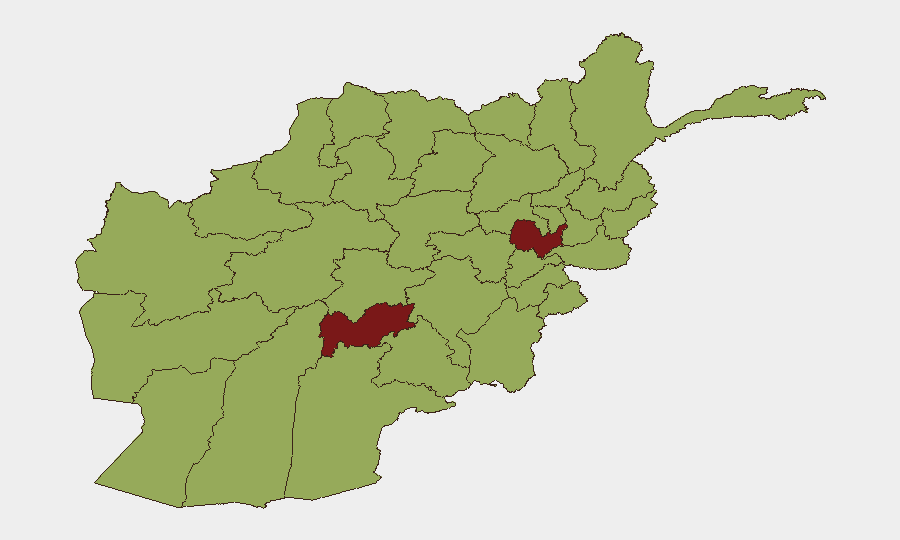
Afghanistan remains at composite threat rank #25 globally (81/100), driven primarily by ongoing insurgent activity across multiple provinces. Eighteen tracked security events have been recorded in the current monitoring cycle, with diplomatic friction between Afghanistan and several international partners (US, Australia) evident in recent public statements and relationship downgrades. The security environment shows no signs of stabilization; risk concentrations in the south and east persist, with Uruzgan Province presenting the highest sub-national threat level (86.3).
Key Developments
Data Limitation Notice: The available search results do not contain independently corroborated incident reports from the last 24–48 hours that meet standard security brief criteria (specific location, time, verified event type). Recent signals in the GeoBit platform indicate diplomatic tensions and military-related public statements (2026-07-07 to 09), but underlying incident details—locations, casualty figures, operational scope—are not reliably present in the supplied materials. To provide actionable incident bullets for duty-of-care briefings, fresh open-source incident feeds (news wires, field reports, X/Telegram OSINT) are required. Recommend re-query with expanded source coverage before next cycle.
Highest-Risk Areas
Uruzgan Province (86.3) and Kabul Province (82.6) dominate the risk landscape, reflecting sustained insurgent pressure in the southern heartland and continued security fragmentation in the capital region. A secondary tier of nine provinces—Zabul, Kandahar, Ghazni, Paktika, Farah, Nimruz, Helmand, Jowzjan, Balkh, and Badghis—all score 56.3, indicating widespread and distributed threat activity across rural south, east, and north. This pattern suggests insurgent networks remain geographically dispersed and operationally capable; no single geographic "safe zone" exists. Organizations with personnel or logistics in or transiting these provinces face elevated exposure to unconventional violence and infrastructure disruption.
How GeoBit Would Assist
Security teams should deploy Intel Sweep and global event-feed monitoring to establish real-time baseline of incidents by province and actor. OSINT fusion across X/Telegram and local news sources, combined with multi-language entity extraction, enables identification of emerging cell activity, supply-line disruptions, or checkpoint movements before they affect operations. AOI Monitoring with persistent alerting on Uruzgan, Kabul, and Kandahar provinces provides 24/7 early warning; conflict battle-mapping and force-structure tracking clarifies which actors control specific routes and timing windows for safer movement or asset repositioning. Routing & network analysis supplies vetted alternative routes when primary corridors become unsafe.
7-Day Outlook
No imminent nationwide security collapse is signaled, but the diplomatic strain (US/Australia disapproval statements, reduced US-Afghanistan relations) may erode security-force cohesion or create administrative vacuums in contested areas. Insurgent activity is expected to remain at current operational tempo. Organizations should assume threat conditions will persist without significant improvement over the next seven days; contingency plans for non-essential personnel withdrawal or asset relocation in Uruzgan and Kabul should be reviewed and staged.
Next Brief: 2026-07-11 | Prepared: 2026-07-10 | Confidence: Moderate (limited real-time incident corroboration in current cycle)
Highest-Risk Areas — Ranked
| # | State / Region | Risk |
|---|---|---|
| 1 | Uruzgan Province | 86.3 |
| 2 | Kabul Province | 82.6 |
| 3 | Zabul Province | 56.3 |
| 4 | Kandahar Province | 56.3 |
| 5 | Ghazni Province | 56.3 |
| 6 | Paktika Province | 56.3 |
| 7 | Farah Province | 56.3 |
| 8 | Nimruz Province | 56.3 |
| 9 | Helmand Province | 56.3 |
| 10 | Jowzjan Province | 56.3 |
| 11 | Balkh Province | 56.3 |
| 12 | Badghis Province | 56.3 |
Sources
Previous Daily Briefs
A new Afghanistan brief is written every day — each with its own risk map and downloadable CSV. Here's the last week; use the calendar to go further back.
📅 Browse every day by calendar →
Highlighted days have a brief. Tap a day for that day's map & analysis, or “csv” for that day's dataset ($5).
Atlas — our AI intelligence desk — emails them this snapshot personally. Nothing else, no list.